
What “Ceramic” Means on a Car Wash Menu (and What It Doesn’t)
You’re standing at the menu board (or scrolling online) deciding between a mid-tier and a premium wash, and “ceramic” is the word that makes the premium package feel justified. It sounds like the kind of protection detailers talk about—slick, glossy, beading for days, and “real” paint defense.
But the ceramic car wash meaning most people expect (a true ceramic coating) is usually not what a tunnel or express wash is selling. And that gap—between what the word suggests and what the service actually is—is where disappointment starts.
This guide is meant for the enthusiast or weekend detailer who wants clarity without hype: what “ceramic” usually refers to on a car wash menu, what it’s designed to do, what it can’t realistically do, and how to decide if the upgrade makes sense when you’re comparing mid-tier vs premium.
Why “ceramic” on a menu causes confusion
“Ceramic” used to be a word you mostly heard in detailing circles—often shorthand for professional ceramic coatings applied carefully on clean, corrected paint. Now it shows up everywhere: spray bottles, quick detailers, sealants, and car wash menus. Same word, different products, wildly different expectations.
That’s the first reason the term is confusing: “ceramic” can describe a category of chemistry, a marketing label, or a professional service—depending on context.
The second reason is the moment you encounter it. It usually appears right where the price jumps. The mid-tier wash might promise a cleaner car and a basic protective step. The premium wash adds “ceramic,” “graphene,” “ultimate protection,” or something similar—and it’s natural to assume you’re moving into long-term protection territory.
If you’re a weekend detailer, you’re also primed to evaluate the results the way you’d evaluate a coating: beading, slickness, and how the paint looks after the next rain. That’s a reasonable instinct. It’s just not always a fair test of what a car wash “ceramic” step is designed to do.
The myth: “Ceramic wash = ceramic coating”
Let’s say the quiet part out loud: most people buy the premium “ceramic” wash because they expect coating-like outcomes.
Here’s what that expectation often includes:
- A hard, durable “shell” on the paint
- Protection that lasts a long time
- Strong water beading that stays consistent
- Resistance to contamination sticking
- A sense that the paint is now “safer” from the real world
If you’ve watched coating videos, read forums, or used a true ceramic-coated vehicle before, those expectations make sense. The term “ceramic” carries a lot of cultural weight in car care.
But in a tunnel or express wash context, that expectation is usually incorrect—not because anyone is trying to trick you, but because the service model and the product type are fundamentally different.
A professional ceramic coating is typically a controlled application on properly prepped paint. A car wash “ceramic” step is typically a fast, high-throughput application designed to be applied to many vehicles quickly. Those two things can both be real products, but they are not the same thing.
The cleanest mental model is this:
A ceramic wash is a “top layer” step. A ceramic coating is a “base layer” system.
The wash step is meant to enhance the finish and add a protective feel. The coating is meant to be a longer-term protective layer. Treating a wash step as a coating is where the myth becomes expensive.
The reality: what “ceramic” usually refers to at an express/tunnel wash
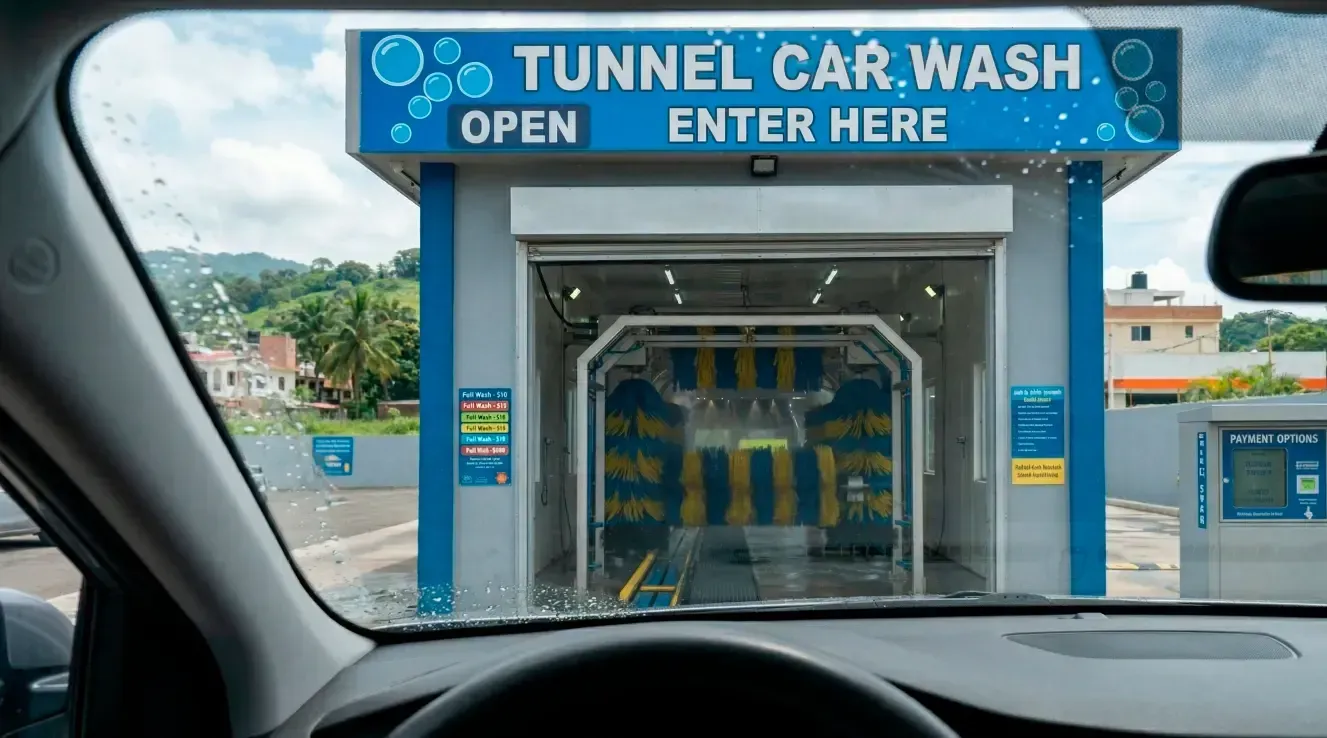
In many express and tunnel washes, “ceramic” refers to a ceramic-labeled protectant or sealant step applied during the wash—often near the end of the process.
You might see it described (depending on the wash) as:
- Ceramic protectant
- Ceramic seal
- Ceramic coating (as a menu label)
- Ceramic shine or ceramic polish
- A “ceramic” add-on to a premium package
What it usually means in practical terms: the wash applies a product designed to leave behind a protective film that enhances gloss and changes water behavior. It can create that satisfying “freshly protected” feel—slickness, tight beads, and a brighter look—especially right after the wash.
That does not automatically mean it behaves like a professional ceramic coating.
What it’s designed to do (realistically) in a car wash environment:
- Improve gloss and visual pop right after the wash
- Enhance water behavior (beading/sheeting can look better short-term)
- Add a short-term protective feel that makes maintenance a bit easier
- Create a premium “finish” experience without requiring a detailer workflow
What you should not assume it does:
- Permanently protect the paint
- Make the car scratch-proof or “damage-proof”
- Replace proper paint prep and coating application
- Provide a consistent, long-term performance window without variables
If you want to be evidence-aware about it, the safest phrasing is: in many menus, “ceramic” refers to a ceramic-labeled protectant step. The exact chemistry and performance depends on the product and application system (TBD unless the wash can name the product and provide plain-language details).
Ceramic wash vs wax wash: what’s actually different
“Wax” and “ceramic” show up as if they’re different universes. In reality, they often sit in the same category on a menu: a protective finishing step.
A wax-style protectant is generally marketed as warmth, shine, and a classic “protected” feel. A ceramic-labeled protectant is generally marketed as higher tech, more durability, and more intense water behavior. But those are marketing frames, not guarantees.
In practical terms, both steps are usually:
- Applied quickly during the wash process
- Designed to leave some form of protective film
- Most noticeable right after the wash
- Influenced heavily by the condition of the paint and what’s already on it
What you may notice immediately with a ceramic-labeled protectant:
- Slickness to the touch (especially on clean paint)
- Tighter beading or more dramatic water behavior
- A slightly “crisper” look on darker colors, depending on lighting and surface condition
What you shouldn’t assume from those immediate effects:
- That it will keep behaving the same way for a long period
- That it will survive multiple washes unchanged
- That it has replaced your usual protection routine at home
- That it’s stacking cleanly on top of everything else already on the paint
A weekend detailer’s common trap is to interpret “beading = durability.” Beading is useful feedback, but it’s not a perfect scoreboard. Water behavior can change based on contamination, wash technique, and what’s on the paint already. Two cars can look very different after the same wash because their paint condition and previous products are different.
If you want a more grounded comparison: think of wax-style and ceramic-labeled steps as two flavors of the same type of service—quick protection add-ons—rather than one being “real” and the other being “fake.”
“How long does a ceramic wash last?” The honest answer
If you ask how long a ceramic wash lasts, you deserve a real answer—not a number pulled from the air.
The honest answer is: there’s no single number that applies to everyone.
Why? Because the life of any wash-applied protectant is shaped by variables that change car-to-car and week-to-week:
- Surface condition: clean, smooth paint holds protection differently than rough, contaminated paint
- Climate: heat, rain, pollen, and grime can change water behavior quickly
- Wash cadence: frequent tunnel washing can refresh a top layer, but it can also wear it down depending on chemistry and conditions
- Contamination: road film, brake dust, and tree sap can mask “ceramic” behavior even if some film remains
- What’s already on the car: previous waxes, sealants, and true coatings change how new products bond and behave
So instead of asking “How long does it last?” ask a question you can actually test:
“What should I expect to notice over the next few days?”
Here are simple, real-life checks that don’t pretend to be lab tests:
- The next day: does the paint feel slicker after a normal drive? Does it look easier to wipe clean?
- After the next rain: does water behavior look meaningfully different compared to your mid-tier wash experience?
- After a light rinse: does the car rinse cleaner than usual, or does road film cling the same way?
If you see an immediate improvement, that’s a valid result. If you don’t, it doesn’t automatically mean the ceramic step was “fake.” It may mean your paint is rough/contaminated, your car has other layers that changed behavior, or your expectations were based on coating logic rather than wash-step reality.
A safe takeaway is this: treat a ceramic wash as a short-term finishing and maintenance aid, not a long-term transformation.
Is a ceramic wash worth it for you?
When you’re comparing mid-tier vs premium, “worth it” depends less on the label and more on your use case.
Here’s a practical way to decide.
If you’re mostly chasing “clean” (and you wash often), a mid-tier wash may be enough when:
- You wash weekly or frequently and don’t need the premium “finish” every time
- Your car is a daily driver that gets dirty quickly, so perfection doesn’t last
- You already use a spray wax or quick detailer at home and prefer to control what goes on the paint
A premium ceramic-labeled wash may make sense when:
- You want a noticeable “just detailed” look with minimal effort
- You’re going to a meet, event, client visit, or simply care about presentation
- You want stronger water behavior and slickness right after the wash
- You’re trying to make light maintenance easier over the next few days
Now the scenarios you actually live in:
Daily driver
- If you drive a lot, the car will pick up film fast. The premium wash can still feel nice, but the difference may be most visible for a short window. Many enthusiasts use premium selectively—when appearance matters—not automatically every time.
Garaged weekend car
- A premium wash can feel more “worth it” because the car stays cleaner longer and the finish is easier to maintain. You’ll likely notice the visual boost more.
Road-salt season (TBD by region)
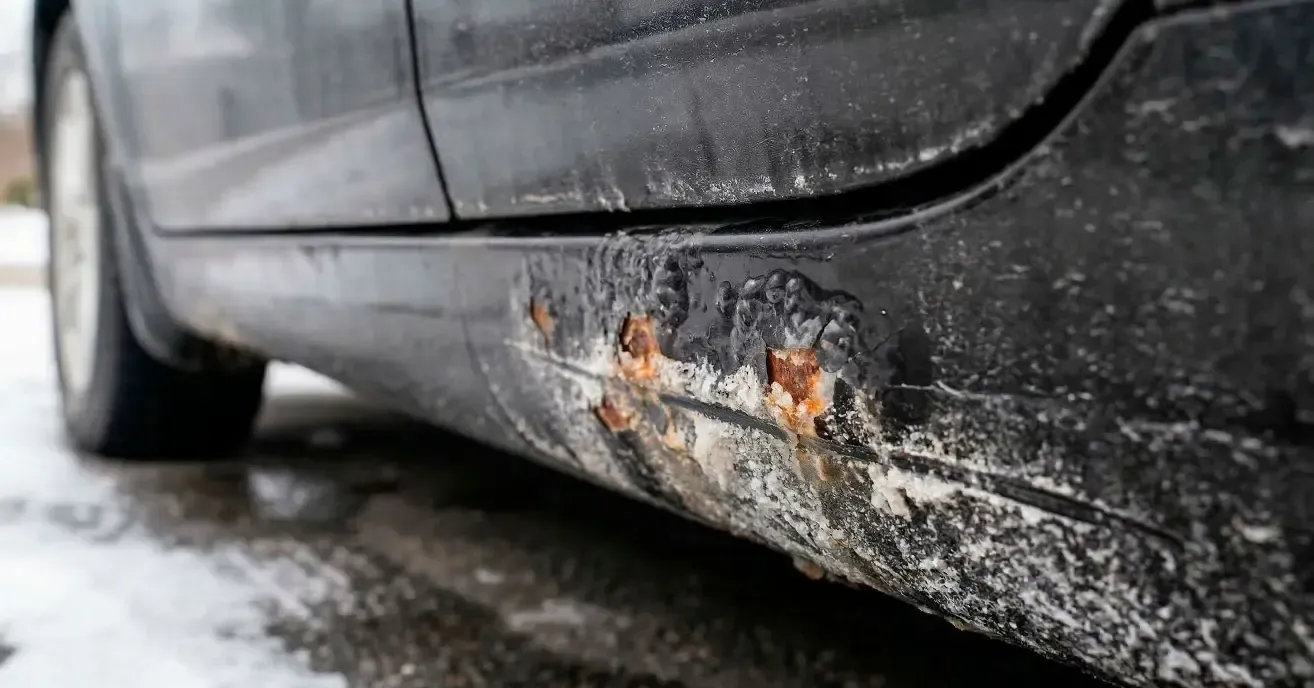
- The value of any protection step can be less about beading and more about making grime easier to remove. If your car sees harsh grime, you may value the premium step as part of a routine, but keep expectations realistic and prioritize safe washing.
Pollen season
- Pollen can make everything look worse quickly. A premium finishing step might help the car look better right after washing, but pollen will still land. “Worth it” here is about your tolerance for re-washing.
The key is to decide what you’re buying:
- If you’re buying “long-term coating performance,” a car wash ceramic step probably won’t satisfy you.
- If you’re buying “short-term finish and easier maintenance,” it often can.
If you already have a real ceramic coating
If your car has a true ceramic coating, the conversation changes.
The goal isn’t to “add more ceramic.” The goal is to maintain what you already invested in without undermining it.
Because car wash systems vary, the safest approach is conservative:
- Ask what the ceramic step actually is (protectant/sealant type) and whether it’s intended for coated vehicles (TBD unless the wash can explain it clearly).
- Ask about the general chemical approach (for example: is it a finishing sealant step? Is it a specialty protectant?) without expecting a technical deep dive.
- If you follow a specific coating brand’s maintenance guidance, prioritize that guidance first and use the wash as a convenience tool, not the primary maintenance strategy.
Also, resist the instinct to assume “more protection steps is better.”
Stacking multiple protection products can create unpredictable behavior: streaking, uneven water behavior, or the sense that your coating “stopped working,” when it may just be masked by another layer or contaminated by road film.
A practical, conservative choice is to use gentler options and focus on consistency. If you want to use the premium ceramic step, treat it as optional and evaluate how your coated paint responds over the next few days. If you see negative effects (streaking, strange spotting, worse behavior), revert to a simpler package and maintain the coating the way its manufacturer recommends (TBD specifics).
Common mistakes weekend detailers make with “ceramic” washes
Most disappointment comes from misunderstanding the process—not from the existence of the product.
Here are the common mistakes that show up when enthusiasts chase menu buzzwords.
Chasing the label instead of the process
- “Ceramic” sounds meaningful, but the real question is: what is being applied, and at what step? Without that, you’re buying a word.
Over-layering products without understanding what’s on the paint
- If you’re already using a spray wax, a sealant, or you have a true coating, adding a ceramic-labeled wash step might not behave the way you expect. You can end up evaluating the interaction, not the product.
Using beading as the only success metric
- Beading looks cool, but it isn’t the whole story. Paint can bead and still be contaminated. Paint can sheet and still be protected. If you want a more grounded metric, ask: is the car easier to maintain after the wash?
Assuming “ceramic” means scratch-proof
- No wash package makes a car damage-proof. Tunnel wash marketing should never imply that, and as a detailer-minded owner, you should treat any “protection” step as incremental, not absolute.
Expecting coating-level durability from a wash step
- This is the core mismatch. A wash step can be useful without being permanent. You don’t need it to be a coating for it to be worth buying occasionally.
How to verify what you’re paying for before upgrading
If you’re about to spend more for the premium ceramic step, you don’t need a chemistry lecture. You just need a plain-language explanation you can trust.
Ask these three questions:
What is the ceramic product type?
- Is it a protectant, a sealant, or a “ceramic-labeled finishing step”?
- If the answer is only buzzwords, treat it as TBD.
How is it applied in the wash?
- Is it an end-of-wash finishing step?
- Is it applied via a dedicated pass, an arch, or a final rinse process?
- The purpose here is to understand whether it’s a distinct step or just a renamed finish.
What should I realistically expect from it?
- Ask for outcomes described in practical terms: gloss, water behavior, ease of maintenance.
- If you hear “permanent,” “scratch-proof,” or anything absolute, dial expectations back.
A good proof posture is simple: look for descriptions that tell you what it is and what it does, not just what it’s called. When a wash can explain the ceramic step plainly, it’s much easier to decide whether the premium upgrade fits your routine.
Comparing mid-tier vs premium? Before you pay for the “ceramic” upgrade, ask what the ceramic step actually is and how it’s applied.
If you can’t get a plain-language answer, treat it as a label—not a promise.
Tell the team whether your car is coated or not, and pick the tier that matches your maintenance goals.
FAQ
What does ceramic mean at a car wash?
In many express and tunnel washes, “ceramic” refers to a ceramic-labeled protectant or sealant step applied during the wash, usually near the end. It’s typically meant to enhance gloss and water behavior and leave a short-term protective feel, not to function like a professional ceramic coating.
Is a ceramic wash the same as a ceramic coating?
Usually not. A professional ceramic coating is a dedicated product applied to properly prepped paint, designed for longer-term protection. A ceramic wash is typically a quick application step during a wash that can improve appearance and water behavior short-term but shouldn’t be assumed to provide coating-level durability.
What’s the difference between a ceramic wash and a wax wash?
Both are generally protective finishing steps applied during the wash. Wax-style steps are often framed as classic shine and protection, while ceramic-labeled steps are framed as more modern and higher-tech. In practice, the differences are usually about formulation and the immediate “feel” and water behavior, not guaranteed long-term durability.
How long does a ceramic wash last?
There isn’t one reliable number. How long you notice the effects depends on variables like paint condition, weather, wash frequency, contamination, and what’s already on the paint. A practical approach is to judge it over the next few days by how the car looks, how it sheds water, and whether it’s easier to maintain.
Is a ceramic wash worth it compared to a mid-tier wash?
It can be, if your goal is a stronger “freshly finished” look and easier short-term maintenance—especially when appearance matters. If you wash frequently and mainly want a clean car, the mid-tier wash may be enough most of the time, and the premium ceramic step can be used selectively.
Can I use a ceramic wash if my car already has a ceramic coating?
Often yes, but it’s smart to be conservative. Ask what the ceramic step is and how it’s meant to behave on coated vehicles (TBD unless the wash can explain clearly), and prioritize your coating manufacturer’s maintenance guidance. Avoid assuming more protection steps are always better; sometimes simpler is safer for consistency.
Ask for the wash-menu breakdown (what the “ceramic” step is) and choose a tier based on your use case
If you have a coated car, ask staff which package is most compatible with your coating’s maintenance guidance
Comparing mid-tier vs premium? Before you pay for the “ceramic” upgrade, ask what the ceramic step actually is and how it’s applied.
If you can’t get a plain-language answer, treat it as a label—not a promise.
Tell the team whether your car is coated or not, and pick the tier that matches your maintenance goals.