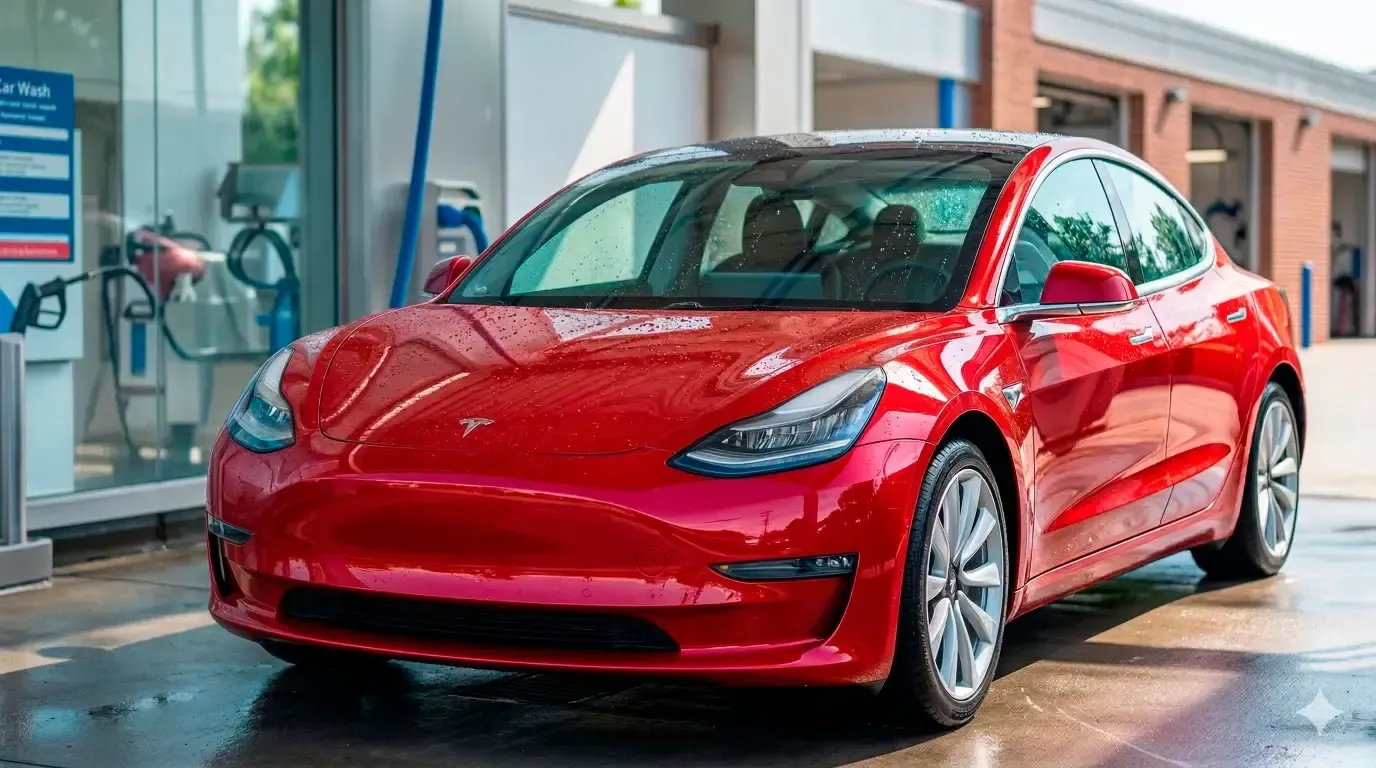

Why Your Car Still Looks Dirty After a Car Wash (And What’s Actually Causing It)
You pull out of the wash expecting that satisfying, freshly cleaned look. Then you park, sunlight hits the hood, and suddenly the car still looks dirty. Maybe there are streaks across the paint. Maybe the windshield has a cloudy film. Maybe the roof and hood are dotted with spots that seem to appear out of nowhere.
It is a frustrating experience because it makes you feel like the wash did not work. But in many cases, that is not the real issue. When a car still looks dirty after a car wash, what you are often seeing is not the same kind of dirt that came in with the vehicle. It is usually leftover residue, minerals, road film, pollen, or drying marks that become visible only after the water is gone.
That distinction matters. Once you know what kind of residue you are looking at, it becomes much easier to understand what happened and what to do next. Instead of assuming the wash failed, you can start diagnosing the problem more accurately.
The Frustration: When a “Clean” Car Still Looks Dirty
This happens in a very specific kind of moment. The car looks fine at first. It is wet, glossy, and visibly better than it was before. Then it dries. Or the light shifts. Or you get home and look at it from a different angle. That is when the haze, spots, or streaks show up.
For a family driver trying to keep the car presentable between school drop-offs, errands, commutes, and weekends out, that is annoying for a simple reason: the whole point of the wash was to make the vehicle look cleaner without turning it into a project. When the finish still looks messy, it feels like you paid for the wash but did not get the result.
The important thing to understand is that this is a common appearance issue. It does not always mean the wash was poor, and it does not automatically mean something is wrong with your paint. Often, the problem is that certain types of residue are harder to remove than loose dirt, or they become easier to see only after the water evaporates.
So before blaming the wash, it helps to ask a better question: what, exactly, are you seeing?
The First Question to Ask: What Exactly Are You Seeing?
Not every “still dirty” car has the same problem. The appearance can be similar at a glance, but the cause may be completely different depending on whether you are dealing with streaks, mineral spots, windshield film, or environmental debris.
Streaks or haze on the paint
If the paint looks smeary, uneven, or lightly cloudy in direct light, you may be dealing with leftover film rather than ordinary dirt. This can show up more clearly on darker colors, where even a faint residue becomes obvious under sunlight.
Haze often creates that disappointing effect where the car is technically cleaner, but it still does not look crisp. Instead of sharp reflections, the finish looks dull or slightly blurred. Drivers sometimes describe this as the car looking “washed, but not really clean.”
Spots that appear after the car dries
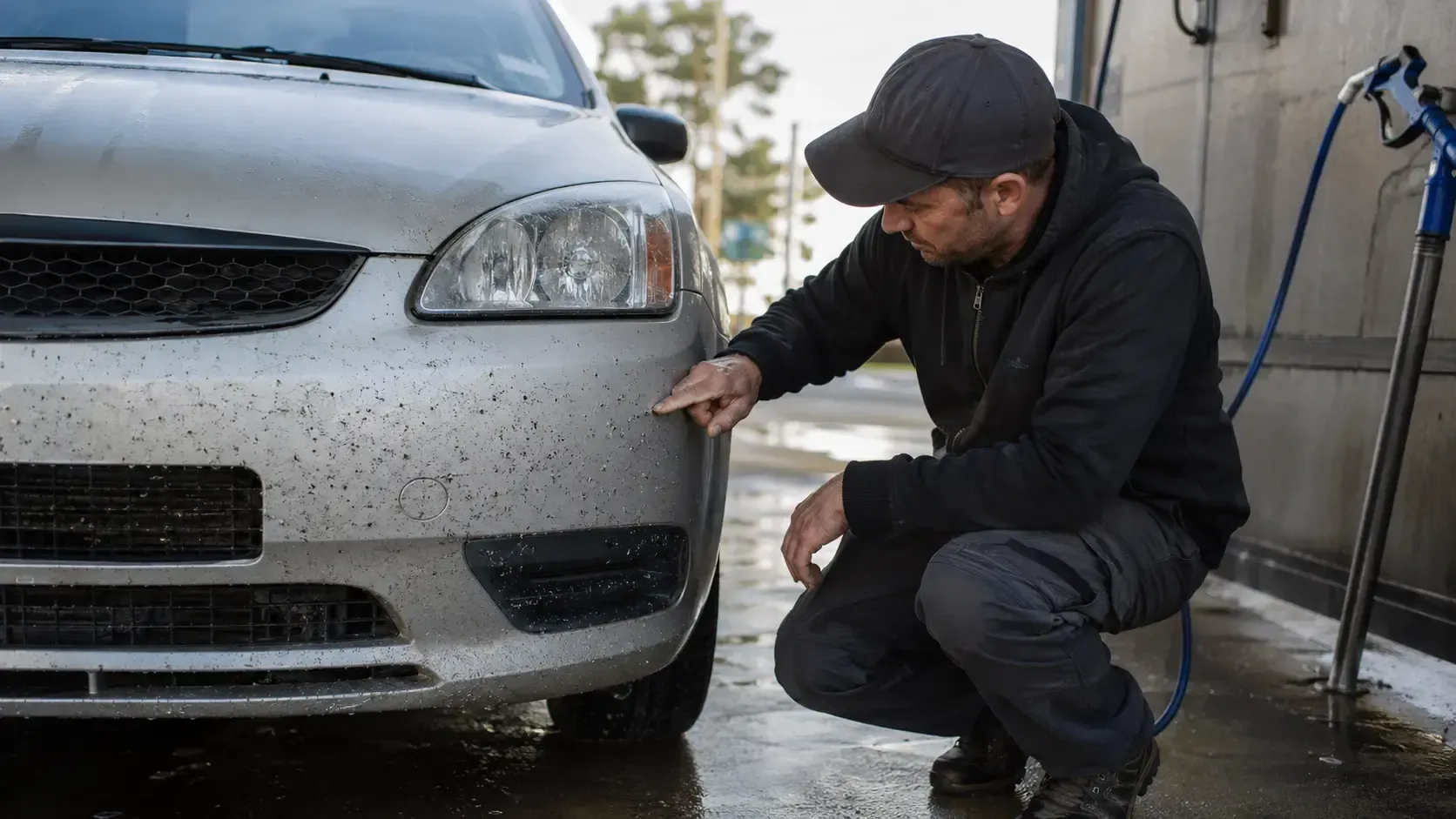
If the car looks fine while wet and then develops dots or rings once it dries, that usually points to water-related residue. The surface may feel clean overall, but visually it looks peppered with marks.
This is especially frustrating because it can make the car seem like it got dirty again within minutes. In reality, the marks were often left behind as the water dried, not picked up afterward.
Film or glare on the windshield
When the windshield looks cloudy after a wash, people often assume the glass was not cleaned properly. But windshield film can come from more than one source. Sometimes it is road residue that was not fully broken down. Sometimes it is leftover moisture or wipe marks. Sometimes it only becomes noticeable when sunlight hits the glass at the wrong angle.
This type of problem stands out because it affects more than appearance. Even a light film on the windshield can make the vehicle feel less clean overall.
Dust or pollen that seems to return immediately
During heavy pollen season or on dry days with a lot of airborne dust, a car can look freshly washed and then start collecting fine particles almost immediately. If the residue looks soft, powdery, or yellow-green, that is a different issue from water spots or oily film.
This can make drivers think the wash “missed” something, when in reality the car may have been clean leaving the tunnel and then started catching fallout right away.
The more clearly you can identify the symptom, the easier it becomes to connect it to the actual cause.
The Most Common Causes Behind Post-Wash Residue
When a car still looks dirty after a car wash, the cause is often one of a few repeat offenders. The tricky part is that they do not all behave the same way. Some sit on top of the surface. Some dry into place. Some are visible only in certain light.
Mineral deposits from water drying on the surface
Water spots are one of the most common reasons a freshly washed car still looks dirty. These marks often form when minerals remain behind after water evaporates. Even if the car was washed correctly, those remaining traces can leave visible spotting on the hood, roof, glass, or trunk.
That is why a vehicle may come out looking bright and then look worse 15 minutes later. Once the moisture is gone, the spots become much more obvious. On glass, this can look like a light peppering. On paint, it may appear as small rings or pale dots.
Not every spot is severe, and not every spot means long-term damage. But visually, even mild spotting can ruin the look of a clean finish.
Pollen and fine dust that cling to wet paint
In places where pollen hits hard for part of the year, this becomes a real issue. A car can be washed and then quickly start collecting a fine layer of airborne particles. Wet or recently dried surfaces can make that effect more noticeable.
If the residue looks soft, dusty, or lightly coated rather than dotted or smeared, pollen or fine environmental fallout may be the reason. This is one reason cars can look clean in the tunnel and less clean by the time they are parked at home.
Drivers often notice this most during seasonal transitions, when they wash the car more often but still feel like the clean look does not last.
Oils or road film that need stronger cleaning
Some residue is not plain dirt. A vehicle picks up road grime, traffic film, oils, and other contaminants that can leave behind a greasy or muted look. These materials may not always come off as easily as dust and mud.
When this kind of residue remains, the car can look streaky or dull rather than obviously dirty. On glass, it can create a film. On paint, it can interfere with that clear, just-washed finish drivers expect.
This is where people sometimes assume the equipment failed. But the more accurate explanation may be that the surface had a type of buildup that needs the right combination of wash chemistry, surface protection, and drying performance to look better.
Towels or wipes that leave streaks
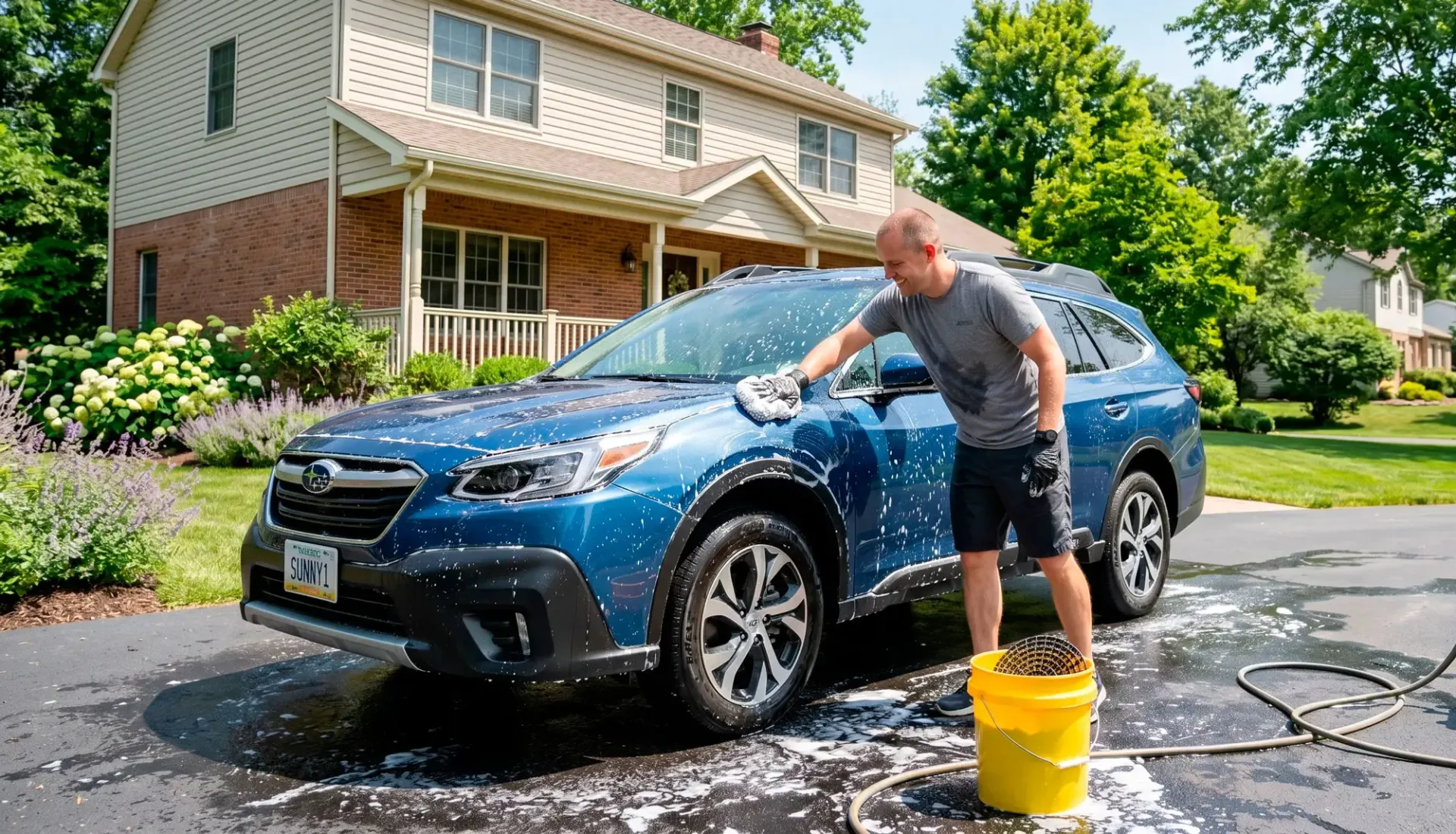
A lot of frustration starts after the wash, not during it. Maybe you notice a spot and try to fix it with a towel from the trunk. Maybe you use a quick wipe on the windshield. Maybe the car is partly dry and you try to help it along.
That can make the finish look worse, especially if the towel is not clean or if the surface is already drying unevenly. Instead of removing residue, the wipe can spread it. What started as a few marks becomes a larger hazy patch or a series of streaks that are even more visible in sunlight.
This is why “fixing” the problem on the spot sometimes creates a second problem.
Why Sunlight Makes the Problem Look Worse
Sunlight does not necessarily create the residue. It exposes it.
A car’s finish reflects light, and when that reflection is strong, even small imperfections become easier to see. A little bit of spotting that barely registers in the shade can suddenly look obvious in direct afternoon sun. The same is true for faint streaks on darker paint or windshield haze seen from the driver’s seat.
This is why so many people leave the wash feeling satisfied, then get disappointed later. The surface looked good while it was wet or while the car was under covered lighting. Once natural light hits it, the leftover marks reveal themselves.
That does not mean the condition became worse in that moment. It means visibility changed.
For drivers, this is actually helpful. Sunlight can serve as a kind of diagnostic tool. It helps you distinguish between a car that is genuinely still dirty and a car that is mostly clean but has specific residue problems that need a different approach.
A Common Misconception: “The Wash Didn’t Work”
When a car wash did not deliver the finish you hoped for, it is natural to assume the wash failed. But that conclusion can be too simple.
A modern wash usually removes the bulk of ordinary dirt and grime. If your vehicle came in with dust, road splash, loose debris, or general buildup, the wash likely did a lot of the heavy lifting. What may remain is the stuff that behaves differently: minerals that dry into visible spots, film that hangs on to glass or paint, or environmental particles that settle quickly afterward.
That is an important distinction because it changes your next step. If the issue is leftover residue rather than full-surface dirt, repeating the exact same process may not solve it. You may need to focus more on surface protection, drying behavior, or identifying what kind of contamination is left.
In other words, a car can be much cleaner than before and still not look fully clean. That is the gap many drivers are reacting to.
The better mindset is not “the wash did nothing.” It is “the wash improved the car, but something specific is still showing.”
Small Prep or Post-Wash Steps That Make a Difference
Once you understand that the problem is often residue, not total wash failure, a few simple habits start to matter more.
Pre-rinse heavily dusty or pollen-covered cars
If a vehicle is carrying a thick layer of pollen, fine dust, or loose surface debris, a pre-rinse can help reduce the amount of material that sticks, smears, or repositions during the wash process. This is especially relevant when the surface is visibly coated before the wash begins.
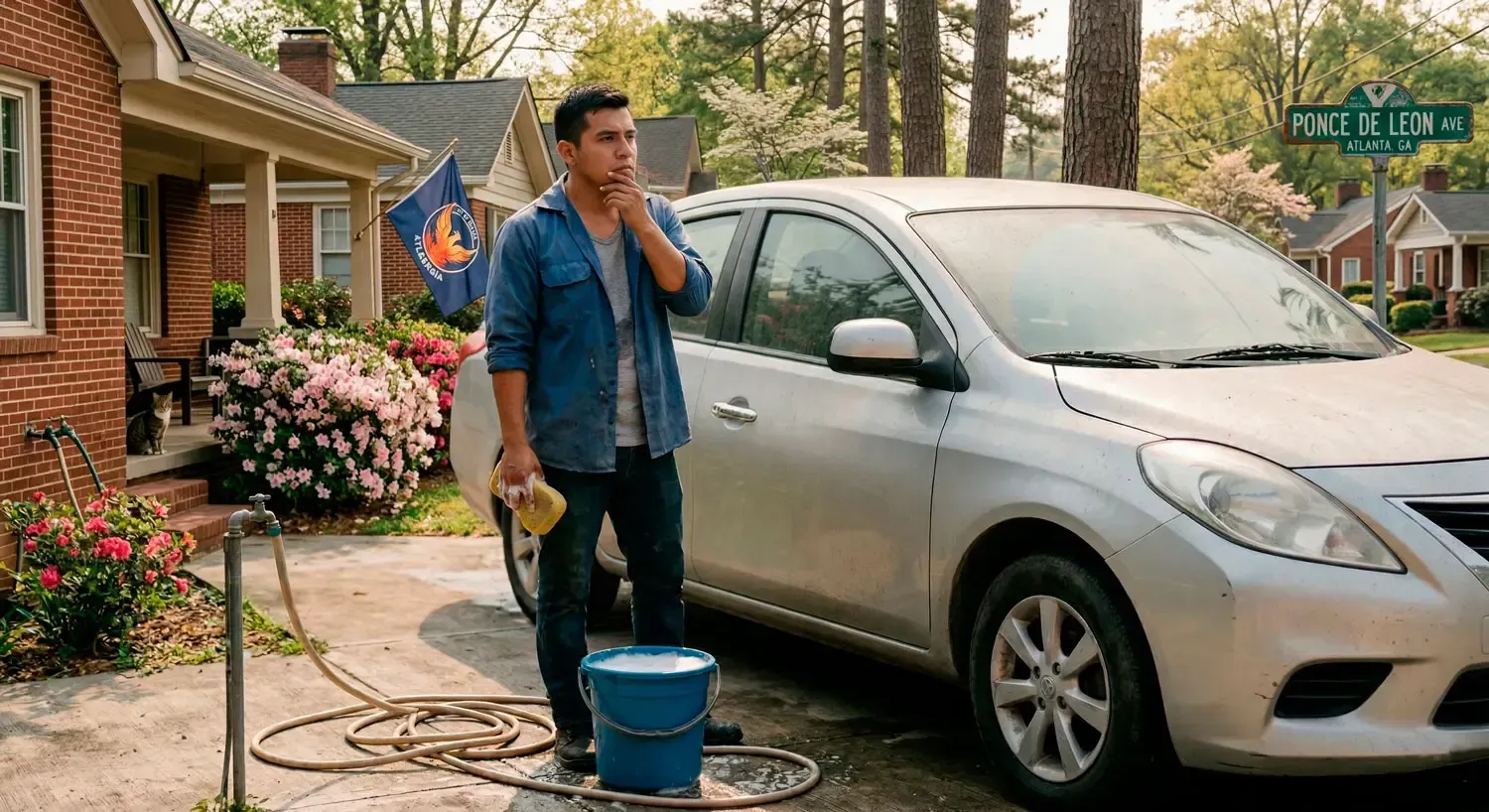
For drivers who know their car has been sitting outside through Atlanta pollen or a dry windy stretch, it helps to think of that layer as something that may need a little extra help before the final appearance improves.
Let protective coatings or sealants do the work
Some wash packages are designed to do more than clean. Protection-focused add-ons may help water move off the surface more effectively and can support a cleaner-looking finish after drying. That does not mean perfection every time, and it does not mean they solve every type of residue. But when drivers repeatedly deal with spotting, sticking dust, or a finish that seems to lose its clean look too fast, surface protection can become more relevant.
This is especially true for people who wash regularly and want the car to stay presentable between visits rather than chase a one-time perfect shine.
Avoid wiping the car when it’s partially dry
This is one of the simplest ways to avoid making the problem worse. If the car has partly dried and you see a few marks, rubbing them with a random towel can spread the residue or create new streaking.
It is usually better to identify the issue first than to react quickly and smear it across a larger area. A lot of “my wash left streaks” complaints are really “I saw a few marks and tried to wipe them away mid-dry.”
That does not mean you should never touch the surface. It means timing and materials matter more than people assume.
How to Tell the Difference Between Dirt, Film, and Water Spots
To figure out what is happening, it helps to stop using the word dirty as a catch-all. Different residues leave different clues.
If you see small, distinct dots or ring-like marks after the water evaporates, you are probably dealing with water spots. These usually show up most clearly on horizontal surfaces like the hood, roof, and trunk, but they can also appear on glass.
If the surface looks greasy, smeary, or slightly cloudy, especially under direct light, that points more toward film. Windshield haze often falls into this category, as does a dull, wiped-looking finish on paint.
If the residue looks soft, powdery, or like it reappeared immediately after the wash, it may be environmental fallout such as pollen or fine dust. This tends to create a “why does it already look dirty again?” reaction.
You can also pay attention to how the problem behaves. Spots tend to show up after drying. Film tends to distort clarity and reflection. Dust tends to settle and soften the finish rather than create defined marks.
That kind of simple diagnosis is useful because it keeps you from treating every appearance issue the same way.
When It Might Be Time for a Different Wash Package
Not every vehicle needs the same wash every time. If you usually choose the most basic option and are consistently frustrated by spotting, streaking, or a finish that loses its clean look too quickly, it may be worth trying a wash package that includes more surface protection.
This is not about upselling for the sake of it. It is about matching the wash to the condition of the car and the result you want. A driver whose vehicle lives outside, collects heavy pollen, or sees frequent road grime may notice a difference when the wash includes features designed to support a more polished finish and better water behavior on the surface.
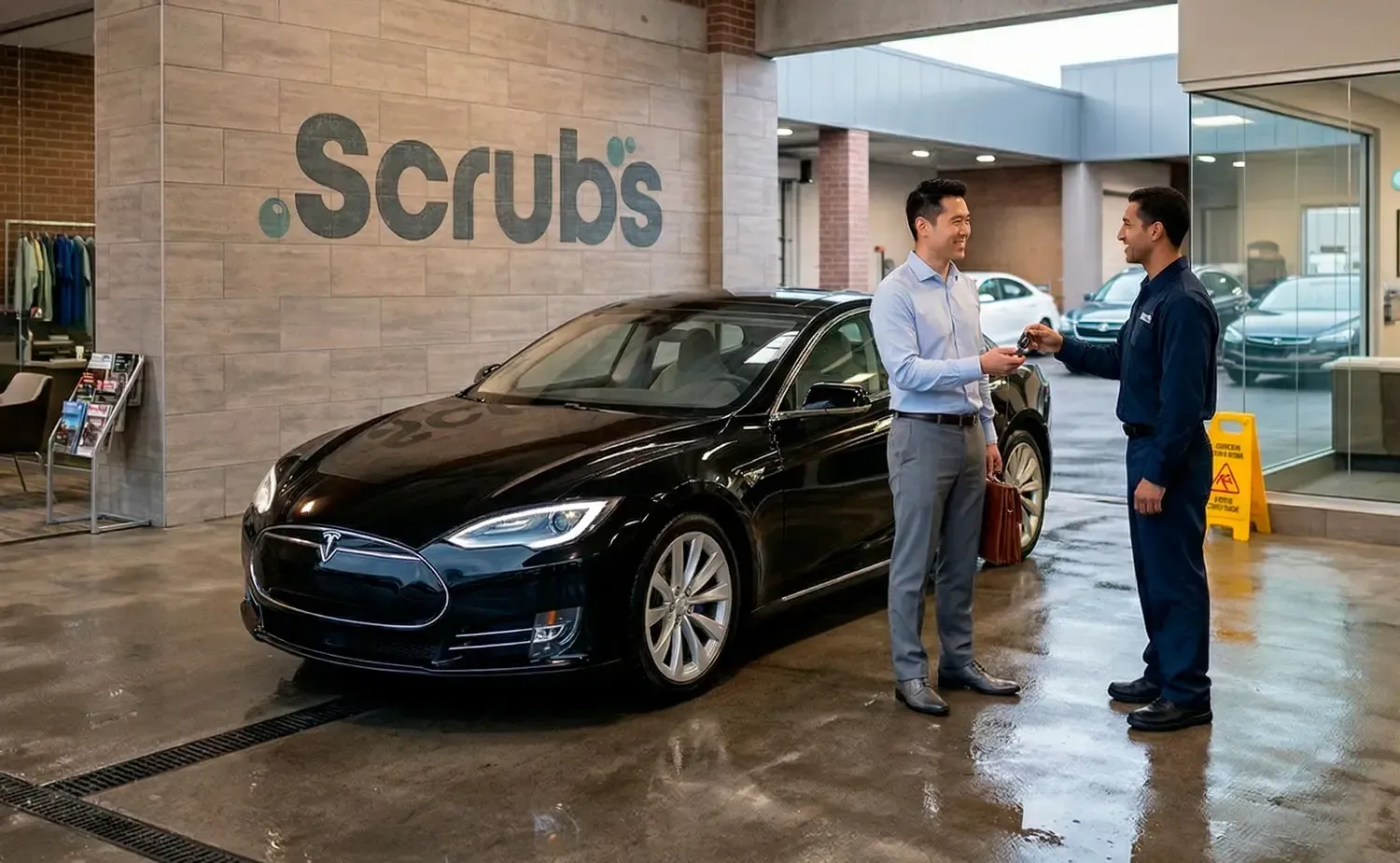
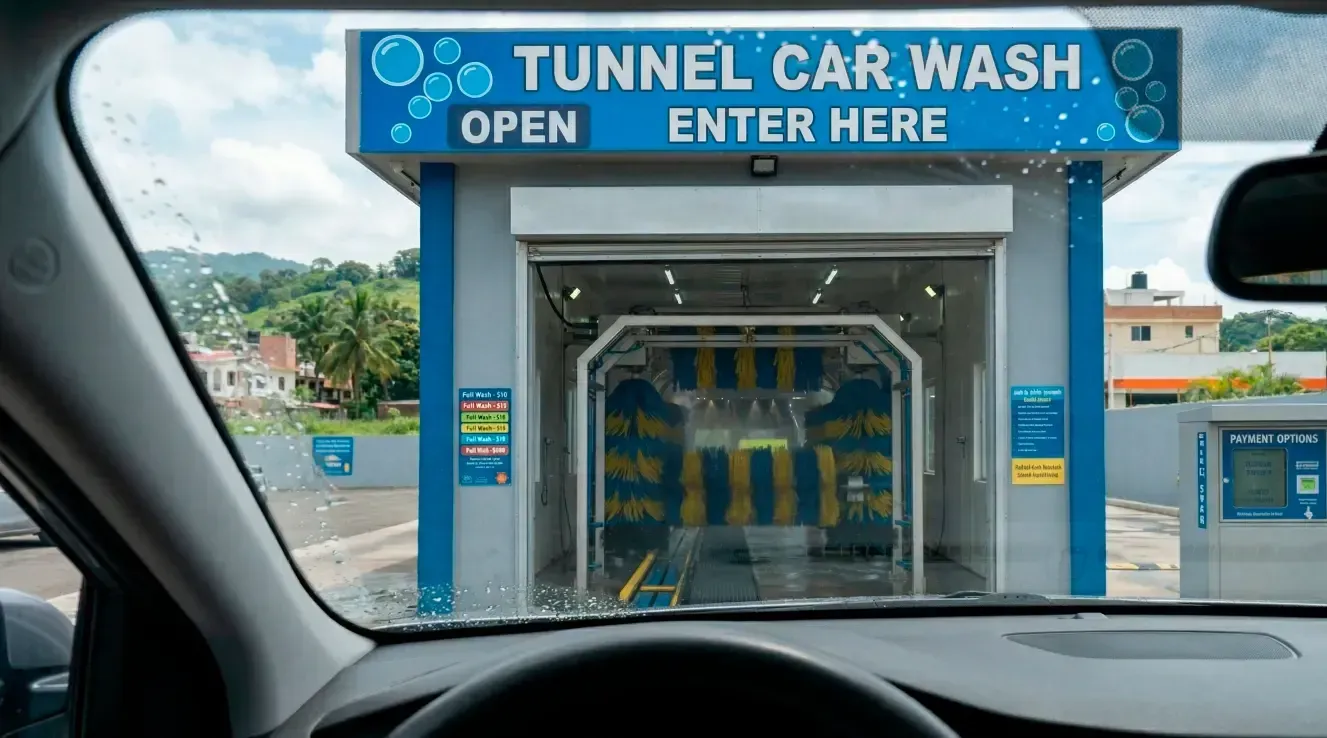
If you’re noticing streaks or spots after washing your car, the solution may be as simple as using a wash package designed to help water sheet off the surface. At Scrubs Express Carwash, drivers can choose from several wash options—or join the Scrub Club for unlimited washes whenever their vehicle needs it. Drive on in and see the difference a fresh wash can make.
That message works best when the reader is already frustrated by a repeated pattern. The key is not promising a miracle. It is suggesting a more suitable option when the current one is not delivering the look they want.
What to Do Next Time You Notice Streaks After a Wash
The next time your car still looks dirty after a car wash, do not jump straight to frustration. Run through a quick check first.
Look at the vehicle both in the shade and in direct sunlight. This helps you distinguish between overall dirt and light-sensitive residue.
Check the windshield separately from the paint. Glass problems and paint problems may look similar from a distance, but they often come from different causes.
Notice whether the marks are dots, streaks, haze, or dust. That tells you far more than simply deciding the car looks “dirty.”
Pay attention to timing. Did the issue show up only after the car dried? Did it appear after you wiped the surface? Did it seem to return quickly while parked outside?
If the problem repeats across multiple visits, consider whether your vehicle might benefit from a different wash package, especially if you are trying to maintain a cleaner-looking finish between frequent drives and outdoor parking.
This kind of checklist is simple, but it changes the experience. Instead of feeling like the wash failed for mysterious reasons, you start seeing patterns.
The Goal Isn’t Just Clean—It’s Protection
A lot of drivers think in terms of one wash at a time. Did this wash work or not? Did it leave the car clean or not? But real-world car care is usually more about consistency than perfection.
Your vehicle picks up dust, traffic film, pollen, water, and all the other little things that come with daily life. A single wash can improve the surface dramatically, but the finish you see afterward also depends on what was already on the car, what dries on it, how the surface behaves, and what hits it next.
That is why the goal is not only to remove visible dirt. It is also to support a finish that looks cleaner, sheds residue better, and stays presentable longer between washes.
For a family driver, that matters. You are not usually chasing showroom conditions. You are trying to avoid that annoying moment where the car should look fresh, but instead looks streaky, hazy, or spotted the minute sunlight hits it.
If that keeps happening, the answer is often not to give up on the wash. It is to better understand what is left behind, adjust your expectations, and use the right level of wash and protection for the way your car is actually used.
FAQ
Why does my car still look dirty after a car wash?
A car can still look dirty after a wash because what remains may not be loose dirt. You may be seeing water spots, pollen, road film, or drying streaks that become more obvious once the car is dry and in direct light.
Why do I see streaks on my car after washing it?
Streaks often come from leftover residue or from wiping the surface while it is partially dry. They are especially visible in sunlight and on darker paint colors.
What causes water spots after a car wash?
Water spots often form when minerals remain behind after water dries on the surface. These marks can show up on paint, glass, and other exterior surfaces once the moisture evaporates.
Why does my windshield look cloudy after a wash?
A cloudy windshield after a wash can be caused by leftover film, wipe marks, or residue that becomes more noticeable in sunlight. It may not mean the glass was never cleaned; it may mean some film is still present.
Can pollen make a clean car look dirty again quickly?
Yes. Pollen can settle quickly on a freshly washed car, especially during heavy seasonal periods. That can make a clean vehicle look dusty again very soon after a wash.
How can I prevent spots and streaks after washing my car?
Start by identifying what kind of residue you are seeing. Avoid wiping a partially dry surface with random towels, inspect the car in sunlight and shade, and consider whether a wash package with added surface protection makes sense for your vehicle and driving conditions.
If you’re noticing streaks or spots after washing your car, the solution may be as simple as using a wash package designed to help water sheet off the surface. At Scrubs Express Carwash, drivers can choose from several wash options—or join the Scrub Club for unlimited washes whenever their vehicle needs it. Drive on in and see the difference a fresh wash can make.