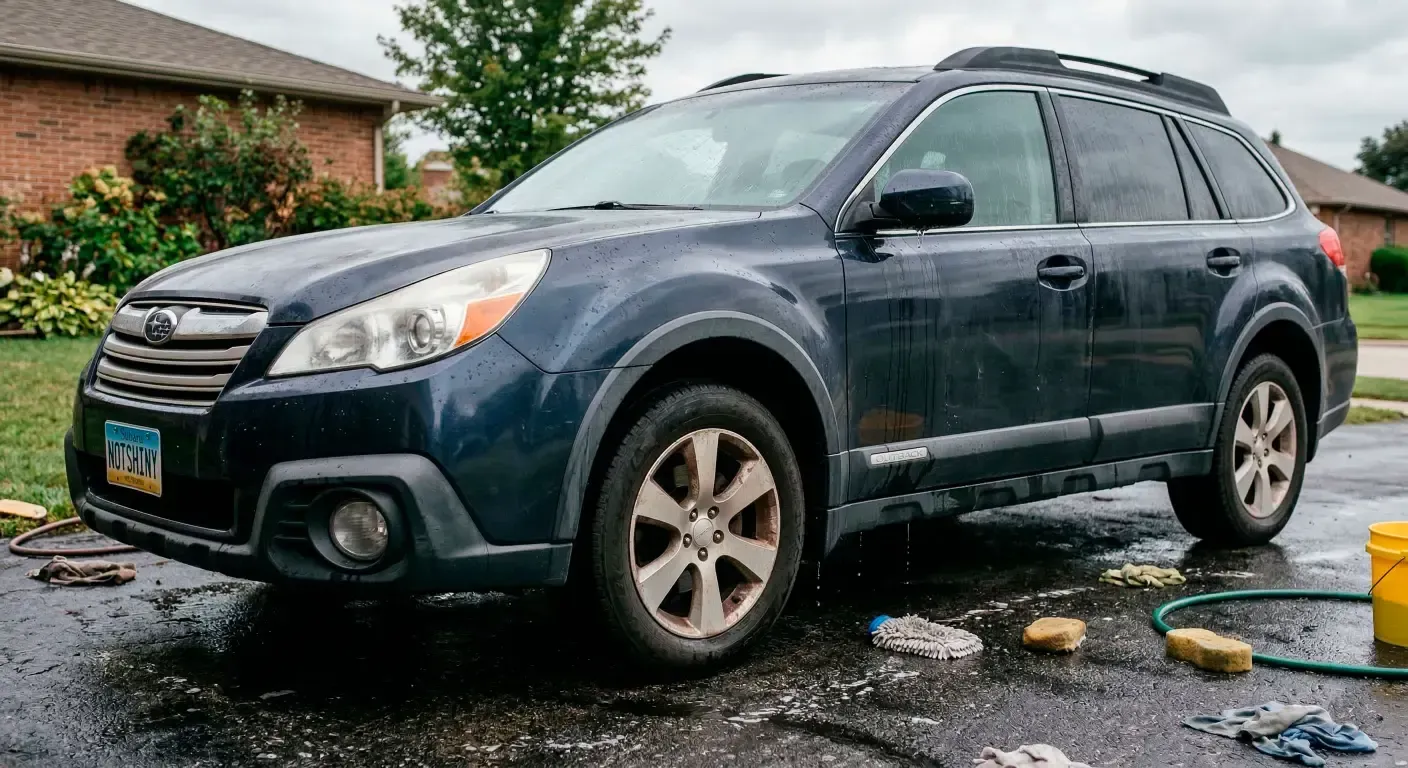

Bugs on the Bumper: What Washes Can and Can’t Remove
If you spend long hours on the road, bug buildup is not just a cosmetic annoyance. It becomes part of the weekly routine. Many drivers finish a route, run the car through a wash, and expect the front bumper and headlights to come out clean enough to move on.
Then the car dries and the bug marks are still there.
That is frustrating, but it is also normal. When you are trying to remove bugs after car wash residue stays behind, the problem is usually not that the wash did nothing. It is that dried bug splatter often needs a softer, more deliberate cleanup order than a standard wash can provide on its own. The key is to loosen first, then touch gently, instead of treating bug residue like ordinary dust.
Why a normal wash often leaves bugs behind
A regular wash is good at lifting loose dirt, road film, and general grime. Bug residue is different. Once it dries onto the front bumper, grille area, mirrors, or headlights, it can cling more stubbornly than the rest of the dirt on the car.
That is why drivers often come out of a tunnel wash with a cleaner car overall but still see small bug patches stuck to the front end. The wash helped, but it did not fully soften or release everything.
This is also why scrubbing harder right away is usually not the smartest next move.
Start with the safest quick check before you scrub
Before you touch the residue, take a close look at what is actually left behind. Is it just light spotting, or does it feel baked on? Is it mostly on painted surfaces, plastic trim, or the headlights? Is it dry and crusted, or partially loosened already?
That quick check matters because the safest approach starts with knowing what kind of surface you are dealing with and how stuck the residue really is. If the bugs are still dry and gripping the finish, more force is usually not the answer yet.
A practical bug-removal checklist for daily drivers
If a normal wash did not fully solve the problem, the next step is not panic or overkill. It is a more careful routine.
Rinse and soften first
Start by getting the front end wet again. The goal is not just to make it look damp. The goal is to begin softening what is left behind so you are not dragging dry residue across the surface.
Even a short extra rinse can help you tell the difference between what is already ready to release and what still needs time.
Let the front end soak instead of attacking it dry
This is the step many drivers skip because they want the problem gone immediately. But soaking matters. A few minutes of contact with water or a safe surface-appropriate bug-loosening step can do more than repeated aggressive wiping.
If bug buildup is heavy after a highway route, patience usually works better than speed at this stage.
Use gentle contact only after residue loosens
Once the residue has softened, you can move to gentle contact. The important part is the order. Soften first, then use light pressure only as needed.
That helps reduce the urge to grind dried material into the finish. If it still feels stuck right away, that is usually a sign to give it more softening time, not more force.
Pay extra attention to headlights and edges
Headlights, bumper edges, and trim lines tend to hold onto residue in ways that stand out after the rest of the car looks clean. These spots deserve extra patience, not harsher treatment.
If the residue is affecting light clarity or visibility, treat that more seriously than a small cosmetic mark on painted trim.
What a tunnel wash can do, and what it usually cannot
A tunnel wash can still be useful. It removes a lot of the loose buildup and may make bug cleanup easier overall. But it is not a guaranteed bug-removal tool for baked-on residue.
That is especially true for drivers who spend a lot of time on the highway or finish routes with the bugs already dried onto warm surfaces. In those cases, the wash is often a first step, not the final step.
Thinking about it that way helps set better expectations. A wash can save time. It just may not finish the whole job by itself.
Where drivers make bug residue worse
The biggest mistake is dry scrubbing. If the residue is still stuck and gritty, rubbing at it right away can be rougher on the surface than drivers realize.
Another mistake is waiting too long and letting each new layer bake onto the last one. Bug buildup usually gets harder to remove the longer it sits.
Drivers also make the problem worse when they assume every surface should be treated the same way. Painted areas, trim, and headlight lenses do not always respond well to the same level of force or the same kind of cleaner.
When to switch from quick wash thinking to hand-detail thinking
Not every bug mark needs a full detail session. But there is a point where quick-wash logic stops being enough.
If the residue is still clearly visible after washing, softening, and a gentle second pass, it may be time to slow down and clean those areas by hand more carefully instead of repeating the same quick step harder.
That does not mean turning a daily driver into a show car. It means recognizing when the fast solution has already done what it can do.
What to verify if residue still will not come off
If residue keeps hanging on, look more closely at where it is and what it is affecting. On painted surfaces, the issue may still be baked-on bug remains that need more patient removal. On headlights, you should be more careful about surface treatment, especially if clarity or visibility seems affected.
This is also the point where it helps to avoid guessing with harsh methods. If you are not sure whether a cleaner or technique is safe for that surface, slow down before trying something more aggressive.
A practical next step for keeping bug buildup easier to manage
For high-mileage drivers, the smartest routine is often a simple one: do not wait too long, use the wash as an early cleanup step, and follow up gently if bug residue is still holding on.
If highway driving is part of your normal week, it also helps to think about how easy your vehicle is to live with and maintain over time. Browse the inventory with real route use in mind, and if you are comparing daily-driver options, reach out with the kind of driving your vehicle needs to handle.
The goal is not perfection after every wash. It is keeping buildup from turning into a bigger cleanup problem than it needs to be.
FAQ Content
Q: Why does bug residue stay on the bumper after a car wash?
A: Because dried bug splatter can cling more stubbornly than ordinary road grime, and a standard wash may not fully soften or release it in one pass.
Q: Should I scrub bugs before going through a wash?
A: Usually it is better to avoid aggressive dry scrubbing. Start by softening the residue first so you are not grinding it into the surface.
Q: What is the safest way to loosen bug splatter?
A: Re-wet the area, let the residue soften, and move to gentle contact only after it begins to loosen.
Q: Why do headlights still look dirty after a wash?
A: Bug residue often sticks around edges and lens surfaces that stand out once the rest of the car is clean, so headlights may need extra careful attention.
Q: When should I stop trying to wipe it off dry?
A: Stop as soon as the residue feels stuck or gritty. That usually means it needs more softening, not more pressure.
Q: What helps keep bug buildup easier to remove next time?
A: Cleaning it sooner, not letting it bake on too long, and treating the wash as an early step instead of the only step usually helps.
If bug cleanup is part of your normal driving life, keep real route use in mind when you compare daily-driver options.
Browse available vehicles, and if you want help narrowing down a practical fit for heavy highway use, contact the dealership with the kind of routine your vehicle needs to handle.