
How to Clean and Protect Black Paint Without Chasing Perfection
Black paint can make a freshly washed car look incredible for about five minutes—and then suddenly every speck of dust, every water mark, and every faint swirl seems visible again.
If you own a black car and actually care how it looks, that feeling is familiar. You wash it, step back, and for a brief moment it looks deep, glossy, and sharp. Then the sun shifts, the dust settles, or the parking-lot lights catch the surface just right, and now all you can see is haze, spotting, or fine marks you wish were not there.
That is why black car wash tips tend to attract a certain kind of reader. Not someone who just wants the car “not filthy,” but someone who notices the finish. Someone who knows black paint can look better than almost any other color—and also worse, faster, when maintenance gets sloppy or expectations get unrealistic.
The good news is that black paint does not need a perfectionist routine to look good. It needs a sustainable one. If your goal is fewer visible swirls, less frustration, and a finish you can actually maintain in the real world, the answer is not chasing flawless. It is building habits that keep the paint looking better, more often, without turning every wash into a correction project.
Why Black Paint Feels So Hard to Keep Looking Good
The problem with black paint is not just that it gets dirty. It is that it shows everything.
Light dust that would disappear visually on silver or gray can look obvious on black by the end of the day. A few water spots after a rinse can suddenly dominate the whole panel. Fine marring that might go unnoticed on lighter paint can show up in sunlight or under gas-station lighting like a personal insult.
That visibility changes the ownership experience.
Black paint can create a kind of emotional fatigue for people who care about cars. You are not imagining it. You are not being too picky. You are just driving a color that turns minor issues into visible ones. A clean black car looks dramatic. A slightly neglected one can look tired fast.
That is what makes black paint so satisfying and so annoying at the same time. It rewards attention, but it also exposes every rushed decision. A careless dry-down, a dusty wipe, a delayed wash, or a too-aggressive cleanup all seem to show up more clearly than they would on another color.
That can push owners into one of two bad patterns. They either become obsessive and frustrated, or they give up and accept a level of finish decline that they hate every time they walk up to the car.
Neither is necessary.
The First Reset: Stop Treating “Perfect” as the Goal
The first mindset shift is the most important one: stop using flawless as your everyday standard.
A lot of black-car frustration comes from treating “looks incredible under direct sun at three feet away” as the only acceptable outcome. That is not a maintenance goal. That is a show-car goal, and most daily-driven black cars are not going to hold that look between normal driving, parking, weather, and dust.
That does not mean standards do not matter. It means the standard has to fit the life of the car.
There is a difference between daily-driver clean, enthusiast-clean, and perfection-chasing.
Daily-driver clean means the car looks well-kept from normal distance, carries good gloss, and is not covered in grime, spotting, or obvious neglect.
Enthusiast-clean means the owner notices the smaller things and manages them well. The finish looks sharper, the paint feels more intentional, and the car presents like someone actually cares about it.
Perfection-chasing is different. That is when every speck feels like failure, every faint mark starts a spiral, and the owner spends more time being disappointed than enjoying the car.
Black paint punishes that mindset.
The better point of view is this: black paint rewards consistency more than obsession. It usually looks better long-term when it gets regular, calm maintenance than when it alternates between neglect and heroic correction.
What Actually Causes Black Paint to Look Bad So Fast
Dust, pollen, and water spotting
The first thing black paint reveals is contamination.
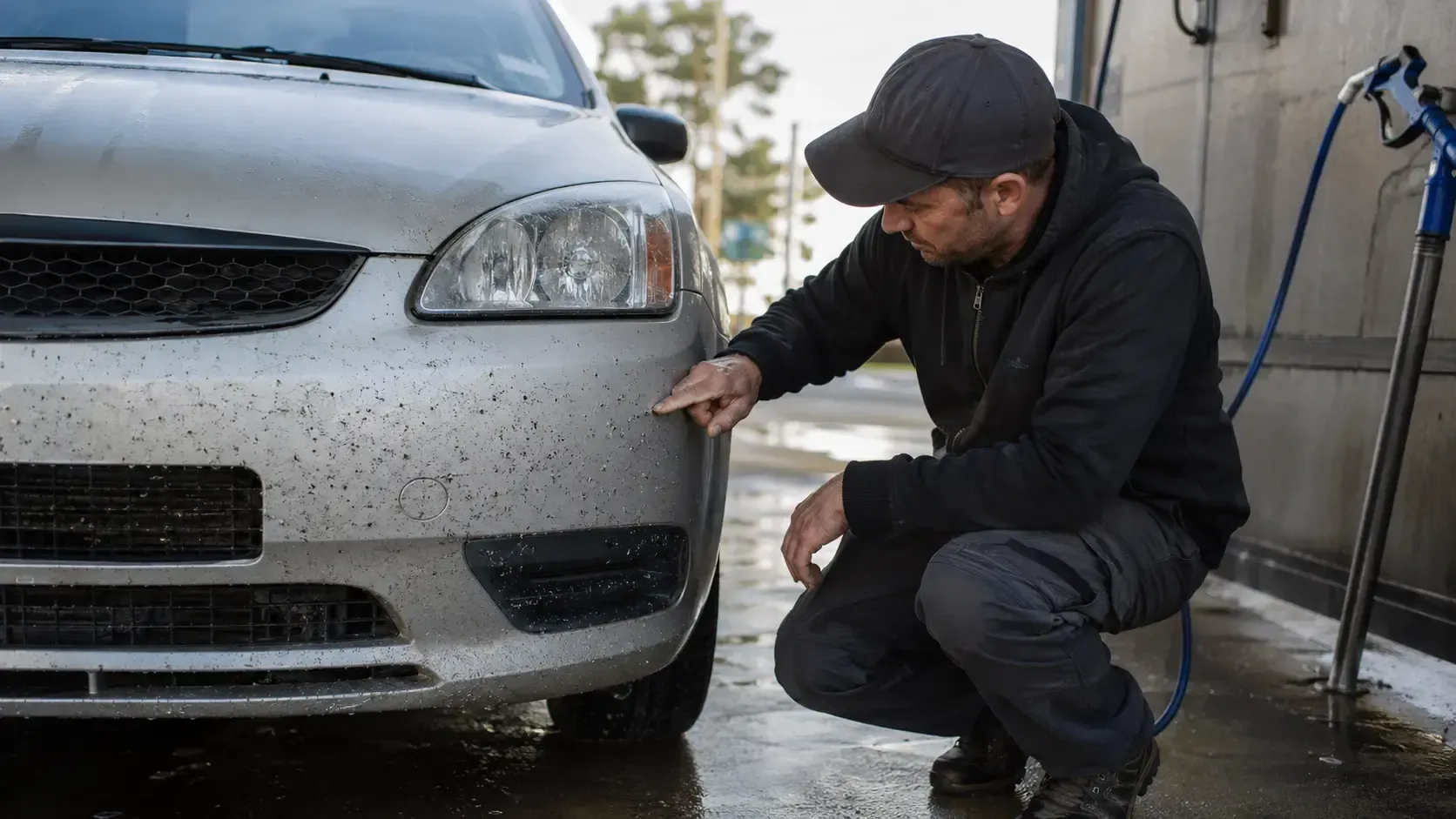
Dust settles quickly and becomes visible almost immediately. Pollen can coat dark paint so evenly that a car looks older by the afternoon than it did in the morning. Water spots stand out more because the contrast is stronger. Even a clean car can lose that “just washed” look quickly when the surface starts collecting everyday fallout.
Many owners find that black paint makes dust, spotting, and fine contamination more noticeable. That is why it can feel like the car never stays clean, even when you are washing more often than most people.
This is also why timing matters. A black car parked outside for a day or two may not be “dirty” in a dramatic sense, but it can still look visually tired much faster than other colors.
Swirls, haze, and light marring
Then there is the finish itself.
Swirls, haze, and light marring are frustrating on black because they change how the paint reflects light. Instead of a deep, clean gloss, you get that slightly cloudy or spiderwebbed look that only seems to show up when the sun is strongest or when you are already in a bad mood.
These issues are not always the result of one catastrophic mistake. Sometimes they build up slowly through ordinary habits: rushed drying, wiping dust when the surface is not clean enough, letting grime sit too long, or repeating a wash routine that is more convenient than gentle.
On black paint, visibility is the multiplier. A minor flaw becomes a noticeable one because the finish has so much contrast and reflective drama to begin with.
Delayed cleanup
One of the most common causes of black paint frustration is simply waiting too long between washes.
A more consistent wash routine often helps avoid the kind of buildup that requires more aggressive cleanup later. When contamination sits longer, the next wash often needs more contact, more wiping, more drying effort, and more chances to create visible marks.
That is why infrequent washing can backfire for black paint. It may seem like you are reducing wear by touching the car less often, but if every wash becomes a heavier cleanup, the paint can still lose over time.
The goal is not endless washing. It is avoiding the kind of neglect that turns a simple maintenance wash into a bigger event.
The Best Way to Wash a Black Car When You Want Realistic Results
The best way to wash a black car is not the most dramatic one. It is the most repeatable one.
That means choosing a wash approach you can sustain regularly, with enough care to reduce avoidable friction and enough realism to keep it from becoming a burden.
For black paint, gentle and consistent usually beats occasional overcorrection.
If the car stays relatively clean, you do not need every wash to feel like a rescue mission. That matters because calmer washes are usually easier on the finish than rushed, high-contact sessions on a heavily dirty car.
In practical terms, the best black car wash tips are often the least glamorous:
- wash before the paint gets noticeably grimy
- avoid treating dust alone as an emergency unless the car truly needs attention
- dry with intention instead of rushing the last step
- keep your routine simple enough that you will actually repeat it
This is where a lot of enthusiast advice goes wrong. It assumes every owner wants a full ritual every weekend. Most do not. Most want a black car that looks sharp enough often enough without losing half their Saturday every time pollen hits.
That is why frequency matters more than drama.
A realistic wash routine might not produce perfection under inspection lighting, but it can absolutely produce a black car that looks rich, clean, and well-kept most of the time. That is a much better outcome than waiting too long, then attacking the paint with too much pressure and too much frustration.
Should You Use a Tunnel Wash on Black Paint?
This is the question black-car owners ask with a slightly guilty tone, because they already know the “enthusiast” answer they are supposed to give.
The honest answer is more useful: it depends on how particular you are, how often you wash, and what kind of finish standard you are actually trying to maintain.
For black-paint owners, the decision often comes down to balancing convenience with how particular they are about finish appearance.
If you are extremely sensitive to fine marks, direct-sun swirls, or subtle haze, you may have a lower tolerance for anything that feels less controlled. If you are trying to preserve a highly corrected finish and inspect the paint constantly, convenience-based washing may not align with your standards.
But that is not the same as saying tunnel washing is automatically the wrong choice for every black car owner.
Some people need convenience to stay consistent. And on black paint, consistency matters. A car that gets washed regularly and kept from heavy buildup may still look better in daily life than one that waits too long for the “perfect” wash and spends most of its time coated in dust, pollen, and road grime.
That is the tradeoff.
The real question is not “Is a tunnel wash pure enough for enthusiasts?” The real question is “What finish standard am I trying to maintain, and what routine can I actually sustain?”
If your standards are extremely high, your answer may be one thing. If your goal is a black daily driver that stays cleaner and glossier with manageable effort, your answer may be different.
What matters is being honest about your tolerance, not pretending there is only one serious answer.
Protection Matters More Than Many Owners Realize
What protection changes in everyday life
Protection matters because it changes maintenance, not because it creates magic.
When black paint has some form of protection on it, many owners find that cleanup feels easier. The car may rinse and dry more cleanly.
Grime may not cling as stubbornly. The finish may keep that just-washed look a little longer, or at least lose it less dramatically.
That is especially valuable on black paint because every little improvement in cleanup behavior can reduce frustration. You are not just chasing gloss. You are trying to lower the amount of effort and contact needed to keep the car looking decent.
In everyday life, that can mean easier washes, less resistance during cleanup, and a finish that feels less punishing to maintain.
What it does not change
Protection may make ongoing cleanup easier, but it does not make black paint maintenance effortless.
That distinction matters. A protected black car still gets dusty. It still shows pollen. It still reveals poor wash habits. It still lives outdoors if your life is outdoors. Protection helps the routine. It does not erase the realities of the color.
That is why black paint owners get disappointed when they expect a protection step to become a personality transplant for the finish. It will not turn black paint into silver paint. It will not stop dust from landing. It will not keep the car “perfect” for a week just because it looked amazing on day one.
What it can do is make the surface easier to manage. That alone can be worth a lot.
How to think about add-ons like ceramic/graphene language
This is where plain language helps.
Scrubs uses protection-focused language in its package descriptions, including terms like ceramic, graphene, triple foam, and wax. For the average owner, those terms can sound either impressive or suspiciously buzzword-heavy.
A better way to think about them is practical, not technical.
If a protection-oriented add-on matters to you, think in terms of likely outcomes such as easier cleanup, better gloss, or less friction in ongoing maintenance. Do not assume any of those words means the paint is now invincible. Do not assume one label automatically solves black-paint frustration. And do not let the vocabulary do more work than the actual maintenance plan.
For a black car owner, the most useful question is simple: does this help the car stay easier to clean and better looking between washes? That is a much more grounded standard than trying to decode every product term on the menu.
Quick Maintenance Steps That Help Between Full Washes
The secret to black paint is not just washing well. It is managing the time between washes intelligently.
That does not mean touching the car constantly. In fact, overreacting to every visible speck is one of the fastest ways to create more frustration. It means knowing when a small, sensible maintenance step helps, and when it is better to leave the car alone until you can wash it properly.
Good between-wash habits usually look boring, and that is a compliment.
If the car has light dust but not much actual grime, you may decide the smartest move is simply to wait. If the surface has pollen or light spotting in a targeted area and the condition supports a quick, careful cleanup, that can make sense. If the whole car is dirty enough that any “quick fix” would require too much touching, a proper wash is usually the better call.
This is where many owners lose the plot. They panic at the sight of dust on black paint and start trying to undo it immediately. That often creates more touch, more wiping, and more chances to make the finish look worse than if they had just waited for the next proper wash.
A smarter in-between mindset is this:
- fix what is genuinely bothering the finish, not every visible particle
- avoid turning light dust into a rubbing session
- treat quick maintenance as support, not as a replacement for a real wash
- use the next proper wash as the reset point, not every glance in the sunlight
That approach keeps black paint ownership sane.
The Most Common Mistakes Black-Car Owners Make
The first mistake is washing too rarely, then overworking the paint when they finally do clean it.
This creates the exact cycle black paint hates most: buildup, frustration, heavier contact, visible marks, regret.
The second mistake is expecting the finish to stay flawless outdoors. This is where a lot of owner disappointment comes from. Black paint can look incredible after a wash and still collect visible dust by the same evening. That is not failure. That is black paint being black paint.
The third mistake is using the wrong success standard after every wash. If your standard is “looks perfect under direct sun from two feet away for days,” you are going to feel disappointed constantly. If your standard is “looks deep, clean, and well-kept in the real world,” your routine starts making a lot more sense.
The fourth mistake is overreacting to every visible speck. Black paint invites that behavior because it keeps giving you things to notice. But not everything visible needs immediate intervention. Sometimes the best choice is restraint.
Another mistake is assuming every convenience option is automatically the enemy. Sometimes the routine you can actually maintain is better than the ideal routine you rarely perform. A black car that gets steady, reasonable upkeep often looks better over time than one owned by someone with high standards and low follow-through.
A Better Finish Goal for the Real World
A better finish goal for black paint is not “never dusty” and not “show-car flawless.”
It is something more durable: well-kept.
Well-kept black paint looks intentional. It carries good gloss. It is washed often enough that grime does not build into a bigger problem. It may still show dust tomorrow. It may still reveal faint flaws in hard sun. But it does not look neglected, overworked, or perpetually one bad wash away from disappointment.
That is the goal worth chasing.
If you are an enthusiast, this is not settling. It is strategy. It means understanding that black paint responds best to maintenance you can repeat. Frequency, reasonable protection, calm judgment, and a finish standard that matches real life will usually take you farther than obsession.
So choose a wash routine you can sustain. Choose protection with practical expectations. Decide how particular you really are about finish sensitivity. And let the standard be “better, more often,” not “perfect, briefly.”
Black paint does not need a perfect owner. It needs a consistent one. If your goal is to keep the finish looking better with less frustration, choose a wash and protection routine you can actually stick with—and make convenience part of the strategy, not the enemy.
FAQ content
What is the best way to wash a black car?
The best way to wash a black car is with a routine you can repeat consistently and gently. Many owners find that regular maintenance washes are easier on black paint than waiting too long and needing a heavier cleanup later.
How do I keep black paint looking clean longer?
You usually cannot stop black paint from showing dust quickly, but you can make it easier to maintain. Frequent washing, realistic expectations, and some form of protection may help the finish stay easier to clean and look sharper between washes.
How can I avoid swirl marks on a black car?
You cannot guarantee a swirl-free life with a black car, but you can reduce avoidable marks by avoiding delayed heavy cleanup, minimizing unnecessary wiping, and sticking to a calmer, more consistent wash routine.
Should I use a tunnel wash on black paint?
That depends on your standards and your tolerance for finish sensitivity. If you are highly particular about fine visible marks, you may prefer more control. If convenience helps you wash often enough to prevent heavier buildup, that tradeoff may be worth considering.
Do protection add-ons help black paint stay cleaner?
They may help with easier cleanup, gloss, and day-to-day maintenance, but they do not make black paint effortless to own. It is better to think of protection as support for the routine, not a shortcut around it.
What quick detail steps make sense after a car wash?
The most sensible steps are the ones that reduce frustration without creating extra unnecessary contact. Small touchups can make sense in the right conditions, but if the car is genuinely dirty again, waiting for a proper wash is often smarter than chasing every visible speck.
Black paint does not need a perfect owner. It needs a consistent one. If your goal is to keep the finish looking better with less frustration, choose a wash and protection routine you can actually stick with—and make convenience part of the strategy, not the enemy.