
How to Clean Your Car Fast Before a Date or Interview

March 28, 2026

You look at the clock, realize you have a date, interview, or last-minute meeting coming up, and then remember the car is a mess. There are coffee cups in the console, receipts in the passenger seat, crumbs on the floor, and a windshield that somehow looks worse when the sun hits it. You do not have time for a full detail, and you do not need one.

What you need is a quick reset that makes the car feel presentable fast.

That is the difference most people miss. If you only have a couple of hours—or less—the goal is not perfection. The goal is to make the car feel under control. That means focusing on the things another person is most likely to notice right away: clutter, smell, visible surfaces, glass, and the passenger area. If you can improve those quickly, the whole car feels cleaner, even if you did not touch every corner.

This is especially useful if you are trying to clean your car fast before a job interview, a date, or a surprise meeting. Time pressure makes people scatter. They start wiping random areas, spraying too much fragrance, or obsessing over the exterior while the inside still feels chaotic. A better approach is to work in order and focus on the few things that create the biggest visual and sensory difference.


When You Only Have Two Hours, the Goal Is Presentable—Not Perfect

The first thing to do is reset your expectations.

If someone is getting into your car in two hours, they are not running a white-glove inspection. They are noticing whether the space feels clean enough, calm enough, and intentional enough. That is a very different standard from “fully detailed.”

This matters because panic cleaning usually wastes time. People start with the hardest tasks first. They scrub a stubborn stain that will not come out in five minutes. They start organizing the trunk even though no one is going to see it. They clean the driver-side door pocket while the passenger seat still has a hoodie, receipts, and an empty water bottle sitting on it.

A car that feels presentable is usually a car where the visible chaos is gone. The front seat looks open and ready. The console is not overloaded. The windshield is clearer. The smell is neutral or lightly fresh instead of stale or artificially perfumed. The floor on the passenger side is not covered in debris. Those are the signals that matter most in a rushed cleanup.

So before you do anything else, decide what kind of win you actually need. If the answer is, “I need this car to stop feeling embarrassing,” that is good news. That kind of improvement is much easier to achieve quickly than a full makeover.


Start With the 15-Minute Quick-Cleanup Checklist

If you are short on time, the order matters almost as much as the effort.

A good 15 minute car cleanup checklist works because it prevents you from bouncing around. You are not trying to clean everything. You are trying to create the biggest visible improvement in the shortest time.

Here is the fast triage order:

First, remove trash and obvious clutter.
Second, clear the passenger area.
Third, wipe the surfaces people see first.
Fourth, clean the glass enough to improve clarity.
Fifth, vacuum the visible floor area if you can.
Sixth, reset the smell without overdoing it.
Seventh, decide whether the exterior needs a quick wash or whether the interior was the real problem all along.

That sequence matters because clutter is usually the biggest visual issue, not dirt. Once the clutter is gone, the car immediately feels better. After that, the surfaces and glass start to matter more. Smell comes later because fragrance without cleanup rarely works well.

This is also why a quick clean car before an interview is less about deep cleaning and more about smart editing. You are removing the distractions that make the car feel messy. Once those are gone, the rest of the vehicle often seems far more presentable.


First Priority: Remove What Makes the Car Feel Messy

Most rushed cleanups succeed or fail in the first few minutes. If you spend that time wisely, the rest becomes much easier.


Trash, bottles, receipts, and seat clutter

Start with the obvious visual noise. Empty cups. Fast-food bags. Water bottles. Receipts. Loose napkins. Gym clothes. Random cords. A jacket thrown across the passenger seat. These things create the immediate impression that the car is chaotic, even if the actual surfaces are not that dirty.

Do not over-sort. Under time pressure, sorting is a trap. You are not organizing your life right now. You are making the car readable and presentable.

Grab a bag and clear the front area first. If the date, interviewer, or meeting contact might ride with you, the passenger seat and passenger footwell should get attention before almost anything else. A clean-looking passenger space signals care far more strongly than a spotless rear seat no one will see.

Then move to the center console and cup holders. These small areas matter more than people expect because they sit right in the middle of the visual field. If they are packed with wrappers, coins, straws, or sticky drink lids, the whole cabin feels more cluttered.


What to move, what to hide, and what to throw away immediately

Under time pressure, you need simple rules.

Throw away actual trash immediately.
Move useful but messy items out of sight if you do not have time to organize them.
Hide only what is neutral and temporary, not what will cause a new mess later.

For example, a clean tote bag or trunk space can help you remove loose items quickly. That is fine. Stuffing everything under the passenger seat is not. It often makes the space look worse once someone gets in.

If something needs to stay in the car, make it look intentional. A single notebook in the console looks different from a pile of receipts and cables. A neatly placed jacket in the back seat feels different from a heap of random belongings in the front.

The rule is simple: remove what feels chaotic first. In a fast cleanup, that alone often changes the mood of the entire vehicle.


Clean the Areas Another Person Will Notice First

Once the clutter is under control, the next step is to focus on the areas that shape first impressions fastest.


Front seats and center console

These are the visual anchors of the interior. If the front seats look clear and the center console looks calm, the car starts to feel manageable.

Wipe obvious dust, crumbs, or smudges from the passenger seat area, console lid, gear area, and cup holder zone. Do not aim for showroom-level results. You are just trying to remove the signs of neglect that stand out in normal use.

If the seats have visible lint, crumbs, or pet hair on the passenger side, those deserve priority. A person getting into your car is much more likely to notice what is on the seat than whether the rear door pocket was cleaned.

If you only have time to wipe one side of the car better than the other, choose the passenger side. That is not laziness. It is prioritization.


Glass and windshield clarity

A dirty windshield or smeared interior glass can make the entire car feel grimy, even if the rest looks acceptable. This is one of the most overlooked parts of a rushed cleanup.

If sunlight is hitting the glass, smears become even more obvious. That is why quick windshield cleaning tips matter so much here. You do not need a perfect polish. You need better clarity.

Wipe the inside windshield enough to reduce haze, fingerprints, or obvious streaking. Then check the passenger window and side mirror area if those are visibly marked. These small improvements change how clean the car feels from both inside and outside.

This is especially useful before a job interview. Clear glass subtly communicates order. It also makes the drive itself feel calmer, which is helpful when you are already under pressure.


Floor mats and visible debris near the passenger side

People notice the floor more than many drivers think, especially when getting in and settling down. If the passenger mat is covered in dirt, leaves, crumbs, or gravel, the car feels unkempt even if the seats look fine.

If you have only a few minutes, focus on the visible floor area nearest the door opening and the front footwell. You do not need a perfect vacuum of every crevice. You need the passenger side to stop looking ignored.

This is one reason a fast vacuum routine at a car wash can be so effective. A couple of focused minutes on the floor mats and front footwell can do more than fifteen random minutes of wiping at home.


The Mistake People Make Under Time Pressure

When people panic-clean a car, they often make the same mistake: they focus on what feels dramatic instead of what feels convincing.

That usually means one of two things. Either they blast air freshener and hope scent will do the work, or they rush to wash the exterior while the inside still looks like a weekday survival zone.

Neither move is completely irrational. A shiny exterior feels like progress. A strong scent feels like action. But those choices often miss what creates a “clean enough” impression in real life.

A person opening your passenger door notices clutter before shine. They notice stale smell before wax. They notice a smeared windshield before a glossy hood. That is why too much exterior focus can be a mistake if the real issue is inside the cabin.

The same goes for fragrance. Too much scent can make a quick cleanup feel forced rather than fresh. If the odor source is still there—old food, damp floor debris, gym clothes, fast-food wrappers—then spraying the cabin heavily usually makes the experience stranger, not cleaner.

The better reframe is this: under time pressure, cleanliness is mostly about perception management. You are not faking anything. You are prioritizing the details that make the car feel cared for right now.


What to Do If You Have Access to a Car Wash Vacuum Station

If you are near a wash and vacuum station, that may be the fastest option by far.

When time is tight, a quick wash and targeted vacuum can sometimes do more than a rushed all-over cleanup at home. That is especially true if you live in an apartment, do not have easy access to a hose, or do not have a strong vacuum setup at home.

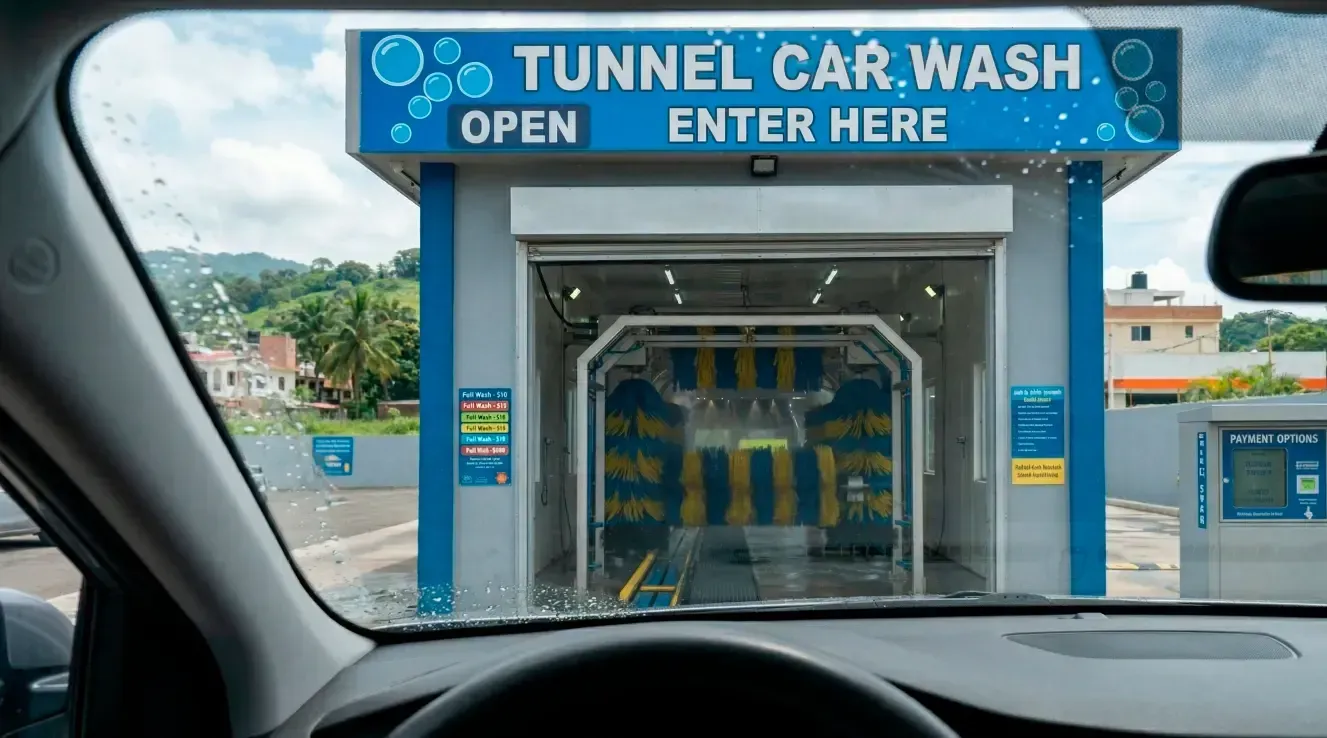
A quick tunnel wash can immediately improve the exterior enough that you do not have to think about dust, pollen, splash marks, or general dullness. Then a few focused minutes at the vacuum station can solve the interior issues that matter most: crumbs, visible debris, and the passenger footwell.

This is often a better use of time than trying to do everything yourself in a parking lot or with household tools. The key is to stay focused. Do not turn the stop into a full detailing session. Go in with a plan:

Run the car through the wash if the exterior looks visibly neglected.
Vacuum the front floor area first.
Hit the passenger seat edges and visible crumbs.
Shake or clean the mat if needed.
Wipe the console and glass after vacuuming so you are not moving dust around twice.

That is why local car wash access matters so much for short-notice situations. If you suddenly need the car to look better fast, convenience is part of the cleaning strategy.


How to Make the Car Smell Fresh Quickly Without Making It Worse

Smell can shape the whole impression of a car, but it is also where rushed cleanups often go wrong.


Remove the source before adding scent

If there is an actual odor source, deal with that first. Food wrappers, takeout containers, gym gear, damp towels, old cups, and even overloaded floor debris can make the cabin smell off. Removing those is more effective than trying to cover them.

This is one reason quick cleanups sometimes fail. People want the fastest possible solution, so they add fragrance first. But if the bad smell is still sitting in the car, the result is not fresh. It is just mixed.

The best way to make a car smell fresh quickly is usually to subtract first. Remove the obvious source, get a little airflow moving, and then add only a small amount of fragrance if needed.


Use restraint with fragrance

If you use scent, go light. A subtle clean smell can help. A heavy blast of fragrance often feels like an attempt to hide something.

That matters before a date or interview because strong artificial scent can be distracting. It can also make the cabin feel smaller and more tense. A neutral or lightly fresh smell usually lands better than something intense and obvious.

If your instinct is to spray until the car smells “definitely clean,” stop earlier than that. The goal is not to make the fragrance noticeable. The goal is to make the stale smell less noticeable.


Airflow and quick reset habits

A little fresh air helps more than people think. Crack windows briefly when appropriate, let stale air cycle out, and avoid trapping odor in the cabin right after cleaning.

If you have a short drive between the cleanup and the meeting, interview, or date, use that time to reset the interior atmosphere rather than loading it up with more products. Sometimes the car just needs to stop smelling closed-in.

This is also why it helps not to leave yesterday’s life sitting in the cabin. Even in a rushed situation, removing one or two odor-causing items can do more than any fragrance product.


A Fast, Realistic Routine for Interviews, Dates, and Surprise Meetings

The basic cleanup strategy stays the same, but the emphasis changes slightly depending on why you are rushing.

If it is a job interview, focus on order, restraint, and calm. The car should feel like you have your life reasonably together. Clear clutter, wipe the visible surfaces, clean the glass, and keep the smell neutral. This is the moment to be understated. You do not need the car to feel impressive. You need it to feel reliable.

If it is a date, the passenger experience matters even more. The seat should be clear. The floor should not be messy. The smell should be fresh but light. The windshield and passenger window should not be streaky. In this situation, comfort and care matter more than overall perfection.

If it is a surprise meeting or unplanned ride-along, speed becomes the priority. You may not need a full wash at all. If the outside is acceptable, focus on the inside and the visible entry points. Remove clutter, hit the glass, reset the passenger area, and go.

In all three cases, the biggest mistake is trying to do too much. The car does not need a transformation. It needs a credible reset. If someone steps in and the space feels open, clean enough, and intentional, you have done what you needed to do.


The Easiest Next Step When You Need the Car to Look Better Fast

If you only have a short window, the easiest next step is usually the one that reduces effort and decision-making.

That is why a quick wash and a few focused interior minutes can be such a strong solution. You are not spending your last hour improvising. You are using a setup designed for exactly the kind of fast cleanup most daily drivers actually need.

If you only have a short window before a date, interview, or surprise meeting, the fastest win may be a quick wash and a few focused minutes on the interior. Scrubs Express Carwash gives Atlanta drivers a convenient way to clean up fast, especially when visible clutter, glass, and floor debris are the real problem. Drive on in, reset the essentials, and get back on schedule.
That kind of approach works because it matches the situation. You are not pretending your car got a luxury detail in two hours. You are just taking the most visible problems off the table and making the vehicle feel ready again.

And in a rushed moment, that is usually more than enough.


FAQ

How can I clean my car fast before a job interview?

Start with the front passenger area, visible clutter, center console, and windshield. Remove trash first, wipe the surfaces someone will notice immediately, and focus on making the cabin feel orderly rather than trying to clean every inch.


What should I clean first if I only have 15 minutes?

Start with trash and loose clutter. After that, focus on the passenger seat, center console, windshield, and visible floor debris. Those areas usually create the biggest improvement fastest.


What is the fastest way to make a car smell better?

Remove the source first, then add airflow, and use only a light amount of fragrance if needed. Old food, wrappers, damp items, and stale clutter usually matter more than the scent product itself.


Should I focus on the interior or exterior before a date?

Usually the interior first, especially if someone may ride with you. A clean passenger area, better smell, and clearer glass often make a stronger impression than a shiny exterior alone.


How do I make my windshield look cleaner quickly?

Wipe away the most obvious haze, fingerprints, and streaks, especially on the inside. You do not need perfect glass in a rush, but better clarity makes the entire car feel cleaner.


Is a quick car wash and vacuum enough before a surprise meeting?

Often, yes. If the exterior is visibly dusty or dirty, a quick wash plus a targeted vacuum on the front floor area and passenger side can make a big difference in a short amount of time.


If you only have a short window before a date, interview, or surprise meeting, the fastest win may be a quick wash and a few focused minutes on the interior. Scrubs Express Carwash gives Atlanta drivers a convenient way to clean up fast, especially when visible clutter, glass, and floor debris are the real problem. Drive on in, reset the essentials, and get back on schedule.


By Francisco Hernandez March 14, 2026
How to Clean Your Car Fast Before a Date or Interview You look at the clock, realize you have a date, interview, or last-minute meeting coming up, and then remember the car is a mess. There are coffee cups in the console, receipts in the passenger seat, crumbs on the floor, and a windshield that somehow looks worse when the sun hits it. You do not have time for a full detail, and you do not need one. What you need is a quick reset that makes the car feel presentable fast. That is the difference most people miss. If you only have a couple of hours—or less—the goal is not perfection. The goal is to make the car feel under control. That means focusing on the things another person is most likely to notice right away: clutter, smell, visible surfaces, glass, and the passenger area. If you can improve those quickly, the whole car feels cleaner, even if you did not touch every corner. This is especially useful if you are trying to clean your car fast before a job interview, a date, or a surprise meeting. Time pressure makes people scatter. They start wiping random areas, spraying too much fragrance, or obsessing over the exterior while the inside still feels chaotic. A better approach is to work in order and focus on the few things that create the biggest visual and sensory difference. When You Only Have Two Hours, the Goal Is Presentable—Not Perfect The first thing to do is reset your expectations. If someone is getting into your car in two hours, they are not running a white-glove inspection. They are noticing whether the space feels clean enough, calm enough, and intentional enough. That is a very different standard from “fully detailed.” This matters because panic cleaning usually wastes time. People start with the hardest tasks first. They scrub a stubborn stain that will not come out in five minutes. They start organizing the trunk even though no one is going to see it. They clean the driver-side door pocket while the passenger seat still has a hoodie, receipts, and an empty water bottle sitting on it. A car that feels presentable is usually a car where the visible chaos is gone. The front seat looks open and ready. The console is not overloaded. The windshield is clearer. The smell is neutral or lightly fresh instead of stale or artificially perfumed. The floor on the passenger side is not covered in debris. Those are the signals that matter most in a rushed cleanup. So before you do anything else, decide what kind of win you actually need. If the answer is, “I need this car to stop feeling embarrassing,” that is good news. That kind of improvement is much easier to achieve quickly than a full makeover. Start With the 15-Minute Quick-Cleanup Checklist If you are short on time, the order matters almost as much as the effort. A good 15 minute car cleanup checklist works because it prevents you from bouncing around. You are not trying to clean everything. You are trying to create the biggest visible improvement in the shortest time. Here is the fast triage order: First, remove trash and obvious clutter. Second, clear the passenger area. Third, wipe the surfaces people see first. Fourth, clean the glass enough to improve clarity. Fifth, vacuum the visible floor area if you can. Sixth, reset the smell without overdoing it. Seventh, decide whether the exterior needs a quick wash or whether the interior was the real problem all along. That sequence matters because clutter is usually the biggest visual issue, not dirt. Once the clutter is gone, the car immediately feels better. After that, the surfaces and glass start to matter more. Smell comes later because fragrance without cleanup rarely works well. This is also why a quick clean car before an interview is less about deep cleaning and more about smart editing. You are removing the distractions that make the car feel messy. Once those are gone, the rest of the vehicle often seems far more presentable. First Priority: Remove What Makes the Car Feel Messy Most rushed cleanups succeed or fail in the first few minutes. If you spend that time wisely, the rest becomes much easier. Trash, bottles, receipts, and seat clutter Start with the obvious visual noise. Empty cups. Fast-food bags. Water bottles. Receipts. Loose napkins. Gym clothes. Random cords. A jacket thrown across the passenger seat. These things create the immediate impression that the car is chaotic, even if the actual surfaces are not that dirty. Do not over-sort. Under time pressure, sorting is a trap. You are not organizing your life right now. You are making the car readable and presentable. Grab a bag and clear the front area first. If the date, interviewer, or meeting contact might ride with you, the passenger seat and passenger footwell should get attention before almost anything else. A clean-looking passenger space signals care far more strongly than a spotless rear seat no one will see. Then move to the center console and cup holders. These small areas matter more than people expect because they sit right in the middle of the visual field. If they are packed with wrappers, coins, straws, or sticky drink lids, the whole cabin feels more cluttered. What to move, what to hide, and what to throw away immediately Under time pressure, you need simple rules. Throw away actual trash immediately. Move useful but messy items out of sight if you do not have time to organize them. Hide only what is neutral and temporary, not what will cause a new mess later. For example, a clean tote bag or trunk space can help you remove loose items quickly. That is fine. Stuffing everything under the passenger seat is not. It often makes the space look worse once someone gets in. If something needs to stay in the car, make it look intentional. A single notebook in the console looks different from a pile of receipts and cables. A neatly placed jacket in the back seat feels different from a heap of random belongings in the front. The rule is simple: remove what feels chaotic first. In a fast cleanup, that alone often changes the mood of the entire vehicle. Clean the Areas Another Person Will Notice First Once the clutter is under control, the next step is to focus on the areas that shape first impressions fastest. Front seats and center console These are the visual anchors of the interior. If the front seats look clear and the center console looks calm, the car starts to feel manageable. Wipe obvious dust, crumbs, or smudges from the passenger seat area, console lid, gear area, and cup holder zone. Do not aim for showroom-level results. You are just trying to remove the signs of neglect that stand out in normal use. If the seats have visible lint, crumbs, or pet hair on the passenger side, those deserve priority. A person getting into your car is much more likely to notice what is on the seat than whether the rear door pocket was cleaned. If you only have time to wipe one side of the car better than the other, choose the passenger side. That is not laziness. It is prioritization. Glass and windshield clarity A dirty windshield or smeared interior glass can make the entire car feel grimy, even if the rest looks acceptable. This is one of the most overlooked parts of a rushed cleanup. If sunlight is hitting the glass, smears become even more obvious. That is why quick windshield cleaning tips matter so much here. You do not need a perfect polish. You need better clarity. Wipe the inside windshield enough to reduce haze, fingerprints, or obvious streaking. Then check the passenger window and side mirror area if those are visibly marked. These small improvements change how clean the car feels from both inside and outside. This is especially useful before a job interview. Clear glass subtly communicates order. It also makes the drive itself feel calmer, which is helpful when you are already under pressure. Floor mats and visible debris near the passenger side People notice the floor more than many drivers think, especially when getting in and settling down. If the passenger mat is covered in dirt, leaves, crumbs, or gravel, the car feels unkempt even if the seats look fine. If you have only a few minutes, focus on the visible floor area nearest the door opening and the front footwell. You do not need a perfect vacuum of every crevice. You need the passenger side to stop looking ignored. This is one reason a fast vacuum routine at a car wash can be so effective. A couple of focused minutes on the floor mats and front footwell can do more than fifteen random minutes of wiping at home. The Mistake People Make Under Time Pressure When people panic-clean a car, they often make the same mistake: they focus on what feels dramatic instead of what feels convincing. That usually means one of two things. Either they blast air freshener and hope scent will do the work, or they rush to wash the exterior while the inside still looks like a weekday survival zone. Neither move is completely irrational. A shiny exterior feels like progress. A strong scent feels like action. But those choices often miss what creates a “clean enough” impression in real life. A person opening your passenger door notices clutter before shine. They notice stale smell before wax. They notice a smeared windshield before a glossy hood. That is why too much exterior focus can be a mistake if the real issue is inside the cabin. The same goes for fragrance. Too much scent can make a quick cleanup feel forced rather than fresh. If the odor source is still there—old food, damp floor debris, gym clothes, fast-food wrappers—then spraying the cabin heavily usually makes the experience stranger, not cleaner. The better reframe is this: under time pressure, cleanliness is mostly about perception management. You are not faking anything. You are prioritizing the details that make the car feel cared for right now. What to Do If You Have Access to a Car Wash Vacuum Station If you are near a wash and vacuum station, that may be the fastest option by far. When time is tight, a quick wash and targeted vacuum can sometimes do more than a rushed all-over cleanup at home. That is especially true if you live in an apartment, do not have easy access to a hose, or do not have a strong vacuum setup at home. A quick tunnel wash can immediately improve the exterior enough that you do not have to think about dust, pollen, splash marks, or general dullness. Then a few focused minutes at the vacuum station can solve the interior issues that matter most: crumbs, visible debris, and the passenger footwell. This is often a better use of time than trying to do everything yourself in a parking lot or with household tools. The key is to stay focused. Do not turn the stop into a full detailing session. Go in with a plan: Run the car through the wash if the exterior looks visibly neglected. Vacuum the front floor area first. Hit the passenger seat edges and visible crumbs. Shake or clean the mat if needed. Wipe the console and glass after vacuuming so you are not moving dust around twice. That is why local car wash access matters so much for short-notice situations. If you suddenly need the car to look better fast, convenience is part of the cleaning strategy. How to Make the Car Smell Fresh Quickly Without Making It Worse Smell can shape the whole impression of a car, but it is also where rushed cleanups often go wrong. Remove the source before adding scent If there is an actual odor source, deal with that first. Food wrappers, takeout containers, gym gear, damp towels, old cups, and even overloaded floor debris can make the cabin smell off. Removing those is more effective than trying to cover them. This is one reason quick cleanups sometimes fail. People want the fastest possible solution, so they add fragrance first. But if the bad smell is still sitting in the car, the result is not fresh. It is just mixed. The best way to make a car smell fresh quickly is usually to subtract first. Remove the obvious source, get a little airflow moving, and then add only a small amount of fragrance if needed. Use restraint with fragrance If you use scent, go light. A subtle clean smell can help. A heavy blast of fragrance often feels like an attempt to hide something. That matters before a date or interview because strong artificial scent can be distracting. It can also make the cabin feel smaller and more tense. A neutral or lightly fresh smell usually lands better than something intense and obvious. If your instinct is to spray until the car smells “definitely clean,” stop earlier than that. The goal is not to make the fragrance noticeable. The goal is to make the stale smell less noticeable. Airflow and quick reset habits A little fresh air helps more than people think. Crack windows briefly when appropriate, let stale air cycle out, and avoid trapping odor in the cabin right after cleaning. If you have a short drive between the cleanup and the meeting, interview, or date, use that time to reset the interior atmosphere rather than loading it up with more products. Sometimes the car just needs to stop smelling closed-in. This is also why it helps not to leave yesterday’s life sitting in the cabin. Even in a rushed situation, removing one or two odor-causing items can do more than any fragrance product. A Fast, Realistic Routine for Interviews, Dates, and Surprise Meetings The basic cleanup strategy stays the same, but the emphasis changes slightly depending on why you are rushing. If it is a job interview, focus on order, restraint, and calm. The car should feel like you have your life reasonably together. Clear clutter, wipe the visible surfaces, clean the glass, and keep the smell neutral. This is the moment to be understated. You do not need the car to feel impressive. You need it to feel reliable. If it is a date, the passenger experience matters even more. The seat should be clear. The floor should not be messy. The smell should be fresh but light. The windshield and passenger window should not be streaky. In this situation, comfort and care matter more than overall perfection. If it is a surprise meeting or unplanned ride-along, speed becomes the priority. You may not need a full wash at all. If the outside is acceptable, focus on the inside and the visible entry points. Remove clutter, hit the glass, reset the passenger area, and go. In all three cases, the biggest mistake is trying to do too much. The car does not need a transformation. It needs a credible reset. If someone steps in and the space feels open, clean enough, and intentional, you have done what you needed to do. The Easiest Next Step When You Need the Car to Look Better Fast If you only have a short window, the easiest next step is usually the one that reduces effort and decision-making. That is why a quick wash and a few focused interior minutes can be such a strong solution. You are not spending your last hour improvising. You are using a setup designed for exactly the kind of fast cleanup most daily drivers actually need. If you only have a short window before a date, interview, or surprise meeting, the fastest win may be a quick wash and a few focused minutes on the interior. Scrubs Express Carwash gives Atlanta drivers a convenient way to clean up fast, especially when visible clutter, glass, and floor debris are the real problem. Drive on in, reset the essentials, and get back on schedule. That kind of approach works because it matches the situation. You are not pretending your car got a luxury detail in two hours. You are just taking the most visible problems off the table and making the vehicle feel ready again. And in a rushed moment, that is usually more than enough. FAQ How can I clean my car fast before a job interview? Start with the front passenger area, visible clutter, center console, and windshield. Remove trash first, wipe the surfaces someone will notice immediately, and focus on making the cabin feel orderly rather than trying to clean every inch. What should I clean first if I only have 15 minutes? Start with trash and loose clutter. After that, focus on the passenger seat, center console, windshield, and visible floor debris. Those areas usually create the biggest improvement fastest. What is the fastest way to make a car smell better? Remove the source first, then add airflow, and use only a light amount of fragrance if needed. Old food, wrappers, damp items, and stale clutter usually matter more than the scent product itself. Should I focus on the interior or exterior before a date? Usually the interior first, especially if someone may ride with you. A clean passenger area, better smell, and clearer glass often make a stronger impression than a shiny exterior alone. How do I make my windshield look cleaner quickly? Wipe away the most obvious haze, fingerprints, and streaks, especially on the inside. You do not need perfect glass in a rush, but better clarity makes the entire car feel cleaner. Is a quick car wash and vacuum enough before a surprise meeting? Often, yes. If the exterior is visibly dusty or dirty, a quick wash plus a targeted vacuum on the front floor area and passenger side can make a big difference in a short amount of time. If you only have a short window before a date, interview, or surprise meeting, the fastest win may be a quick wash and a few focused minutes on the interior. Scrubs Express Carwash gives Atlanta drivers a convenient way to clean up fast, especially when visible clutter, glass, and floor debris are the real problem. Drive on in, reset the essentials, and get back on schedule.
By Francisco Hernandez March 14, 2026
In Atlanta, the question is not always whether your car needs a wash. A lot of the time, it is when to go. That matters even more if you live in an apartment and do not have driveway access, a hose, or the option to casually rinse the car whenever it gets dusty. For many drivers, a professional wash is the routine. The challenge is that Atlanta heat can make a normal wash feel less effective than it should. You head out on a hot afternoon, get the car cleaned, and then notice spots, streaks, or fast-drying marks soon after. The wash itself may have been fine, but the timing may not have been. That is why the best time to wash your car in Atlanta is not just about convenience. It is also about surface temperature, direct sunlight, what the car will do next, and whether the conditions are working with you or against you. If summer heat keeps turning a routine wash into a frustrating one, a better wash window can make a real difference. Why Timing Matters More in Atlanta Than People Think Many drivers assume a car wash is a simple in-and-out task. If the car is dirty, you go wash it. But timing matters more than people expect, especially in a place where summer heat can change how the car looks after the wash is over. The issue is not necessarily that the wash fails. It is that hot surfaces, bright sun, and fast drying can make leftover moisture or residue more noticeable. What looked good leaving the wash may look less satisfying after the car sits in direct sun at your apartment complex or in an open parking lot. That is a very real scenario for Atlanta drivers. If your car spends most of its time outside, it heats up quickly. If you run errands during the warmest part of the day, the car may already be hot by the time you decide to wash it. If you are relying on a retail wash because home washing is not realistic, you are making timing decisions based on your schedule, not ideal conditions. That does not mean you need a perfect routine. It means the best time of day to wash your car in Atlanta is often the time when the car and the weather are less likely to work against the result. The Real Tradeoff Is Convenience vs. Surface Conditions Most people do not choose a wash time based only on what is best for the car. They choose based on real life. Before work. After work. Between errands. On a Saturday when they finally have a little time. On the way home from somewhere else. That is normal. The real tradeoff is not “best practice” versus “bad practice.” It is convenience versus surface conditions. Cooler conditions tend to feel easier to work with. A car that has not been baking in the sun may be less frustrating to wash than one that has been parked on hot pavement for hours. But the coolest part of the day may not fit your routine. On the other hand, the most convenient time—often midday or late afternoon during a busy day—may also be the time when the car is hottest and drying-related issues feel more noticeable. There are other factors too. What happens right after the wash matters. Are you driving straight back to an apartment lot with full sun exposure? Are you parking under trees? Is rain on the way? Are you squeezing the wash between several stops, which means the car may sit, heat up again, or collect fresh dust sooner than expected? So when you are deciding on the best time to wash your car in Atlanta, the better question is not “What is the perfect hour?” It is “Which time window gives me the best balance of cleaner-looking results and realistic convenience?” Morning, Midday, or Evening? What Each Time Window Changes Not every time of day creates the same kind of experience. Morning, midday, and evening all have advantages and tradeoffs, especially in summer. Morning washes For many drivers, morning is often the most forgiving option. The car may be cooler. The sun may be less intense. The whole process may feel easier before the day fully heats up. This can be a strong choice if you want a cleaner-looking result without the extra frustration that sometimes comes with hot surfaces. If your weekends are flexible, a morning wash may simply feel smoother. You are less likely to be dealing with a car that has been sitting in the sun since lunch, and you may be able to head home before the hottest part of the day. Morning also works well for apartment residents who want to get the wash done before the rest of the day starts filling up. You are not trying to wedge the task in after several errands, and you are less likely to feel rushed. That said, morning is not automatically best for every person. If you wash early and then park outdoors all day in dusty or pollen-heavy conditions, some of the fresh look may fade sooner than you hoped. Timing helps, but it does not freeze the car in clean condition for the rest of the day. Midday washes Midday is often the toughest time window, especially in summer. It is usually the most convenient for people who are already out, but it can also be the most frustrating. By then, the car may already be hot from sitting outside. The pavement is hotter. Sunlight is more direct. If you are someone who notices spots or streaks after a wash, this is often the window that seems to make those issues feel worse. Midday heat can make post-wash frustration more noticeable, especially if the vehicle goes right back into strong sun afterward. This does not mean midday is always wrong. If it is the only time that fits your day, a wash can still be worthwhile. But it is the time window where expectations need to be more realistic. If you already know your car tends to show marks more in the heat, midday may be the least forgiving choice. For apartment residents, midday can also be awkward because it often overlaps with other tasks rather than sitting in a calm routine slot. You are more likely to treat the wash as one quick stop in a longer chain of activity, which means less control over what happens immediately before and after. Evening washes Evening can be a practical middle ground. The day starts cooling down, the experience feels less rushed for some drivers, and you may be washing the car after work instead of building your whole day around it. This is a useful option for apartment residents who want to keep the wash tied to a realistic weekly routine. A post-work wash can be easier to repeat than a Saturday morning plan that keeps getting pushed around. Evening does come with tradeoffs. The main one is what happens next. If the car sits outside overnight, it may collect dust, moisture, or environmental fallout depending on the conditions. If you wash in the evening and then do not drive much until the next day, the car may still look good—but the full benefit depends on where and how it sits overnight. So is morning or evening better? In many cases, both are more forgiving than midday. The better one depends on your schedule and what the car will be exposed to after the wash. The Mistake People Make: Chasing a “Perfect” Time Instead of a Better Window A lot of drivers make the same mistake: they look for one perfect answer. One exact hour. One universal rule. Something like, “Always wash at 8:00 a.m.” or “Never wash after 5:00 p.m.” Real life usually does not work like that. There is rarely one magic time that guarantees the best result every time. A morning wash may be better in one situation, while an evening wash may fit another routine much more naturally. The better move is not to chase perfection. It is to choose a better window. A better window is the one where the car is less heat-soaked, the conditions feel less punishing, and the timing makes sense for what happens after the wash. That could mean going before the hottest stretch of the day. It could mean waiting until after work instead of washing on a blazing lunch break. It could mean avoiding the moment when the car has just been parked in open sun for hours. This shift in mindset helps because it is practical. Instead of feeling like you are always getting it wrong unless you hit one ideal moment, you start looking for the most favorable realistic option. That is a more useful routine for someone with apartment parking, limited flexibility, and a car that has to live outside. Weekday vs. Weekend Washes in Real Life When people think about car wash timing, they often focus on time of day and forget the day of the week. But weekday versus weekend can change the experience too. Weekday washes can feel more routine and less crowded for some drivers. If you already pass by a wash on your way to or from work, it may be easier to build it into a consistent rhythm. That matters because consistency is often more helpful than waiting for a perfect day that never comes. If washing on a Tuesday evening is realistic and repeatable, that may be better than endlessly planning for an ideal Saturday morning. Weekends have advantages too. You may have more time, less urgency, and more flexibility to go in the morning before the heat builds. But weekends can also get packed quickly. You may already be running errands, meeting people, or driving all over the city. The wash becomes one more stop rather than a simple routine task. For apartment residents, this matters because a wash works best when it fits naturally into movement you already make. If a weekday stop keeps the car cleaner without turning the whole thing into a project, that may be the better long-term answer. If weekends give you better control over timing, that may be worth using instead. The best day of week for a car wash in Atlanta is often the day you can repeat without overthinking it. Should You Wash Before Rain in Atlanta or Wait It Out? This is one of the most common timing questions, and it makes sense. No one wants to pay for a wash and then feel like the weather canceled the result an hour later. The simplest answer is that washing before rain is not always pointless. Whether it makes sense depends on timing, conditions, and what you want from the wash. If the car is already dirty, a wash before rain may still have value. You may prefer starting from a cleaner surface rather than letting layers of dust, grime, or pollen sit even longer. If rain comes later, the car may still have been worth cleaning first. On the other hand, if the rain is very close, you know the car will be parked outside through it, and you are mainly hoping for a spotless appearance that lasts, waiting may feel more sensible. This is where expectations matter. Rain does not always erase the benefit of a wash, but it can change how long that freshly cleaned look lasts. If your main goal is to keep the car looking sharper for the next few days, checking the near-term weather may help you avoid bad timing. If your goal is simply to reset the car from heavy buildup, a wash before rain may still feel justified. So should you wash your car before rain in Atlanta? Sometimes yes, sometimes no. The better question is whether the wash still serves your purpose, given what the car will face next. What Helps Reduce Spots and Streaks During Hot Weather Timing is a big part of the answer, but it is not the only one. A few practical habits can help make hot-weather washes feel more worth it. Avoid letting the car sit baking before the wash if possible If you know you want to wash the car, it can help to avoid choosing the exact moment when it has been roasting in full sun for hours. That does not mean you need to control every variable. It just means recognizing that a hot, sun-loaded vehicle may be more frustrating to wash than one that is a little cooler. For apartment residents, this may mean choosing a wash window before a long afternoon of parked heat instead of after it. Even small timing adjustments can make the experience feel more forgiving. Pay attention to what happens right after the wash Post-wash timing matters more than people expect. If you wash the car and then immediately park it in direct sun, under trees, or in an environment where it quickly collects dust, the clean result may not hold the way you hoped. This is why two people can get the same wash and feel very differently about it afterward. One drives home and parks in a reasonable spot. The other drives home, parks on a hot open lot, and checks the car again half an hour later under harsh light. Same wash, different outcome. If possible, think about the hour after the wash, not just the moment during it. Consider protection-focused wash options when heat is a repeat problem If heat-related spots and streaks are a pattern for you, not just a one-off annoyance, it may be worth trying a wash option that includes more surface protection. Some protection-oriented wash options are designed to support better water behavior on the surface, which may help if your main frustration is how the car looks after drying. This is not about turning a routine wash into a complicated detailing process. It is just about matching the wash to the conditions your vehicle deals with regularly. For a car that lives outside, deals with summer heat, and gets washed on a repeating schedule, a little more protection may make the result feel more durable. How to Judge Whether Your Timing Is Actually Working A lot of people change their wash timing once and then make a snap judgment. That can be misleading. A better approach is to look for a few simple signs over several visits. First, check how the car looks in direct sunlight after the wash. Are you seeing fewer visible spots or streaks than usual? If yes, that is a useful clue that the timing may be working better. Second, look at the glass. Windshield clarity tells you a lot. If the car generally looks cleaner and the glass looks less hazy than it usually does, that is another sign the timing and conditions may be more favorable. Third, pay attention to how long the clean look lasts into the next day. Not forever—just longer than before. If your usual midday wash leaves you disappointed by evening, but a morning or evening routine keeps the car looking better through the next day, that is meaningful. Finally, pay attention to how the wash fits your life. The best routine is not only the one that gives the best appearance outcome. It is the one you will actually repeat. A great timing rule that constantly clashes with your schedule is not very useful. A slightly less ideal window that you can stick to every week may give you better overall results. A Simple Next Step for Drivers Who Want a Cleaner-Looking Result If you are tired of summer heat turning a normal wash into a streak-and-spots problem, the next step does not need to be complicated. You probably do not need a full DIY setup, a major new routine, or a rigid timing system that is impossible to follow. What you need is a better wash window and a wash option that fits the way you actually live. If summer heat keeps turning a routine wash into a streak-and-spots problem, a better wash window may be all you need. Scrubs Express Carwash gives Atlanta drivers a quick, convenient option when timing matters and driveway washing is not realistic. Stop by when conditions are working in your favor—or make it easier to wash more often with the Scrub Club. That is the real goal: not perfection, not overthinking, and not chasing one magic hour. Just a smarter, more repeatable routine that gives your car a cleaner-looking result without making the process harder than it needs to be. FAQ What is the best time of day to wash your car in Atlanta? For many drivers, earlier or later parts of the day are often easier to work with than the hottest midday period. The best choice depends on your schedule, how hot the car already is, and what happens right after the wash. Is it better to wash your car in the morning or evening in summer? In many cases, both can be more forgiving than midday. Morning may help you avoid the strongest heat, while evening may fit better after work. The better option depends on when you can go and where the car will sit afterward. Should I wash my car before rain in Atlanta? Sometimes it still makes sense, especially if the car is already dirty and you want to reset it. If rain is very close and your main goal is keeping a spotless look for longer, waiting may feel more practical. What time of day helps avoid water spots during summer washing? Many drivers find cooler, less intense parts of the day easier to work with. Hot midday conditions can make drying-related frustration feel more noticeable. Are weekdays better than weekends for getting a car wash in Atlanta? They can be, especially if a weekday wash fits naturally into your routine and feels easier to repeat. Weekends may offer more flexibility, but they can also become crowded with errands and less predictable timing. How can apartment residents keep a car cleaner longer in hot weather? Choose a wash time that works better with heat and sunlight, think about what happens after the wash, and consider a protection-focused option if hot-weather spotting is a repeat issue. The goal is to make the clean result last a little better in real conditions. If summer heat keeps turning a routine wash into a streak-and-spots problem, a better wash window may be all you need. Scrubs Express Carwash gives Atlanta drivers a quick, convenient option when timing matters and driveway washing is not realistic. Stop by when conditi
By Steve Neu March 14, 2026
You pull out of the wash expecting that satisfying, freshly cleaned look. Then you park, sunlight hits the hood, and suddenly the car still looks dirty. Maybe there are streaks across the paint. Maybe the windshield has a cloudy film. Maybe the roof and hood are dotted with spots that seem to appear out of nowhere. It is a frustrating experience because it makes you feel like the wash did not work. But in many cases, that is not the real issue. When a car still looks dirty after a car wash, what you are often seeing is not the same kind of dirt that came in with the vehicle. It is usually leftover residue, minerals, road film, pollen, or drying marks that become visible only after the water is gone. That distinction matters. Once you know what kind of residue you are looking at, it becomes much easier to understand what happened and what to do next. Instead of assuming the wash failed, you can start diagnosing the problem more accurately. The Frustration: When a “Clean” Car Still Looks Dirty This happens in a very specific kind of moment. The car looks fine at first. It is wet, glossy, and visibly better than it was before. Then it dries. Or the light shifts. Or you get home and look at it from a different angle. That is when the haze, spots, or streaks show up. For a family driver trying to keep the car presentable between school drop-offs, errands, commutes, and weekends out, that is annoying for a simple reason: the whole point of the wash was to make the vehicle look cleaner without turning it into a project. When the finish still looks messy, it feels like you paid for the wash but did not get the result. The important thing to understand is that this is a common appearance issue. It does not always mean the wash was poor, and it does not automatically mean something is wrong with your paint. Often, the problem is that certain types of residue are harder to remove than loose dirt, or they become easier to see only after the water evaporates. So before blaming the wash, it helps to ask a better question: what, exactly, are you seeing? The First Question to Ask: What Exactly Are You Seeing? Not every “still dirty” car has the same problem. The appearance can be similar at a glance, but the cause may be completely different depending on whether you are dealing with streaks, mineral spots, windshield film, or environmental debris. Streaks or haze on the paint If the paint looks smeary, uneven, or lightly cloudy in direct light, you may be dealing with leftover film rather than ordinary dirt. This can show up more clearly on darker colors, where even a faint residue becomes obvious under sunlight. Haze often creates that disappointing effect where the car is technically cleaner, but it still does not look crisp. Instead of sharp reflections, the finish looks dull or slightly blurred. Drivers sometimes describe this as the car looking “washed, but not really clean.” Spots that appear after the car dries If the car looks fine while wet and then develops dots or rings once it dries, that usually points to water-related residue. The surface may feel clean overall, but visually it looks peppered with marks. This is especially frustrating because it can make the car seem like it got dirty again within minutes. In reality, the marks were often left behind as the water dried, not picked up afterward. Film or glare on the windshield When the windshield looks cloudy after a wash, people often assume the glass was not cleaned properly. But windshield film can come from more than one source. Sometimes it is road residue that was not fully broken down. Sometimes it is leftover moisture or wipe marks. Sometimes it only becomes noticeable when sunlight hits the glass at the wrong angle. This type of problem stands out because it affects more than appearance. Even a light film on the windshield can make the vehicle feel less clean overall. Dust or pollen that seems to return immediately During heavy pollen season or on dry days with a lot of airborne dust, a car can look freshly washed and then start collecting fine particles almost immediately. If the residue looks soft, powdery, or yellow-green, that is a different issue from water spots or oily film. This can make drivers think the wash “missed” something, when in reality the car may have been clean leaving the tunnel and then started catching fallout right away. The more clearly you can identify the symptom, the easier it becomes to connect it to the actual cause. The Most Common Causes Behind Post-Wash Residue When a car still looks dirty after a car wash, the cause is often one of a few repeat offenders. The tricky part is that they do not all behave the same way. Some sit on top of the surface. Some dry into place. Some are visible only in certain light. Mineral deposits from water drying on the surface Water spots are one of the most common reasons a freshly washed car still looks dirty. These marks often form when minerals remain behind after water evaporates. Even if the car was washed correctly, those remaining traces can leave visible spotting on the hood, roof, glass, or trunk. That is why a vehicle may come out looking bright and then look worse 15 minutes later. Once the moisture is gone, the spots become much more obvious. On glass, this can look like a light peppering. On paint, it may appear as small rings or pale dots. Not every spot is severe, and not every spot means long-term damage. But visually, even mild spotting can ruin the look of a clean finish. Pollen and fine dust that cling to wet paint In places where pollen hits hard for part of the year, this becomes a real issue. A car can be washed and then quickly start collecting a fine layer of airborne particles. Wet or recently dried surfaces can make that effect more noticeable. If the residue looks soft, dusty, or lightly coated rather than dotted or smeared, pollen or fine environmental fallout may be the reason. This is one reason cars can look clean in the tunnel and less clean by the time they are parked at home. Drivers often notice this most during seasonal transitions, when they wash the car more often but still feel like the clean look does not last. Oils or road film that need stronger cleaning Some residue is not plain dirt. A vehicle picks up road grime, traffic film, oils, and other contaminants that can leave behind a greasy or muted look. These materials may not always come off as easily as dust and mud. When this kind of residue remains, the car can look streaky or dull rather than obviously dirty. On glass, it can create a film. On paint, it can interfere with that clear, just-washed finish drivers expect. This is where people sometimes assume the equipment failed. But the more accurate explanation may be that the surface had a type of buildup that needs the right combination of wash chemistry, surface protection, and drying performance to look better. Towels or wipes that leave streaks A lot of frustration starts after the wash, not during it. Maybe you notice a spot and try to fix it with a towel from the trunk. Maybe you use a quick wipe on the windshield. Maybe the car is partly dry and you try to help it along. That can make the finish look worse, especially if the towel is not clean or if the surface is already drying unevenly. Instead of removing residue, the wipe can spread it. What started as a few marks becomes a larger hazy patch or a series of streaks that are even more visible in sunlight. This is why “fixing” the problem on the spot sometimes creates a second problem. Why Sunlight Makes the Problem Look Worse Sunlight does not necessarily create the residue. It exposes it. A car’s finish reflects light, and when that reflection is strong, even small imperfections become easier to see. A little bit of spotting that barely registers in the shade can suddenly look obvious in direct afternoon sun. The same is true for faint streaks on darker paint or windshield haze seen from the driver’s seat. This is why so many people leave the wash feeling satisfied, then get disappointed later. The surface looked good while it was wet or while the car was under covered lighting. Once natural light hits it, the leftover marks reveal themselves. That does not mean the condition became worse in that moment. It means visibility changed. For drivers, this is actually helpful. Sunlight can serve as a kind of diagnostic tool. It helps you distinguish between a car that is genuinely still dirty and a car that is mostly clean but has specific residue problems that need a different approach. A Common Misconception: “The Wash Didn’t Work” When a car wash did not deliver the finish you hoped for, it is natural to assume the wash failed. But that conclusion can be too simple. A modern wash usually removes the bulk of ordinary dirt and grime. If your vehicle came in with dust, road splash, loose debris, or general buildup, the wash likely did a lot of the heavy lifting. What may remain is the stuff that behaves differently: minerals that dry into visible spots, film that hangs on to glass or paint, or environmental particles that settle quickly afterward. That is an important distinction because it changes your next step. If the issue is leftover residue rather than full-surface dirt, repeating the exact same process may not solve it. You may need to focus more on surface protection, drying behavior, or identifying what kind of contamination is left. In other words, a car can be much cleaner than before and still not look fully clean. That is the gap many drivers are reacting to. The better mindset is not “the wash did nothing.” It is “the wash improved the car, but something specific is still showing.” Small Prep or Post-Wash Steps That Make a Difference Once you understand that the problem is often residue, not total wash failure, a few simple habits start to matter more. Pre-rinse heavily dusty or pollen-covered cars If a vehicle is carrying a thick layer of pollen, fine dust, or loose surface debris, a pre-rinse can help reduce the amount of material that sticks, smears, or repositions during the wash process. This is especially relevant when the surface is visibly coated before the wash begins. For drivers who know their car has been sitting outside through Atlanta pollen or a dry windy stretch, it helps to think of that layer as something that may need a little extra help before the final appearance improves. Let protective coatings or sealants do the work Some wash packages are designed to do more than clean. Protection-focused add-ons may help water move off the surface more effectively and can support a cleaner-looking finish after drying. That does not mean perfection every time, and it does not mean they solve every type of residue. But when drivers repeatedly deal with spotting, sticking dust, or a finish that seems to lose its clean look too fast, surface protection can become more relevant. This is especially true for people who wash regularly and want the car to stay presentable between visits rather than chase a one-time perfect shine. Avoid wiping the car when it’s partially dry This is one of the simplest ways to avoid making the problem worse. If the car has partly dried and you see a few marks, rubbing them with a random towel can spread the residue or create new streaking. It is usually better to identify the issue first than to react quickly and smear it across a larger area. A lot of “my wash left streaks” complaints are really “I saw a few marks and tried to wipe them away mid-dry.” That does not mean you should never touch the surface. It means timing and materials matter more than people assume. How to Tell the Difference Between Dirt, Film, and Water Spots To figure out what is happening, it helps to stop using the word dirty as a catch-all. Different residues leave different clues. If you see small, distinct dots or ring-like marks after the water evaporates, you are probably dealing with water spots. These usually show up most clearly on horizontal surfaces like the hood, roof, and trunk, but they can also appear on glass. If the surface looks greasy, smeary, or slightly cloudy, especially under direct light, that points more toward film. Windshield haze often falls into this category, as does a dull, wiped-looking finish on paint. If the residue looks soft, powdery, or like it reappeared immediately after the wash, it may be environmental fallout such as pollen or fine dust. This tends to create a “why does it already look dirty again?” reaction. You can also pay attention to how the problem behaves. Spots tend to show up after drying. Film tends to distort clarity and reflection. Dust tends to settle and soften the finish rather than create defined marks. That kind of simple diagnosis is useful because it keeps you from treating every appearance issue the same way. When It Might Be Time for a Different Wash Package Not every vehicle needs the same wash every time. If you usually choose the most basic option and are consistently frustrated by spotting, streaking, or a finish that loses its clean look too quickly, it may be worth trying a wash package that includes more surface protection. This is not about upselling for the sake of it. It is about matching the wash to the condition of the car and the result you want. A driver whose vehicle lives outside, collects heavy pollen, or sees frequent road grime may notice a difference when the wash includes features designed to support a more polished finish and better water behavior on the surface. If you’re noticing streaks or spots after washing your car, the solution may be as simple as using a wash package designed to help water sheet off the surface. At Scrubs Express Carwash, drivers can choose from several wash options—or join the Scrub Club for unlimited washes whenever their vehicle needs it. Drive on in and see the difference a fresh wash can make. That message works best when the reader is already frustrated by a repeated pattern. The key is not promising a miracle. It is suggesting a more suitable option when the current one is not delivering the look they want. What to Do Next Time You Notice Streaks After a Wash The next time your car still looks dirty after a car wash, do not jump straight to frustration. Run through a quick check first. Look at the vehicle both in the shade and in direct sunlight. This helps you distinguish between overall dirt and light-sensitive residue. Check the windshield separately from the paint. Glass problems and paint problems may look similar from a distance, but they often come from different causes. Notice whether the marks are dots, streaks, haze, or dust. That tells you far more than simply deciding the car looks “dirty.” Pay attention to timing. Did the issue show up only after the car dried? Did it appear after you wiped the surface? Did it seem to return quickly while parked outside? If the problem repeats across multiple visits, consider whether your vehicle might benefit from a different wash package, especially if you are trying to maintain a cleaner-looking finish between frequent drives and outdoor parking. This kind of checklist is simple, but it changes the experience. Instead of feeling like the wash failed for mysterious reasons, you start seeing patterns. The Goal Isn’t Just Clean—It’s Protection A lot of drivers think in terms of one wash at a time. Did this wash work or not? Did it leave the car clean or not? But real-world car care is usually more about consistency than perfection. Your vehicle picks up dust, traffic film, pollen, water, and all the other little things that come with daily life. A single wash can improve the surface dramatically, but the finish you see afterward also depends on what was already on the car, what dries on it, how the surface behaves, and what hits it next. That is why the goal is not only to remove visible dirt. It is also to support a finish that looks cleaner, sheds residue better, and stays presentable longer between washes. For a family driver, that matters. You are not usually chasing showroom conditions. You are trying to avoid that annoying moment where the car should look fresh, but instead looks streaky, hazy, or spotted the minute sunlight hits it. If that keeps happening, the answer is often not to give up on the wash. It is to better understand what is left behind, adjust your expectations, and use the right level of wash and protection for the way your car is actually used. FAQ Why does my car still look dirty after a car wash? A car can still look dirty after a wash because what remains may not be loose dirt. You may be seeing water spots, pollen, road film, or drying streaks that become more obvious once the car is dry and in direct light. Why do I see streaks on my car after washing it? Streaks often come from leftover residue or from wiping the surface while it is partially dry. They are especially visible in sunlight and on darker paint colors. What causes water spots after a car wash? Water spots often form when minerals remain behind after water dries on the surface. These marks can show up on paint, glass, and other exterior surfaces once the moisture evaporates. Why does my windshield look cloudy after a wash? A cloudy windshield after a wash can be caused by leftover film, wipe marks, or residue that becomes more noticeable in sunlight. It may not mean the glass was never cleaned; it may mean some film is still present. Can pollen make a clean car look dirty again quickly? Yes. Pollen can settle quickly on a freshly washed car, especially during heavy seasonal periods. That can make a clean vehicle look dusty again very soon after a wash. How can I prevent spots and streaks after washing my car? Start by identifying what kind of residue you are seeing. Avoid wiping a partially dry surface with random towels, inspect the car in sunlight and shade, and consider whether a wash package with added surface protection makes sense for your vehicle and driving conditions. If you’re noticing streaks or spots after washing your car, the solution may be as simple as using a wash package designed to help water sheet off the surface. At Scrubs Express Carwash, drivers can choose from several wash options—or join the Scrub Club for unlimited washes whenever their vehicle needs it. Drive on in and see the difference a fresh wash can make.
February 20, 2026
You’re standing at the menu board (or scrolling online) deciding between a mid-tier and a premium wash, and “ceramic” is the word that makes the premium package feel justified. It sounds like the kind of protection detailers talk about—slick, glossy, beading for days, and “real” paint defense. But the ceramic car wash meaning most people expect (a true ceramic coating) is usually not what a tunnel or express wash is selling. And that gap—between what the word suggests and what the service actually is—is where disappointment starts. This guide is meant for the enthusiast or weekend detailer who wants clarity without hype: what “ceramic” usually refers to on a car wash menu, what it’s designed to do, what it can’t realistically do, and how to decide if the upgrade makes sense when you’re comparing mid-tier vs premium. Why “ceramic” on a menu causes confusion “Ceramic” used to be a word you mostly heard in detailing circles—often shorthand for professional ceramic coatings applied carefully on clean, corrected paint. Now it shows up everywhere: spray bottles, quick detailers, sealants, and car wash menus. Same word, different products, wildly different expectations. That’s the first reason the term is confusing: “ceramic” can describe a category of chemistry, a marketing label, or a professional service—depending on context. The second reason is the moment you encounter it. It usually appears right where the price jumps. The mid-tier wash might promise a cleaner car and a basic protective step. The premium wash adds “ceramic,” “graphene,” “ultimate protection,” or something similar—and it’s natural to assume you’re moving into long-term protection territory. If you’re a weekend detailer, you’re also primed to evaluate the results the way you’d evaluate a coating: beading, slickness, and how the paint looks after the next rain. That’s a reasonable instinct. It’s just not always a fair test of what a car wash “ceramic” step is designed to do. The myth: “Ceramic wash = ceramic coating” Let’s say the quiet part out loud: most people buy the premium “ceramic” wash because they expect coating-like outcomes. Here’s what that expectation often includes: A hard, durable “shell” on the paint Protection that lasts a long time Strong water beading that stays consistent Resistance to contamination sticking A sense that the paint is now “safer” from the real world If you’ve watched coating videos, read forums, or used a true ceramic-coated vehicle before, those expectations make sense. The term “ceramic” carries a lot of cultural weight in car care. But in a tunnel or express wash context, that expectation is usually incorrect—not because anyone is trying to trick you, but because the service model and the product type are fundamentally different. A professional ceramic coating is typically a controlled application on properly prepped paint. A car wash “ceramic” step is typically a fast, high-throughput application designed to be applied to many vehicles quickly. Those two things can both be real products, but they are not the same thing. The cleanest mental model is this: A ceramic wash is a “top layer” step. A ceramic coating is a “base layer” system. The wash step is meant to enhance the finish and add a protective feel. The coating is meant to be a longer-term protective layer. Treating a wash step as a coating is where the myth becomes expensive. The reality: what “ceramic” usually refers to at an express/tunnel wash In many express and tunnel washes, “ceramic” refers to a ceramic-labeled protectant or sealant step applied during the wash—often near the end of the process. You might see it described (depending on the wash) as: Ceramic protectant Ceramic seal Ceramic coating (as a menu label) Ceramic shine or ceramic polish A “ceramic” add-on to a premium package What it usually means in practical terms: the wash applies a product designed to leave behind a protective film that enhances gloss and changes water behavior. It can create that satisfying “freshly protected” feel—slickness, tight beads, and a brighter look—especially right after the wash. That does not automatically mean it behaves like a professional ceramic coating. What it’s designed to do (realistically) in a car wash environment: Improve gloss and visual pop right after the wash Enhance water behavior (beading/sheeting can look better short-term) Add a short-term protective feel that makes maintenance a bit easier Create a premium “finish” experience without requiring a detailer workflow What you should not assume it does: Permanently protect the paint Make the car scratch-proof or “damage-proof” Replace proper paint prep and coating application Provide a consistent, long-term performance window without variables If you want to be evidence-aware about it, the safest phrasing is: in many menus, “ceramic” refers to a ceramic-labeled protectant step. The exact chemistry and performance depends on the product and application system (TBD unless the wash can name the product and provide plain-language details). Ceramic wash vs wax wash: what’s actually different “Wax” and “ceramic” show up as if they’re different universes. In reality, they often sit in the same category on a menu: a protective finishing step. A wax-style protectant is generally marketed as warmth, shine, and a classic “protected” feel. A ceramic-labeled protectant is generally marketed as higher tech, more durability, and more intense water behavior. But those are marketing frames, not guarantees. In practical terms, both steps are usually: Applied quickly during the wash process Designed to leave some form of protective film Most noticeable right after the wash Influenced heavily by the condition of the paint and what’s already on it What you may notice immediately with a ceramic-labeled protectant: Slickness to the touch (especially on clean paint) Tighter beading or more dramatic water behavior A slightly “crisper” look on darker colors, depending on lighting and surface condition What you shouldn’t assume from those immediate effects: That it will keep behaving the same way for a long period That it will survive multiple washes unchanged That it has replaced your usual protection routine at home That it’s stacking cleanly on top of everything else already on the paint A weekend detailer’s common trap is to interpret “beading = durability.” Beading is useful feedback, but it’s not a perfect scoreboard. Water behavior can change based on contamination, wash technique, and what’s on the paint already. Two cars can look very different after the same wash because their paint condition and previous products are different. If you want a more grounded comparison: think of wax-style and ceramic-labeled steps as two flavors of the same type of service—quick protection add-ons—rather than one being “real” and the other being “fake.” “How long does a ceramic wash last?” The honest answer If you ask how long a ceramic wash lasts, you deserve a real answer—not a number pulled from the air. The honest answer is: there’s no single number that applies to everyone. Why? Because the life of any wash-applied protectant is shaped by variables that change car-to-car and week-to-week: Surface condition: clean, smooth paint holds protection differently than rough, contaminated paint Climate: heat, rain, pollen, and grime can change water behavior quickly Wash cadence: frequent tunnel washing can refresh a top layer, but it can also wear it down depending on chemistry and conditions Contamination: road film, brake dust, and tree sap can mask “ceramic” behavior even if some film remains What’s already on the car: previous waxes, sealants, and true coatings change how new products bond and behave So instead of asking “How long does it last?” ask a question you can actually test: “What should I expect to notice over the next few days?” Here are simple, real-life checks that don’t pretend to be lab tests: The next day: does the paint feel slicker after a normal drive? Does it look easier to wipe clean? After the next rain: does water behavior look meaningfully different compared to your mid-tier wash experience? After a light rinse: does the car rinse cleaner than usual, or does road film cling the same way? If you see an immediate improvement, that’s a valid result. If you don’t, it doesn’t automatically mean the ceramic step was “fake.” It may mean your paint is rough/contaminated, your car has other layers that changed behavior, or your expectations were based on coating logic rather than wash-step reality. A safe takeaway is this: treat a ceramic wash as a short-term finishing and maintenance aid, not a long-term transformation. Is a ceramic wash worth it for you? When you’re comparing mid-tier vs premium, “worth it” depends less on the label and more on your use case. Here’s a practical way to decide. If you’re mostly chasing “clean” (and you wash often), a mid-tier wash may be enough when: You wash weekly or frequently and don’t need the premium “finish” every time Your car is a daily driver that gets dirty quickly, so perfection doesn’t last You already use a spray wax or quick detailer at home and prefer to control what goes on the paint A premium ceramic-labeled wash may make sense when: You want a noticeable “just detailed” look with minimal effort You’re going to a meet, event, client visit, or simply care about presentation You want stronger water behavior and slickness right after the wash You’re trying to make light maintenance easier over the next few days Now the scenarios you actually live in: Daily driver If you drive a lot, the car will pick up film fast. The premium wash can still feel nice, but the difference may be most visible for a short window. Many enthusiasts use premium selectively—when appearance matters—not automatically every time. Garaged weekend car A premium wash can feel more “worth it” because the car stays cleaner longer and the finish is easier to maintain. You’ll likely notice the visual boost more. Road-salt season (TBD by region) The value of any protection step can be less about beading and more about making grime easier to remove. If your car sees harsh grime, you may value the premium step as part of a routine, but keep expectations realistic and prioritize safe washing. Pollen season Pollen can make everything look worse quickly. A premium finishing step might help the car look better right after washing, but pollen will still land. “Worth it” here is about your tolerance for re-washing. The key is to decide what you’re buying: If you’re buying “long-term coating performance,” a car wash ceramic step probably won’t satisfy you. If you’re buying “short-term finish and easier maintenance,” it often can. If you already have a real ceramic coating If your car has a true ceramic coating, the conversation changes. The goal isn’t to “add more ceramic.” The goal is to maintain what you already invested in without undermining it. Because car wash systems vary, the safest approach is conservative: Ask what the ceramic step actually is (protectant/sealant type) and whether it’s intended for coated vehicles (TBD unless the wash can explain it clearly). Ask about the general chemical approach (for example: is it a finishing sealant step? Is it a specialty protectant?) without expecting a technical deep dive. If you follow a specific coating brand’s maintenance guidance, prioritize that guidance first and use the wash as a convenience tool, not the primary maintenance strategy. Also, resist the instinct to assume “more protection steps is better.” Stacking multiple protection products can create unpredictable behavior: streaking, uneven water behavior, or the sense that your coating “stopped working,” when it may just be masked by another layer or contaminated by road film. A practical, conservative choice is to use gentler options and focus on consistency. If you want to use the premium ceramic step, treat it as optional and evaluate how your coated paint responds over the next few days. If you see negative effects (streaking, strange spotting, worse behavior), revert to a simpler package and maintain the coating the way its manufacturer recommends (TBD specifics). Common mistakes weekend detailers make with “ceramic” washes Most disappointment comes from misunderstanding the process—not from the existence of the product. Here are the common mistakes that show up when enthusiasts chase menu buzzwords. Chasing the label instead of the process “Ceramic” sounds meaningful, but the real question is: what is being applied, and at what step? Without that, you’re buying a word. Over-layering products without understanding what’s on the paint If you’re already using a spray wax, a sealant, or you have a true coating, adding a ceramic-labeled wash step might not behave the way you expect. You can end up evaluating the interaction, not the product. Using beading as the only success metric Beading looks cool, but it isn’t the whole story. Paint can bead and still be contaminated. Paint can sheet and still be protected. If you want a more grounded metric, ask: is the car easier to maintain after the wash? Assuming “ceramic” means scratch-proof No wash package makes a car damage-proof. Tunnel wash marketing should never imply that, and as a detailer-minded owner, you should treat any “protection” step as incremental, not absolute. Expecting coating-level durability from a wash step This is the core mismatch. A wash step can be useful without being permanent. You don’t need it to be a coating for it to be worth buying occasionally. How to verify what you’re paying for before upgrading If you’re about to spend more for the premium ceramic step, you don’t need a chemistry lecture. You just need a plain-language explanation you can trust. Ask these three questions: What is the ceramic product type? Is it a protectant, a sealant, or a “ceramic-labeled finishing step”? If the answer is only buzzwords, treat it as TBD. How is it applied in the wash? Is it an end-of-wash finishing step? Is it applied via a dedicated pass, an arch, or a final rinse process? The purpose here is to understand whether it’s a distinct step or just a renamed finish. What should I realistically expect from it? Ask for outcomes described in practical terms: gloss, water behavior, ease of maintenance. If you hear “permanent,” “scratch-proof,” or anything absolute, dial expectations back. A good proof posture is simple: look for descriptions that tell you what it is and what it does, not just what it’s called. When a wash can explain the ceramic step plainly, it’s much easier to decide whether the premium upgrade fits your routine. Comparing mid-tier vs premium? Before you pay for the “ceramic” upgrade, ask what the ceramic step actually is and how it’s applied. If you can’t get a plain-language answer, treat it as a label—not a promise. Tell the team whether your car is coated or not, and pick the tier that matches your maintenance goals. FAQ What does ceramic mean at a car wash? In many express and tunnel washes, “ceramic” refers to a ceramic-labeled protectant or sealant step applied during the wash, usually near the end. It’s typically meant to enhance gloss and water behavior and leave a short-term protective feel, not to function like a professional ceramic coating. Is a ceramic wash the same as a ceramic coating? Usually not. A professional ceramic coating is a dedicated product applied to properly prepped paint, designed for longer-term protection. A ceramic wash is typically a quick application step during a wash that can improve appearance and water behavior short-term but shouldn’t be assumed to provide coating-level durability. What’s the difference between a ceramic wash and a wax wash? Both are generally protective finishing steps applied during the wash. Wax-style steps are often framed as classic shine and protection, while ceramic-labeled steps are framed as more modern and higher-tech. In practice, the differences are usually about formulation and the immediate “feel” and water behavior, not guaranteed long-term durability. How long does a ceramic wash last? There isn’t one reliable number. How long you notice the effects depends on variables like paint condition, weather, wash frequency, contamination, and what’s already on the paint. A practical approach is to judge it over the next few days by how the car looks, how it sheds water, and whether it’s easier to maintain. Is a ceramic wash worth it compared to a mid-tier wash? It can be, if your goal is a stronger “freshly finished” look and easier short-term maintenance—especially when appearance matters. If you wash frequently and mainly want a clean car, the mid-tier wash may be enough most of the time, and the premium ceramic step can be used selectively. Can I use a ceramic wash if my car already has a ceramic coating? Often yes, but it’s smart to be conservative. Ask what the ceramic step is and how it’s meant to behave on coated vehicles (TBD unless the wash can explain clearly), and prioritize your coating manufacturer’s maintenance guidance. Avoid assuming more protection steps are always better; sometimes simpler is safer for consistency. Ask for the wash-menu breakdown (what the “ceramic” step is) and choose a tier based on your use case If you have a coated car, ask staff which package is most compatible with your coating’s maintenance guidance Comparing mid-tier vs premium? Before you pay for the “ceramic” upgrade, ask what the ceramic step actually is and how it’s applied. If you can’t get a plain-language answer, treat it as a label—not a promise. Tell the team whether your car is coated or not, and pick the tier that matches your maintenance goals.
February 20, 2026
You wake up, walk outside, and your car is literally yellow—pollen dusted across the hood, glass, and every horizontal panel. If you’re in Atlanta, you already know the pattern: park overnight, wake up to a coating, repeat. The instinct is to wipe it off fast, but pollen season is when “quick fixes” can create the most unnecessary micro-marring. This is a practical, paint-safe playbook for Atlanta pollen car wash decisions: what pollen residue can do, what not to do, and the safest wash timing and steps when your car is coated yellow overnight—so you can keep your paint looking good without turning pollen season into swirl season. The Atlanta pollen problem: why your car turns yellow overnight Pollen shows up on every car, but it hits you hardest where the car collects it. Horizontal panels load up first: hood, roof, trunk, the tops of mirrors—anything flat becomes a landing pad. Airflow makes it “pile” in certain zones: the base of the windshield (cowl area), behind badges, around window trim, and panel gaps tend to trap pollen and dust. Moisture changes everything: overnight dew can turn dry pollen into a thin slurry. Light rain can spread it into a film. Then the next day’s heat can make that film feel “grabby” and harder to remove cleanly. That’s why one morning your car looks like it’s just dusty, and the next morning it looks like it’s been powdered with yellow paint. Same pollen—different conditions. What pollen can do to your paint (and what it usually doesn’t) Let’s separate the real risks from the rumors. The real risk: marring from how you remove it Most visible “damage” people associate with pollen season is actually removal damage: Dry wiping across a dusty surface Rubbing harder because it won’t come off instantly Using a towel that’s already contaminated Trying to “spot clean” a patch so you can see your paint When pollen is on the surface, it’s often mixed with road dust and whatever else settled overnight. Dragging that across clear coat is how you get micro-marring and swirls. Residue film and sticky buildup after dew/rain When pollen mixes with moisture, it can leave: A light, smeary film on paint and glass Streaking when you try to wipe it dry Residue in seams and trim that reappears later (the first time you open a door or hit the windshield washers) Set expectations: pollen isn’t sandpaper—but dry wiping can act like it Pollen itself isn’t automatically “paint-destroying,” but the combination of pollen + dust + dry contact is what creates the scratchy effect. Think of pollen season as a time to prioritize low-contact removal —and to avoid “just a quick wipe” habits. First, diagnose what you’re dealing with Before you touch the paint, take 15 seconds and decide which of these you’re facing. Your wash method should change based on the condition. 1) Dry pollen dust Looks like a soft yellow powder Brushes off your finger easily (don’t do this on paint—just observe) Usually safest to remove with a rinse-first approach 2) Pollen + morning dew (thin slurry) Looks darker, slightly muddy, or “stuck” Smears easily on glass Needs gentle rinsing and a lubricated wash (not spot wiping) 3) Pollen after rain (film + spots) Leaves a dull haze or patchy film Can show water spotting on glass/trim Usually requires a real wash + careful drying to avoid dragging residue 4) Heavy buildup in seams/vents (cowl, badges, window trim) The “it’s clean until I drive” problem Pollen hides in panel gaps, mirror bases, around emblems, and the cowl area Needs a rinse that targets crevices—otherwise it reappears the moment water moves through those areas Once you identify the category, the safest path becomes obvious: reduce contact, increase lubrication, and dry carefully. The safest way to remove pollen without scratching If you remember one rule all season: remove as much pollen as possible before you ever touch the paint. That’s the difference between a safe wash and “why do I have new swirls?” Step 1: rinse strategy (low-contact removal) Your goal is to float off loose pollen rather than wipe it around. Start with a thorough rinse from top to bottom. Give extra attention to: windshield base/cowl, mirror bases, badges, window trim, and panel gaps. If you have access to a pressure washer, use a reasonable distance and keep the spray moving. You’re not trying to cut paint—you’re trying to remove loose contamination. If you’re doing a quick cleanup and you can’t do a full wash, a careful rinse is still better than dry wiping. Step 2: wash method (lubrication and gentle contact) Once the heavy layer is rinsed away, wash with maximum lubrication and minimal pressure. Use a clean wash media (mitt or microfiber) and keep it dedicated to paint. Work top-down, rinsing your wash media frequently. Use straight-line motions with light pressure. Let the soap do the work. If a section feels grabby, don’t press harder—rinse again and re-wash that section with more lubrication. If you’re a weekend detailer, you already know the mindset: your hands should feel like they’re guiding the mitt, not scrubbing. Step 3: drying approach (how to avoid dragging residue) Drying is where people undo a perfectly safe wash. Sheet water off first (a gentle flow of water can help reduce standing water). Use clean, high-absorbency microfiber towels that are not already loaded with pollen or dust. Blot or glide lightly, and flip to a clean side often. If you see smearing, don’t grind it out—re-wet and re-dry that area. Smearing usually means residue is still present. What not to do: dry wiping, dusty towels, circular rubbing These are the highest-risk habits in pollen season: Don’t dry wipe a yellow car “just to make it look better.” Don’t use a towel that’s been sitting in the trunk uncovered collecting dust/pollen. Don’t rub in circles trying to “polish” pollen off the clear coat. Don’t quick-detail spray and wipe on heavy pollen as your first move. If you want to use a quick detailer, it’s best as a finishing touch after the loose layer is removed. When to wash during pollen season (timing that reduces rework) If you wash every time the car turns yellow, you’ll lose—mostly because you’re fighting nature on a 24-hour cycle. A better approach is to separate appearance maintenance from paint-safe maintenance. A practical cadence: wash after “events” Instead of “wash daily,” anchor your washes to triggers that actually change the risk: After a big overnight coating (especially if dew is involved) After rain that turns pollen into a film Before an occasion when you want the car to look its best When the car feels grabby (a sign film is building up) On lighter days, a careful rinse may be enough to keep things under control. The “wait vs wash” decision Use this simple decision rule: If it’s dry, light pollen and you’re not seeing film: a rinse can be a smart move. If it’s pollen + dew (smears on glass) or post-rain film: treat it as a real wash day. If you’re tempted to wipe because you’re in a hurry: that’s usually a sign you should rinse first or do nothing until you can remove it safely. The goal isn’t to have a perfect car every morning. The goal is to avoid the habits that quietly add swirls week after week. Home wash vs car wash: which is safer this week? This is where most enthusiasts get stuck: you want convenience, but you also want paint safety. The safer option depends on your setup and your reality this week. If you can wash at home safely Home washing can be very safe if you have: Shade (or at least a cooler time window) A solid rinse step Clean towels and wash media Enough time to dry properly without rushing If you’re missing those pieces—especially clean towels and a good rinse—home washing can become “wipe and hope,” which is where marring happens. If you’re considering a car wash for convenience A reputable wash can be a practical tool during pollen surges, especially when you need a quick reset and you want the loose pollen removed before it turns into film. When evaluating a wash option, look for: A strong pre-rinse/soak stage (low-contact removal) A process that doesn’t require you to hand-wipe a dusty car afterward A clear explanation of finishing steps (so you know what you’re paying for) If you’re using a tunnel wash locally—like Scrubs Express Carwash—your best paint-safe habit is simple: don’t wipe the car on-site if it’s still dusty, and don’t use a towel that’s already contaminated. Let the wash remove the bulk of the pollen, then finish carefully at home if needed with clean towels. If using a tunnel wash: how to minimize risk Avoid bringing one “all-purpose” towel and wiping everything down immediately. If you dry on-site, use a fresh, clean towel and focus on blotting high-water areas rather than rubbing residue around. If the car still shows haze or film, it’s usually safer to re-wet and re-dry later than to scrub it away in the parking lot. Finishing steps that help the next cleanup (without overpromising) Here’s the truth: nothing makes your car “pollen-proof.” But the right finishing step can make the next cleanup feel less sticky and reduce how much film clings. Why a finishing protectant can reduce “grabby” residue (variable; TBD by product) A light protectant layer can make the surface feel slicker and help water carry away residue more easily. How well it works depends on: The product type (TBD unless specified) The condition of your paint How often you wash Weather and contamination levels So treat finishing steps as helpful, not magical. Practical options: spray sealant/wax at home vs wash package protectant step Two common approaches: At home: a simple spray protectant after a safe wash can be a low-effort way to keep maintenance easier. At the wash: a “protectant” or “premium finish” step may improve gloss and water behavior right after the wash, which can make the next few days feel easier. If you’re comparing tiers, the right question isn’t “Will this protect my paint for months?” It’s: Will this make the next pollen cleanup easier without adding complexity? Keep it simple: the goal is easier rinsing and less film, not “pollen-proof paint” If you’re already overwhelmed by pollen season, don’t add a five-product routine. Pick one finishing approach you can repeat consistently—and focus on wash safety first. Common mistakes enthusiasts make in pollen season Even careful owners fall into these traps when the car turns yellow every morning. Wiping pollen off “just to see the paint” This is the #1 swirl-maker. If you want to see the paint, rinse first. If you can’t rinse, it’s often better to wait. Using one towel for everything (glass + paint + jambs) Glass, jambs, and lower panels collect different grime. Mixing them on one towel is an easy way to drag contamination across paint. Forgetting seams and vents until it smears later If you don’t rinse crevices, pollen will keep reappearing: When you open doors When water runs out of mirrors When the HVAC pulls air through the cowl area A targeted rinse in those areas saves you from “it keeps coming back” frustration. Over-correcting: polishing too often instead of changing the wash method If pollen season has you thinking “I need to polish again,” pause. Often the better move is to improve wash contact and drying habits. Polishing is a tool—just not the first tool for a seasonal maintenance problem. A 10-minute “yellow car” quick plan for tomorrow morning If you know your car will be yellow again tomorrow (it probably will), here’s a quick plan that avoids the biggest mistakes. Decide: dry dust or wet film? If it’s dry dust: rinse-first is usually enough to safely reset it. If it’s wet film (dew/rain): plan for a real wash, not a wipe. Rinse top-down, and hit crevices Give extra attention to the windshield base, mirrors, badges, and trim. If you have time, do a gentle contact wash Light pressure, plenty of lubrication, clean wash media. Dry like you mean it Clean towel, light touch, flip often. If it smears, re-wet and re-dry. Optional: a simple finishing step If you’re using one, keep it consistent and low-effort (product type TBD by your preference and what you already use). What to keep in the trunk (TBD by preference): A sealed bag with clean microfiber towels A rinseless wash option for emergencies (TBD) A small spray protectant you trust (TBD) A separate towel just for glass Comparing options this week? Don’t wipe a yellow car dry—rinse first, then choose the least-aggressive wash that removes the residue. Want an easier week? Ask what the finishing protectant step is and pick the tier that matches your routine. When you’re ready, get a quick wash and keep your paint looking good through pollen season. FAQ content Does pollen damage car paint in Atlanta? Pollen itself usually isn’t the main threat. The bigger risk is how it’s removed—dry wiping a pollen-coated surface can cause micro-marring, especially when pollen is mixed with road dust. If pollen sits and mixes with moisture, it can leave film that’s harder to remove cleanly. How often should I wash my car during pollen season in Atlanta? Instead of washing every time the car turns yellow, many owners do better with an “event-based” cadence: wash after heavy overnight coating (especially with dew), after rain that creates film, or before you want the car looking its best. On lighter days, a careful rinse may be enough. What’s the safest way to remove yellow pollen without scratching? Start with a thorough rinse to remove as much loose pollen as possible before touching the paint. If needed, follow with a gentle, lubricated wash using clean wash media, then dry with a clean microfiber towel using light pressure (blot or glide gently, don’t scrub). Should I wash right after a pollen “storm” or wait? If the pollen is dry and light, a rinse can be a smart first step. If pollen has mixed with dew or rain and left a film, it’s usually better to wash sooner rather than waiting for it to bake on—just avoid dry wiping either way. Is a car wash better than washing at home during pollen season? It depends on your setup. Home washing can be very safe if you can rinse thoroughly, use clean towels, and dry properly. A good car wash can be practical during heavy pollen surges—just avoid wiping the car afterward with dusty or reused towels. What finishing step helps reduce pollen residue buildup? A simple finishing protectant (type TBD by product) can make the surface feel slicker and may help residue release more easily, but results vary with paint condition and weather. The main win still comes from rinse-first removal and gentle washing habits. Get a quick wash during pollen surges and choose a finishing step that supports easier maintenance Ask staff what their finishing protectant step is (plain-language) and pick mid-tier vs premium accordingly “Don’t wipe a yellow car dry—rinse first, then choose the least-aggressive wash that gets the residue off. Want an easier week? Ask what the finishing protectant step is and pick the tier that matches your routine. When you’re ready, swing by for a quick wash and keep your paint looking good through pollen season.”
February 19, 2026
With 5–20 vehicles, a “simple” car wash decision stops being about soap and shine. It becomes a small system you have to manage: who’s eligible, how access works, how billing behaves month to month, and whether you can actually prove what happened when a charge is questioned. That’s why subscription-based programs can feel both attractive and risky. On paper, “unlimited” sounds like fewer receipts and more consistency. In practice, fleet reality is different: vehicle types don’t always qualify, drivers don’t all behave the same, and the reporting you need may or may not exist. This guide is built for the moment you’re in right now—evaluating options and trying to avoid getting stuck. Use the checklist questions to surface the real terms before your team depends on the program. The real decision: “washing cars” vs. managing a system If you manage 5–20 vehicles, you’re not just choosing a place to wash cars. You’re choosing a workflow your drivers and accounting team will live with. Here’s the hidden workload you’re trying to control: Eligibility rules (what qualifies, what doesn’t, and who decides) Access method (how vehicles are recognized and what happens when it fails) Billing cadence and rules (renewal timing, proration, cancellation timing) Reporting and auditability (vehicle-level usage, exports, admin access) Policy enforcement (preventing misuse without creating friction) At a smaller fleet size, you can sometimes “brute force” it with receipts and reimbursements. But once you’re at 5–20 vehicles, receipts stop working because the time cost becomes the real cost: lost hours, disputes you can’t resolve cleanly, and inconsistent compliance with your own vehicle-appearance standards. A fleet wash program is supposed to reduce that load. Your job is to confirm it actually can. The Fleet Car Wash Program Checklist (ask these before you agree) Use these questions as a script for vendor calls, email threads, or an on-site visit. The goal isn’t to be difficult—it’s to get clarity in writing before your drivers start relying on the program. Program fit Do you offer a true fleet/corporate program, or is this a consumer membership adapted for business use? Are there restrictions based on vehicle type, use, or branding (commercial markings, racks, equipment, ride-share usage)? Is the program structured per vehicle, pooled, or a mix? Access and recognition How does access work (license plate recognition, tags, stickers, app, code)? What’s the exception process when recognition fails at the lane? What happens when a vehicle changes plates, is replaced, or is temporarily swapped? Billing and administration When does billing occur (monthly on a fixed date vs. “anniversary date” per vehicle)? Is billing consolidated to one invoice, or are charges per vehicle? Is proration available? How do mid-cycle vehicle adds/removals work? Are there setup, replacement, cancellation, or admin fees? Reporting and controls Can you provide vehicle-level usage reports with timestamps and package details? Can I export reports (CSV)? Who can access the admin portal? Can we set usage limits or rules (frequency caps, package restrictions)? What safeguards exist to prevent misuse? Operations What are peak times and typical wait considerations? Are there any lane rules that certain vehicles must follow (height limits, attachments, loose items)? How are add-ons handled so charges don’t “creep” outside the program? Claims and liability What is your damage/claims process and the timeline for reporting issues? What vehicle prep expectations do you require (removing loose items, securing accessories)? What documentation do you recommend before and after a wash if a claim happens? You don’t need every answer to be perfect. You do need the answers to be clear, consistent, and ideally confirmed in writing. Eligibility & vehicle rules (what qualifies—and what doesn’t) Eligibility is where most fleet wash programs either work smoothly or fall apart fast. If you only ask one category of questions, ask these. “One vehicle per plan” and how vendors enforce it (plates, tags, stickers, LPR) Many subscription programs are designed around the idea of “one plan, one vehicle.” That’s not inherently a problem—fleet programs often are per vehicle. The problem is ambiguity: when the vendor thinks it’s per vehicle, but your internal expectation is pooled usage, shared access, or flexible substitutions. Ask the vendor to explain, in plain terms: Is the plan tied to a single license plate? If the vehicle changes plates, what do you need from us to update it? If a vehicle is down and we temporarily swap another vehicle into service, can that substitute be used without opening a new plan? If access is powered by license plate recognition, what happens when the system doesn’t recognize the plate the first time? If you’re hearing phrases like “it should work” or “usually,” you’re not done yet. This is the kind of rule that becomes a problem at the lane when your driver is trying to get back on route. Commercial / ride-share / modified vehicles: what exclusions commonly look like Fleet managers run into exclusions that consumer programs rarely mention up front—because they were never built for fleet in the first place. You’re looking for clarity on questions like: Are commercially marked vehicles eligible? Are ride-share or delivery-use vehicles eligible if they’re used for business operations? Are there restrictions for vehicles with racks, equipment, decals, ladders, toolboxes, or modified parts? Are there height or accessory restrictions that change which lane or wash type can be used? Even if a vendor says “we can do corporate rates,” that doesn’t automatically mean every fleet vehicle qualifies under those rates. Your goal is a simple list: which vehicles qualify, which don’t, and why. If a vendor can’t give you that list, your safe stance is: assume exclusions exist until proven otherwise. What happens when a vehicle changes plates or is replaced At 5–20 vehicles, you will replace vehicles, rotate vehicles, or reassign plates. It’s not “if,” it’s “when.” Ask for the operational steps: How do we update vehicle details (plate changes, new vehicle assignment)? Who can request changes—drivers, fleet admin, or only the account owner? How long do updates take to become active? Are there replacement fees (for tags/stickers) or re-enrollment fees? A fleet wash program should make these changes routine, not a customer-service ordeal. Billing structure: the questions that prevent accounting pain A fleet wash program is only as good as its billing clarity. If your accounting team can’t reconcile charges quickly, the program creates friction instead of removing it. Subscription billing timing (e.g., “anniversary date”) and proration policies Subscription billing can be straightforward, or it can turn into a calendar nightmare—especially when each vehicle is on a different renewal date. Ask: Is billing on a single monthly date, or per-vehicle anniversary dates? If per-vehicle anniversary dates are used, is there an option to align all vehicles to one billing cycle? How does proration work when we add a vehicle mid-cycle? If we remove a vehicle, does cancellation take effect immediately, at the end of the cycle, or at a specific cutoff date? The goal is predictability. Your team should be able to forecast and reconcile without chasing moving targets. If proration and cycle rules are unclear, treat that as a risk to solve before rollout—not after. Invoice format: single consolidated invoice vs. per-vehicle charges For fleet operations, a single consolidated invoice is often the difference between “easy to manage” and “death by a thousand line items.” Ask the vendor: Do you provide one consolidated invoice for the account? Can the invoice show vehicle-level detail (which vehicle used what, and when)? Are charges grouped in a way that matches how your company codes expenses? If they can only provide per-vehicle billing without a clean summary, the program can still work—but you’ll need to account for more admin time. That’s not a dealbreaker; it’s a planning requirement. Fees to watch: activation, RFID/LPR setup, replacement, cancellation timing Subscription programs sometimes look clean until you discover the “small” fees that multiply across vehicles. Ask specifically about: Account setup fees Plate-recognition setup costs (if any) Tag/sticker replacement fees Fees tied to changing vehicles or plates Cancellation policy timing (including any “must cancel X days before renewal” rules) Any minimum program requirements (TBD if not provided) You’re not trying to negotiate on day one. You’re trying to prevent surprise line items that create internal friction later. Reporting & controls: prove usage without becoming a full-time auditor Fleet managers aren’t allergic to data. They’re allergic to wasting time chasing it. If your organization expects you to justify spend, enforce policy, or resolve disputes, reporting isn’t optional—it’s the foundation. Start with a simple requirement: you should be able to answer, quickly and confidently, “Which vehicles washed, when, and under what package.” Minimum reporting questions: Can you provide vehicle-level usage (not just account-level totals)? Does reporting include timestamps and location? Does it show package level (basic vs premium, add-ons included, etc.)? Can you export reports (CSV or comparable)? Who can access the reporting (fleet admin vs drivers)? If a vendor can’t provide fleet-ready reporting, the program may still be usable—but your risk goes up: Disputes become harder to resolve Misuse becomes harder to detect Accounting questions become harder to close Driver controls: who can wash, how often, and what exceptions look like Controls aren’t about policing your team—they’re about aligning behavior with policy. Ask: Is access tied strictly to the vehicle, or can drivers trigger washes under their name/login? Can you set usage limits (e.g., frequency caps) or restrict package level? What happens when a driver tries to wash a vehicle that isn’t eligible? Is there an exception process for urgent needs (e.g., a vehicle has to be cleaned before a client visit)? A good program makes “doing the right thing” easy. If the system forces drivers into workarounds, you’ll see misuse—not because your team is careless, but because the process is broken. What data exports matter (CSV, monthly summaries) and who gets access Reporting is only useful if you can pull it in the format your team needs. “We can tell you if you call” is not reporting. Confirm: Export types (CSV is a practical default) How often reports can be generated (monthly, weekly, on-demand) Whether reports can be filtered by vehicle Whether you can add multiple admin users If those features are “coming soon” or “maybe,” treat that as TBD and plan as if you won’t have them. Operations & driver experience: where programs quietly fail Even a perfectly structured program can fail if the daily workflow is clunky. Your drivers will tell you, quickly, whether the system actually works. Access flow: fast lanes, recognition failures, and how exceptions are handled Access friction is one of the biggest hidden costs in fleet programs. If drivers are stuck at the entry point, they’ll avoid using the program—or they’ll create “creative” workarounds that blow up your controls. Ask the vendor: Is there a dedicated lane or faster entry method for members/fleet users? If a plate isn’t recognized, what is the immediate next step? Is staff available during peak hours to handle exceptions? Can exceptions be handled without charging the driver personally? You’re trying to prevent the scenario where your driver ends up paying out of pocket because “it didn’t scan,” which pulls you right back into reimbursement chaos. On-site constraints: peak-hour waits, lane rules, and training drivers to reduce friction Fleet use tends to cluster: end of day, after dirty routes, before deliveries, before client meetings. That’s also when consumer traffic can spike. Ask: What are peak periods? Are there best times for fleet users? Are there restrictions for certain vehicles (height/accessories) that require a different process? Then decide what “good enough” looks like for your operation. A program doesn’t need to be perfect; it needs to be predictable. Also, plan for a short driver guidance note: what to remove/secure what lane to use what to do if recognition fails how to avoid add-on upsells if your policy doesn’t allow them Add-ons and upsells: how to keep “extra spend” from creeping in Many modern car washes have optional upgrades and add-ons. That’s fine—until fleet spend starts drifting because drivers choose upgrades inconsistently. Ask: Are add-ons included in the fleet program or charged separately? Can add-ons be disabled or restricted? How are add-ons shown on reporting and invoices? If your program is supposed to be a predictable line item, add-on control matters. Claims, liability, and “what happens if something goes wrong” Tunnel-style car washes are operational systems. That means there are edge cases: loose items, mirrors, antennas, racks, unexpected contact, or minor damage claims. Your goal isn’t to assume damage will happen. It’s to know what the process is if it does. Damage/claims process: what “notify immediately” means in practice Many claims processes depend on immediate reporting. If that’s the standard, your drivers need to know it. Ask the vendor: What is the claims process step-by-step? What is the required timeframe for reporting? Who should the driver speak to on-site? What documentation helps (photos before/after, incident notes)? Then align your internal process: A short driver instruction: “If you notice an issue, stop and notify staff before leaving.” A simple internal note: date/time, vehicle, location, summary, photos. Loose items + vehicle prep responsibilities (what your driver policy should say) Loose items are a common issue, and they’re also one of the easiest things to control. Ask: What items must be removed or secured? Are there restrictions on exterior attachments? Are there vehicle types that require special handling? Then translate it into your driver policy in one paragraph: remove/secure loose exterior items follow lane guidance don’t override system rules report issues immediately This reduces risk without turning you into a compliance officer. Proof posture: what you should document before rollout Before you roll out a fleet wash program to all vehicles, document what you need to confidently manage it. At minimum: A vehicle list (plates, vehicle types, special attachments) Your internal policy rules (who can wash, how often, what package level) The vendor’s written confirmation of eligibility and billing terms (TBD if not provided) A sample invoice and sample usage report (if available) This isn’t paperwork for paperwork’s sake. It’s what prevents confusion later when something goes wrong and everyone asks, “What did we agree to?” The contrarian moment: “Unlimited” isn’t a fleet program Here’s the misconception that causes the most fleet program pain: If a consumer membership program says “unlimited washes,” it must work for fleet. Not necessarily. Consumer programs are designed for one person and one vehicle. Fleet programs are designed for multiple vehicles, multiple drivers, and accountability. That’s a different problem. Where consumer-style programs often break for fleet needs: Eligibility exclusions show up after you try to enroll certain vehicles Billing becomes messy when each vehicle has separate renewal logic Reporting is too thin for auditability Controls are limited, so misuse becomes hard to prevent Exception handling puts drivers on the spot What a fleet-ready program must include: Clear vehicle eligibility rules (in writing) Fleet-ready billing (consolidated, predictable, reconcilable) Vehicle-level reporting you can export A practical exception process when recognition fails Clear controls to match your driver policy You can absolutely use subscription economics in a fleet setting. But the structure has to match the fleet reality. Next steps: a low-friction way to evaluate a local provider in 30 minutes If you’re short on time, don’t try to solve everything at once. Evaluate the program like a small operational pilot. The one-page decision sheet: vehicles list + vehicle types + desired reporting Before you call or visit, prepare one page: Total vehicle count (5–20) Vehicle types (sedans, vans, pickups, branded vehicles, vehicles with racks/attachments) How often you expect washes (rough estimate, not a promise) Your billing preference (one invoice vs per vehicle) Your minimum reporting needs (vehicle-level usage, timestamps, export) This makes the conversation concrete and prevents vague answers. Pilot suggestion: pick 2–3 vehicles, test exception handling and reporting A pilot is the fastest way to discover if the program works in real life. Choose 2–3 vehicles that represent your reality: one standard vehicle one vehicle with any special considerations (branding, attachments, route dirt, etc.) one vehicle assigned to a driver who will actually use the process During the pilot, test: does access work reliably? how are exceptions handled? does billing align with what was promised? can you pull a usable usage report? If the pilot results are clean, scaling is straightforward. If they aren’t, you just saved yourself a fleet-wide headache. CTA path: request fleet/corporate options and confirm terms in writing Managing 5–20 vehicles? Ask about fleet/corporate wash options—not just consumer memberships. Share your vehicle count and types, and request (1) eligibility confirmation, (2) a sample invoice, and (3) a sample usage report. If it all checks out, start with a small pilot group and scale from there. FAQ What questions should I ask before signing a fleet car wash program? Ask about eligibility by vehicle type, how access works (and what happens when it fails), billing timing and consolidation, reporting capability, controls to prevent misuse, add-on handling, and the claims process. If the vendor can’t answer clearly or in writing, treat that as a risk to resolve before rollout. Are “unlimited wash memberships” valid for fleet or commercial vehicles? Sometimes—but not always. Many “unlimited” programs are built for consumer use and may have restrictions that don’t fit fleet vehicles or certain vehicle uses. The safest approach is to ask whether a dedicated fleet/corporate program exists and to confirm eligibility for your vehicle types in writing. How do corporate car wash rates usually work (per vehicle vs pooled)? Corporate programs are often structured per vehicle, but the billing and reporting approach varies. Some providers can consolidate billing into one invoice while still tracking usage per vehicle. Ask whether the program is per vehicle, pooled, or hybrid—and what reporting is included. What reporting should a fleet wash program provide for 5–20 vehicles? At minimum, you want vehicle-level usage with timestamps and package detail, plus a way to export the data (often CSV). You should also confirm who can access reporting and whether reports can be generated on-demand. If reporting is limited, plan for higher admin time and less auditability. Is a fleet wash membership better than vouchers or prepaid packages? It depends on your priorities. Membership can be simpler if billing and reporting are fleet-ready, but vouchers or prepaid options can offer tighter control if reporting is weak or eligibility is complicated. Evaluate based on how well each option supports your audit trail, driver policy, and operational predictability. How do I manage multiple vehicles at a car wash without driver misuse? Make the process vehicle-based where possible (so access is tied to the vehicle, not the driver), require vehicle-level reporting, and set clear internal rules about who can wash and what package is allowed. Also confirm with the vendor how exceptions and add-ons are handled so drivers aren’t pushed into workarounds. Request a fleet/corporate program quote + confirm eligibility and reporting Managing 5–20 vehicles? Ask about fleet/corporate wash options—not just consumer memberships. Share your vehicle count and types, and request (1) eligibility confirmation, (2) a sample invoice, and (3) a sample usage report. If it all checks out, start with a small pilot group and scale from there.