
Do Car Washes Really Save Water vs. Washing at Home?
A lot of car washes talk about being eco-friendly. They mention reclaimed water, biodegradable soaps, or systems designed to reduce waste. For an eco-minded driver, that can sound promising, but also a little too polished. If you are skeptical, that is reasonable.
The real question is not which option has the better slogan. It is what actually happens to the water.
That is the more useful way to compare a commercial wash with washing at home. You are not just comparing where the car gets cleaned. You are comparing how water is used, where runoff goes, what gets carried with it, and whether the business can clearly explain its process. If you are trying to make a more responsible choice, that is where the decision gets more honest.
So when people ask whether a car wash save water vs home wash, the answer is not a simple automatic yes. Some commercial car washes are designed to use water more efficiently than home washing, depending on their systems. Some also handle wastewater in a more structured way than driveway washing. But those benefits are only as credible as the details behind them.
This article is built for the customer who does not want to be sold an eco story. It is for the one who wants to understand what to look for, what questions to ask, and what makes an environmental claim feel earned instead of vague.
Why Eco-Minded Drivers Question Car Wash Water Claims
Eco-minded drivers usually are not looking for perfection. They are looking for honesty.
That is why car wash water claims can feel hard to trust. The wording often sounds big and clean: eco-friendly, water-conscious, green, sustainable. But without context, those phrases do not tell you much. A thoughtful customer wants to know whether the business is talking about actual systems or just appealing branding.
That skepticism is rational. It does not mean someone is anti-business or impossible to convince. It means they understand that environmental claims should be supported by more than signage.
This is especially true with washing a car, because the environmental issue is not always obvious. The water disappears. The soap rinses away. The driveway dries. At a commercial site, everything looks even more invisible because the equipment is doing the work behind the scenes. So the customer is left trying to infer what is happening from a few phrases on a website or a menu board.
The better frame is this: do not ask which option sounds greener. Ask what happens to the water, what happens to the runoff, and whether the explanation holds up when you get specific.
The First Myth to Drop: “At Home” Does Not Automatically Mean Better
A lot of people instinctively trust home washing more because it feels simpler and more natural. You are using your own hose, your own soap, and your own space. That can feel more responsible than driving through a commercial site with machinery, pumps, and a branded environmental pitch.
But “at home” does not automatically mean lower-impact.
The main reason is visibility. Home washing feels cleaner from a moral standpoint because you can see yourself doing it. Commercial washing feels more industrial because you cannot see every part of the system. But hidden infrastructure is not automatically worse than informal runoff. In some cases, structured handling may be exactly what makes the difference.
That does not mean every commercial wash is better. It means the comparison has to go deeper than personal intuition.
If you wash at home, a lot depends on your habits. How long the hose runs. How much water is used. What kind of soap is involved. Where the water goes after it leaves the driveway. Most people do not measure any of that closely. They are just trying to wash the car.
That is why the home-vs-commercial comparison can be misleading when it starts from feeling instead of flow. The home method may feel more harmless. But if the runoff carries dirt, soap, road residue, and vehicle grime into a drainage path not designed for that mix, the environmental picture gets more complicated.
The Real Comparison Is Not Just Water Volume
The easiest mistake in this conversation is making it all about gallons. Water volume matters, but it is not the only thing that matters.
How home washing usually works
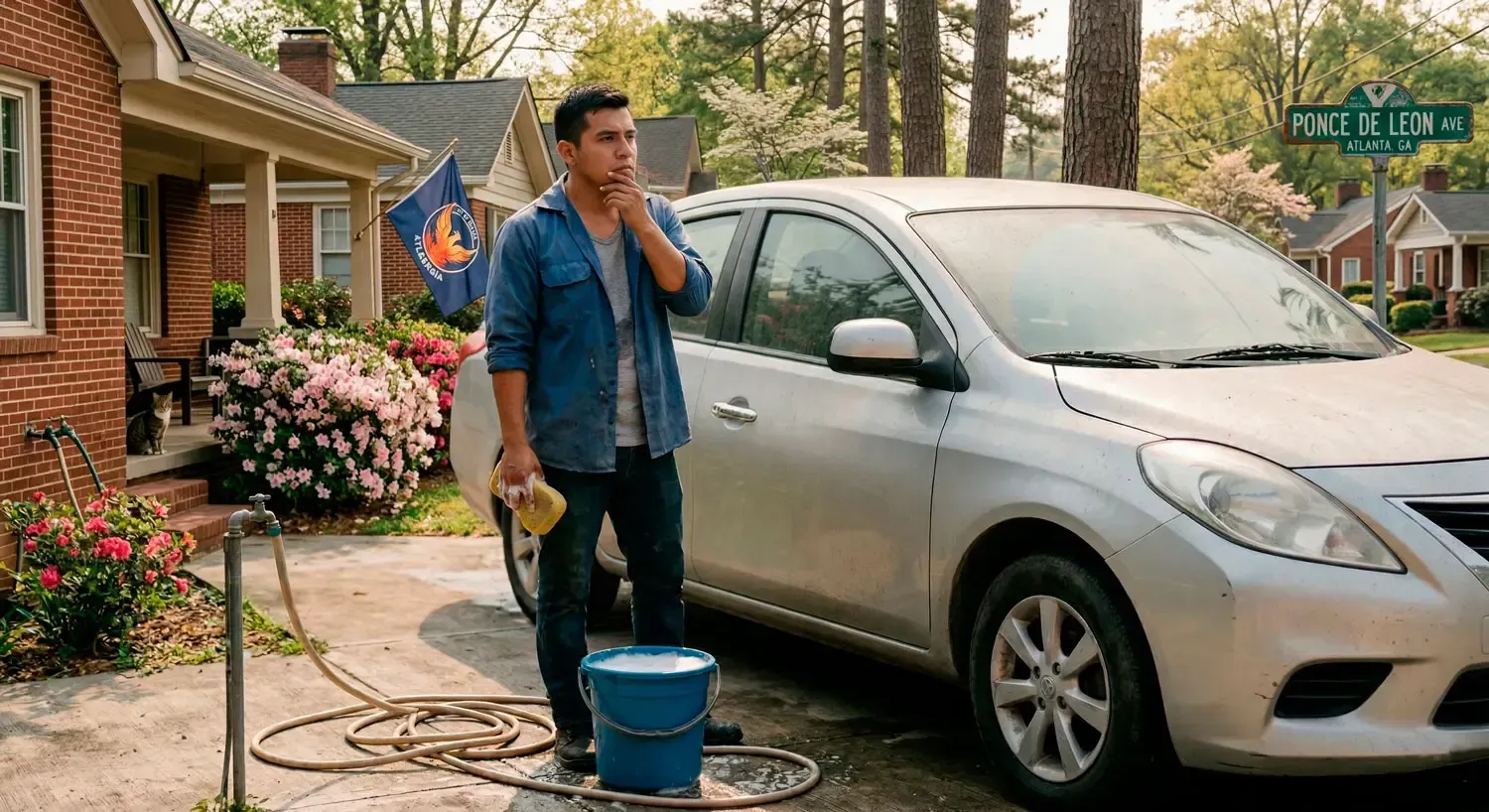
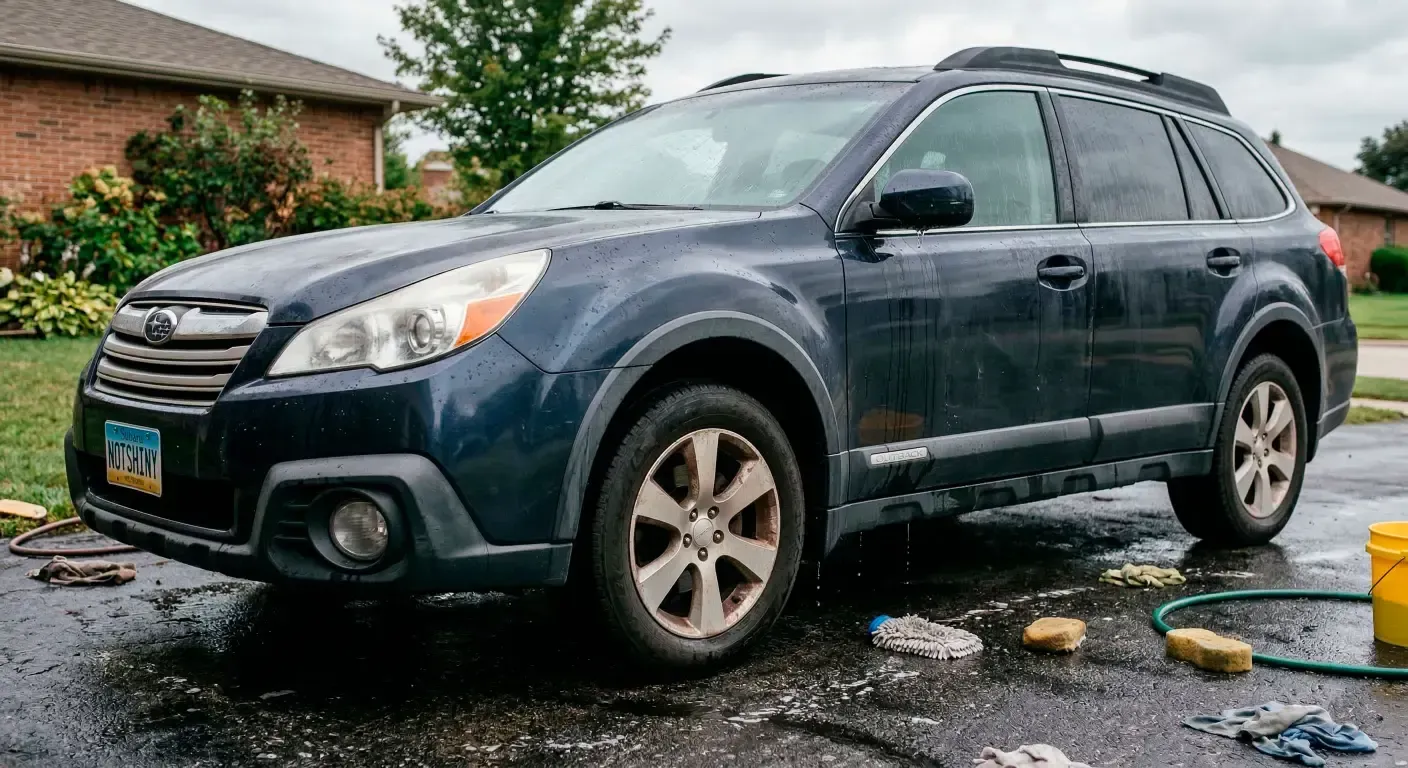
Home washing varies wildly. One person may use a bucket and a shutoff nozzle. Another may leave the hose running for much of the wash. One driveway might slope gently toward landscaping. Another might send runoff directly toward a curb or drain.
That variability is the point. There is no single “home wash” model.
Some at-home washes may be careful and relatively restrained. Others may use more water than the driver realizes, especially when rinsing takes longer than expected or when people wash wheels, mats, and heavily dirty surfaces in one go. The runoff usually leaves the driveway one way or another. What happens after that depends on the site, the drainage layout, and local infrastructure.
How a commercial wash may work
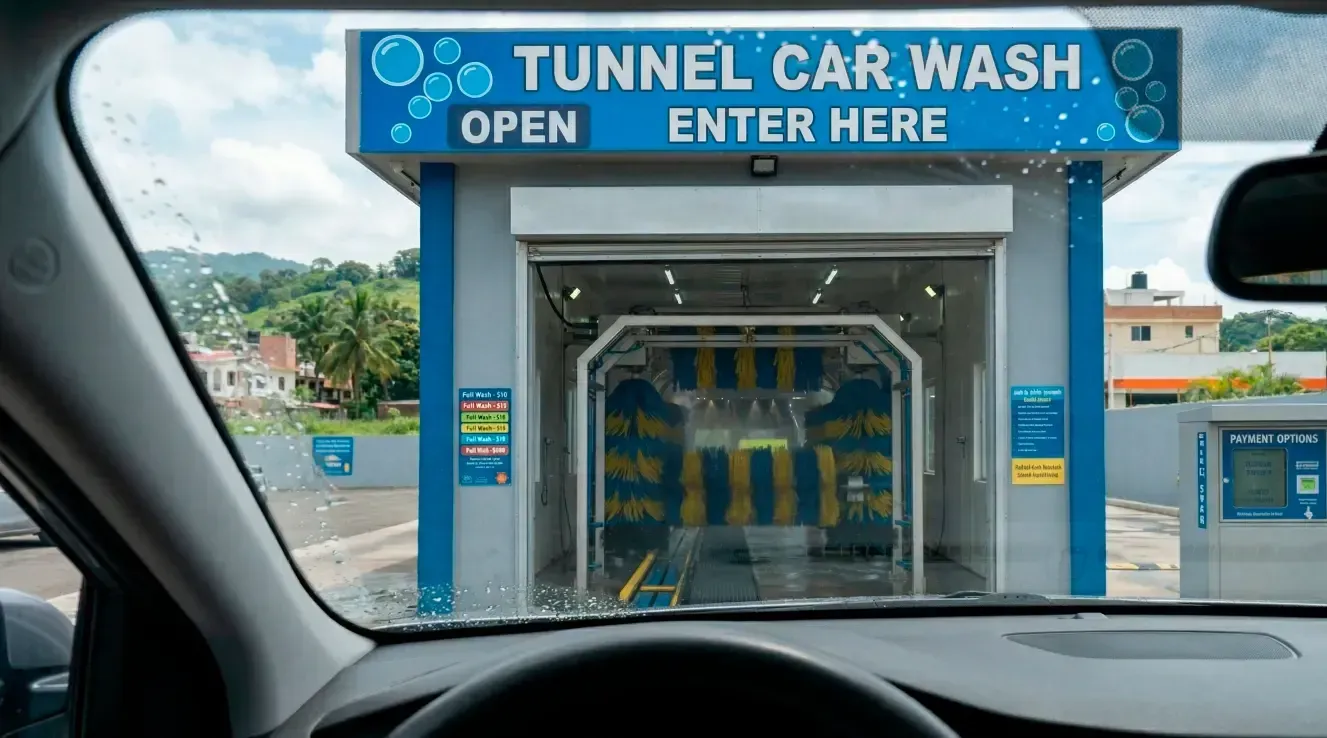
A commercial wash may operate very differently. Instead of relying on whatever happens on a driveway, it may have systems specifically designed to manage water use and wastewater. Depending on the site, that can include routing used water through managed handling systems, separating certain waste streams, and reclaiming or recapturing some portion of the water for reuse in parts of the wash process.
That is the key difference a skeptical customer should focus on: not whether a building is bigger or more mechanical, but whether the wash is built around deliberate water handling.
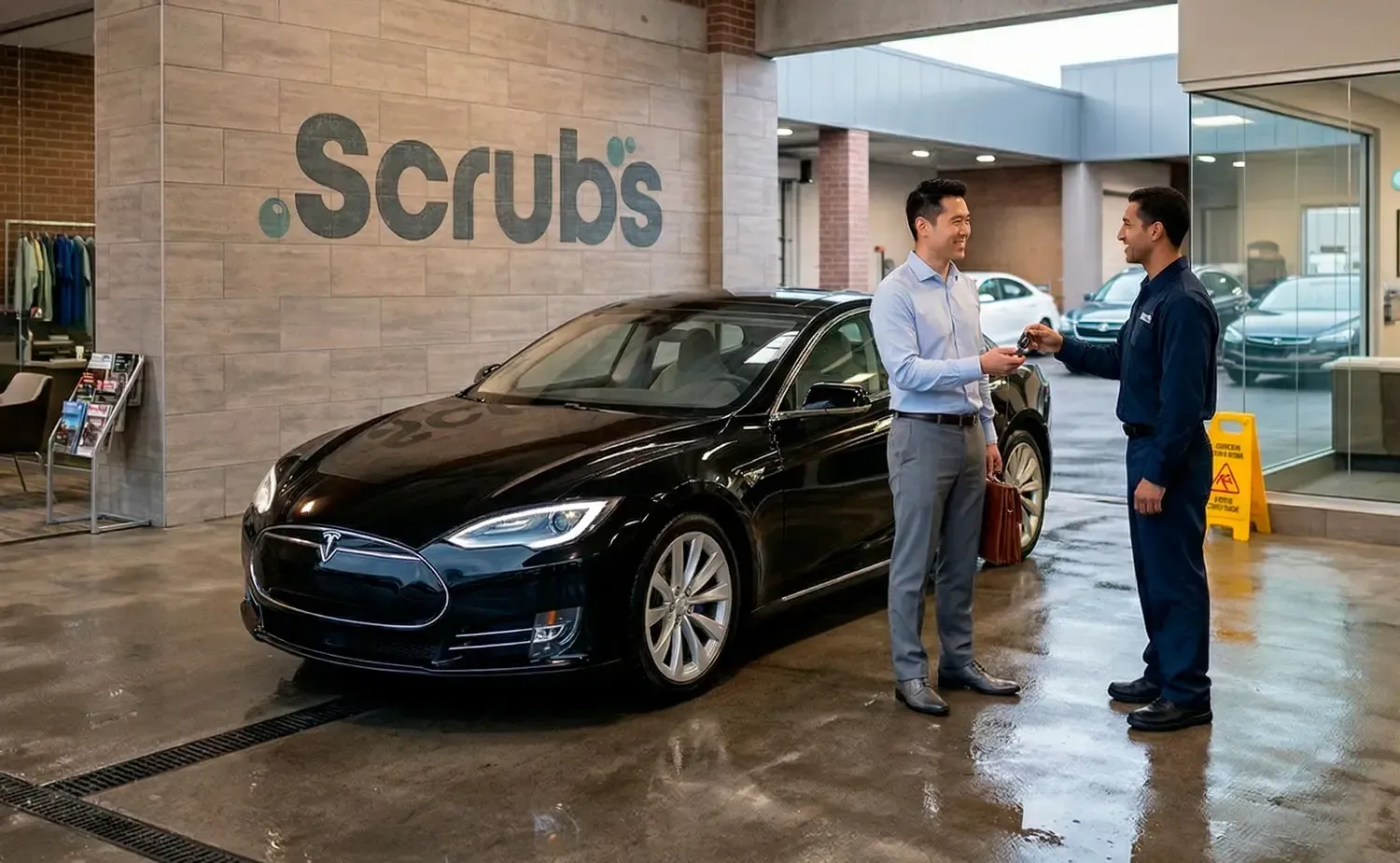
Scrubs, for example, states that it uses reclaimed water, biodegradable soaps, and that more than 70% of its water is recaptured. Those are meaningful claims if they reflect real operational systems. They are also exactly the kind of claims that deserve to be understood, not just repeated.
Why system design matters more than assumptions
This is where the conversation gets more useful. System design often matters more than assumptions about scale.
A home wash is informal by nature. A commercial wash may be more structured by design. That structure does not make every site superior, but it does create the possibility of a more controlled process. Water use can be planned. Wastewater can be directed intentionally. Reuse may be built into the operation instead of left to chance.
So the real comparison is not just “commercial vs home.” It is “unstructured use and runoff vs structured handling and possible reuse.”
That is a much better test.
What Water Reclamation Actually Means in Plain English
Water reclamation sounds technical, but the basic idea is not hard to understand.
In plain English, it usually means that some of the water used in the wash is captured, treated or filtered in some way, and reused for parts of the wash process instead of being used once and discarded immediately.
That does not mean the wash is running on the exact same water forever. It does not mean no fresh water is used. It also does not mean every stage of the wash uses reclaimed water equally. “Reclaimed” is not the same as “nothing new enters the system.”
That distinction matters because eco claims often get flattened into something more dramatic than they really mean. A skeptical customer should not expect a perfect closed loop unless that is clearly explained and documented. What you should listen for is whether the business can describe, in simple terms, what gets recaptured, how it is reused, and what fresh water is still needed.
That is what makes “car wash water reclamation explained” such an important part of the decision. The term itself is not proof. The explanation behind it is.
A credible answer tends to sound grounded. It describes part of a process, not magic. It acknowledges limits. It does not try to imply that reclamation eliminates all water use. It just explains how the site reduces waste or reuses part of what would otherwise be discarded.
If the answer is too polished and too vague at the same time, that is a reason to keep asking questions.
The Runoff Question Most People Overlook
The part of this topic that often gets missed is runoff.
People tend to focus on how much water gets used, but the environmental issue may depend just as much on where the used water goes afterward. That is where the difference between a driveway wash and a managed commercial process can become more important than people expect.
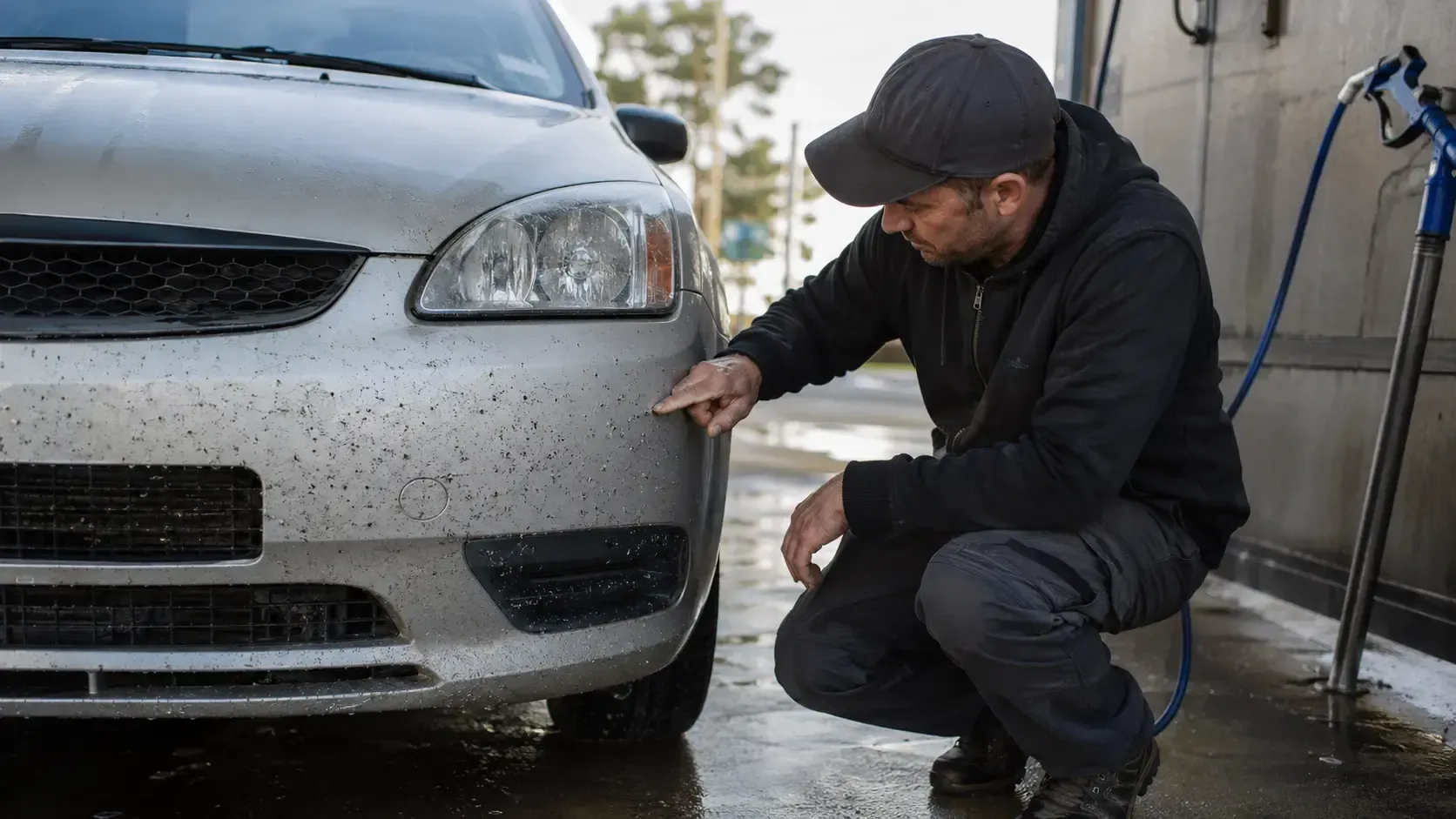
At home, runoff may move across the driveway, into the curb line, and toward drainage pathways. One concern with at-home washing is that runoff may flow into drainage systems not designed for wash water. That matters because the water is not just water anymore. It may carry soap, loosened dirt, oils, pollen, brake dust, road grime, and whatever else was on the car.
That is why “is washing car at home bad for drains” keeps coming up as a real question. The concern is not that washing your car at home is inherently irresponsible in every case. The concern is that where the runoff goes may matter more than most people assume.
A commercial wash may route wastewater differently. That does not make every claim automatically trustworthy, but it changes the environmental conversation. A site that is built to manage wastewater is playing a different game than a driveway that simply lets wash water leave the surface however it can.
This is the contrarian part of the topic. The environmental issue may be less about the wash itself and more about where everything goes afterward.
That shift in thinking helps skeptical customers ask better questions. Instead of only asking, “Do you use less water?” they can ask, “What happens after the water leaves the car?”
What to Look For Before You Trust an Eco-Friendly Car Wash Claim
If you are trying to evaluate an eco-friendly car wash without getting swept up in branding, there are a few practical things to look for.
Specific operational claims
Start with the exact claims being made.
If a wash mentions water recapture percentages, note the number and the wording. If it says it uses biodegradable soaps, ask what that means in practice. If it talks about reclaimed water or wastewater handling, look for whether it explains the process at all.
Specificity is useful because it gives you something concrete to evaluate. A claim like “we care about the environment” tells you almost nothing. A claim like “more than 70% of our water is recaptured” tells you what to ask next.
The same goes for wastewater language. If a business brings up sewer routing, reclamation systems, or differences between storm drains and managed disposal, that is more meaningful than a generic “green wash” label. It does not prove everything, but it suggests the company is at least naming operational details instead of just mood-setting.
Signs of substance versus vague branding
A strong eco claim usually has at least one of three qualities: it describes a process, it names a system, or it can be explained plainly by a real person.
That last part matters. If you ask staff how the water handling works, can they give a simple explanation? Not a defensive one. Not a memorized slogan. A real explanation.
Substance often looks like this:
- clear process descriptions
- language about recapture, reuse, or wastewater routing that goes beyond a single headline
- operational details that sound like procedures, not just values
- a willingness to explain what is known and what is not publicly documented
Vague branding usually sounds broader and softer. It leans on emotion, identity, or catchphrases without giving the customer much to inspect.
That is why eco friendly car wash questions are so valuable. They help you distinguish between a company with a real process and one with a polished theme.
The Most Common Mistakes People Make When Judging “Green” Car Washes
One common mistake is trusting slogans too quickly. If a customer sees “washing cars with a conscience” or “eco-friendly” and stops there, they may miss the difference between image and evidence.
Another mistake is assuming that every home wash is automatically low-impact. That belief is understandable, but it can hide the runoff issue entirely. Home washing is not automatically bad, but it is not automatically the responsible option either.
A third mistake is treating every commercial wash as equally eco-friendly. Even within the same category, practices may differ. One site may have more developed water handling language and systems than another. One may explain recapture clearly. Another may just use the right words.
A fourth mistake is confusing eco-conscious brand voice with operational proof. A company can sound friendly, community-minded, and environmentally aware without providing enough evidence to support stronger claims. Those are different layers of trust.
The smartest reader does not become cynical. They become specific. They do not reject eco claims altogether. They ask better questions.
A Better Way to Decide: Questions to Ask and How to Evaluate the Answers
If you want a more credible way to judge these claims, ask questions that force the explanation out of marketing mode.
Start with the basics:
What happens to the wastewater here?
That question gets to the heart of the runoff issue. It helps you understand whether the site has a managed process or just a broad environmental identity.
Then ask:
Do you reclaim or recapture water, and how is that described?
This is where a business should be able to explain, in plain language, whether some water is reused and what that actually means. You are not looking for engineering jargon. You are looking for clarity and consistency.
Next ask:
Are these environmental claims documented anywhere, or are they just described in marketing copy?
That does not have to be asked aggressively. It is a fair question. A company can have honest operations and still not have every piece of documentation ready for a customer. But the way it answers matters. Clear, grounded answers build trust. Evasive or overly polished answers weaken it.
If the answers are partial, vague, or TBD, that does not automatically mean the claims are false. It does mean you should treat them as company statements rather than independently verified facts.
That is an important distinction. It lets you stay fair without becoming gullible.
This is also the best place for a business like Scrubs to win trust the right way. Not by insisting customers believe the eco story, but by making the water handling story easier to understand.
When a Commercial Wash May Be the More Credible Choice
A commercial wash may be the more credible choice when you care about runoff handling as much as water use.
That matters for drivers who wash often. If you are cleaning your car regularly, the question is not just whether one wash uses slightly more or less water in theory. It is whether the overall process is structured, repeatable, and designed with water handling in mind.
It may also matter for customers who do not want to rely on home habits alone. Maybe you know your driveway setup is not ideal. Maybe you are not sure where runoff goes. Maybe you simply want a wash option that can explain how it manages wastewater rather than leaving that question unanswered.
This is where a commercial wash can earn credibility, but only if it explains itself well.
If you are skeptical of eco claims, that is a good instinct—not a barrier. The best next step is to look past the slogan and ask how the wash actually handles water, runoff, and reuse. If the process makes sense and the answers are clear, you can choose with a lot more confidence.
A good commercial wash is not just asking you to trust the branding. It is giving you enough detail to decide whether the environmental story holds up for your standards. And once you feel comfortable with that explanation, choosing a wash that fits your routine becomes much easier.
FAQ content
Do car washes use less water than washing at home?
Sometimes they do, depending on their systems. Some commercial car washes are designed to use water more efficiently than home washing, especially when reclamation or controlled water handling is part of the process. But the claim is stronger when the business can explain how its system works.
Is washing your car at home bad for storm drains?
It can raise runoff concerns because wash water may carry soap, dirt, and vehicle residue into drainage pathways not designed for that kind of wastewater. The exact impact depends on how the site drains and how the washing is done, but runoff is a valid part of the environmental conversation.
What does car wash water reclamation mean?
It usually means that some of the water used in the wash is captured and reused for parts of the wash process instead of being used once and immediately discarded. It does not usually mean no fresh water is used at all.
Are all commercial car washes eco-friendly?
No. Some may have more credible water handling practices than others. The better approach is to ask how the site manages wastewater, whether it reclaims water, and whether its claims are explained clearly.
What questions should I ask an eco-friendly car wash?
Ask what happens to the wastewater, whether the site recaptures or reclaims water, how those claims are described, and whether there is any documentation or clear process explanation behind the marketing language.
How can I tell whether a car wash’s water-saving claims are credible?
Look for specific operational details, not just slogans. Credible claims usually describe a process, mention water recapture or wastewater handling in plain language, and hold up when you ask follow-up questions.
If you are skeptical of eco claims, that is a good instinct—not a barrier. The best next step is to look past the slogan and ask how the wash actually handles water, runoff, and reuse. If the process makes sense and the answers are clear, you can choose with a lot more confidence.