Safety Tips for Entering a Conveyor Tunnel Wash for the First Time
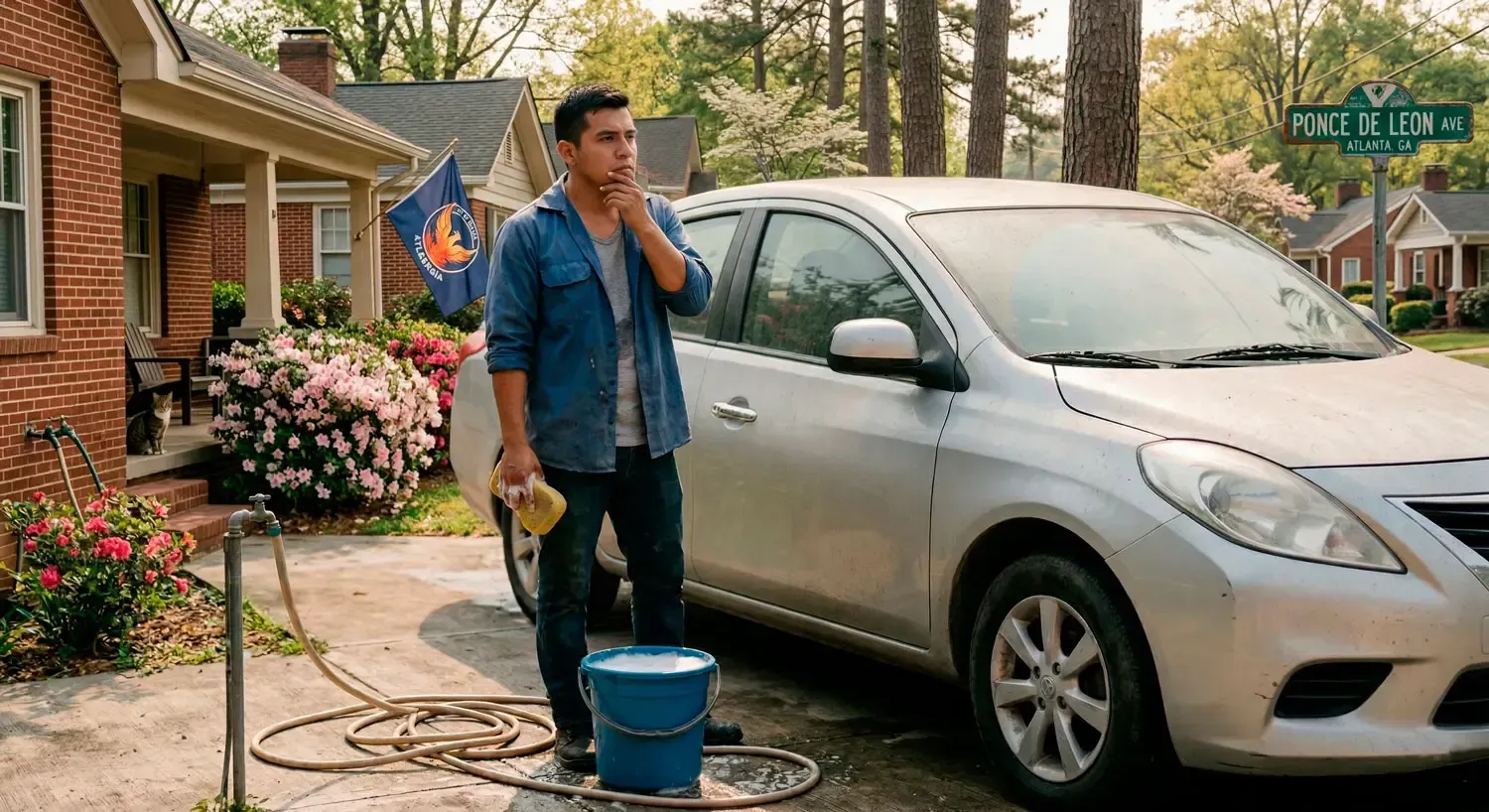
The first time you pull into a conveyor tunnel wash, it can feel much more stressful than it looks from the outside. You are trying to line up the wheels, listen to instructions, remember what gear to use, and stay calm while the car starts moving in a way that feels unfamiliar. If kids or family members are with you, that pressure can rise even faster.
The good news is that most of the stress comes from unfamiliarity, not complexity. A conveyor wash usually becomes much easier once you understand the few moments that matter most: approaching slowly, aligning the wheel correctly, following the on-site instructions, placing the car in the correct gear when told, and resisting the urge to react suddenly once the conveyor starts pulling the vehicle.
That is the point of this guide. If you are using a tunnel wash for the first time, the goal is not to turn you into an expert. It is to help you feel calmer, more prepared, and less likely to make the small mistakes that often trigger panic.
Why First-Time Tunnel Washes Feel More Intimidating Than They Really Are
A first-time tunnel wash feels intimidating because several unfamiliar things happen close together. The car ahead of you disappears into the tunnel. Staff may be signaling you forward. You are watching a track on the ground. There may be lights, signs, or audio prompts. Then, once you are positioned, the vehicle starts moving without you pressing the accelerator.
That combination can make a normal process feel high-pressure.
For most family drivers, the fear is not really about the wash equipment itself. It is about doing something wrong at the entrance. Maybe you are worried about lining up badly. Maybe you are unsure whether you are supposed to brake, steer, or shift to neutral. Maybe you are worried a child in the back seat will get scared and make the moment feel even more chaotic.
All of that is normal.
It helps to remember that first-time stress does not mean the process is unsafe by default. It usually means you are entering a routine system without a clear mental picture of how it works yet. Once you understand the order of events, the experience tends to feel far more manageable.
The goal is not to rush through it confidently. The goal is to move through it calmly and follow instructions carefully.
Before You Roll Forward, Know the Few Things That Matter Most
Before you even begin moving toward the conveyor, it helps to know the basic mental model.
There are really only a few things that matter most at entry:
You approach slowly.
You line up the wheel with the track or conveyor guidance.
You wait for the signal or staff instruction.
You place the car in the instructed gear when told.
You remove your feet from the pedals if instructed to do so.
Then you let the system carry the vehicle through.
That is the whole rhythm.
The mistake many nervous first-time drivers make is thinking they need to actively “help” the wash once the conveyor takes over. In most cases, that instinct creates more problems than it solves. Once the vehicle is properly aligned and you have followed the entry instructions, calm stillness matters more than quick reactions.
This is also a good time to prepare the family. If children are in the car, give them a simple heads-up before you enter. Tell them the wash may be noisy, the car may move on its own, and that everyone should stay seated and calm. That short explanation can lower the emotional temperature before anything even starts.
If you have loose items that might shift, secure them before entry. If something seems unusual about your vehicle or you are unsure whether to proceed, ask the attendant before moving forward rather than trying to guess in the moment.
Calm attention matters more than speed. Most tunnel entry mistakes come from rushed nerves, not lack of intelligence.
What the Entry Usually Looks Like Step by Step
The best way to reduce stress is to picture the entry in order. When you know what the sequence usually feels like, the moment becomes less overwhelming.
Approaching the track slowly
As you move toward the tunnel entrance, go slowly and stay focused on the area immediately ahead of the front wheel. This is not the moment to think about the whole wash. It is just the moment to get the vehicle into position.
Usually, there will be some combination of staff guidance, lights, posted instructions, or track markers helping direct you. Watch those cues instead of trying to interpret everything at once. If an attendant is guiding you, that should be your main reference point.
Do not rush because you feel other people are waiting. A slow, controlled approach is usually better than overcorrecting quickly and ending up misaligned.
Lining up the wheel correctly
Getting lined up correctly is often the part first-time drivers think about most. That is because it feels like the “point of no return” moment. Once the wheel finds the track or the conveyor mechanism engages, people worry that one small mistake will turn into a big one.
In practice, the key is simply to inch forward carefully and follow the guidance you are given. Do not oversteer. Do not keep making dramatic corrections at the last second. Slow and small is usually better than reactive and sharp.
If you have ever searched how to enter a conveyor car wash safely, this is probably the moment you were imagining. And it helps to know that nervousness here is common. You are not failing by feeling unsure. You are just doing something unfamiliar.
Waiting for the signal and following staff instructions
Once the car is aligned, wait for the instruction that tells you what happens next. That may be a staff signal, a sign, or an audio prompt depending on the wash setup.
This is where drivers often get mentally split. Part of them is listening for gear instructions, part of them is still thinking about alignment, and part of them is wondering whether they should keep their foot on the brake. That mental overload is why it helps to keep your attention narrow.
At this stage, you are not improvising. You are following the next instruction only.
If the instruction is to stop, stop. If it is to shift, shift. If it is to remove your foot from the brake, do that. The simpler you keep the moment, the calmer it usually feels.
What Gear Should the Car Be In—and When?
This is one of the biggest first-time questions, and it is also one of the places where drivers get tense fastest.
Why neutral matters in many tunnel wash setups
Many tunnel washes instruct drivers to place the vehicle in neutral once aligned, but drivers should always follow on-site instructions. The reason this matters in many conveyor systems is that the wash is designed to move the vehicle through the tunnel once the car is correctly positioned.
That is why so many people search what gear should car be in tunnel wash before their first visit. It feels like the one instruction you really do not want to get wrong.
The safest mindset is not to memorize one universal rule for every wash. It is to expect that the wash will tell you what to do, and your job is to follow that guidance carefully. If the system or attendant instructs neutral, then neutral is the right move for that setup. If there are different instructions on site, those instructions take priority.
Why drivers get confused at this point
Drivers get confused here because shifting into neutral feels like “letting go” in a moment when they already feel uncertain. They worry the car will move strangely, or they wonder whether they should keep braking, steering, or correcting.
That confusion is emotional as much as mechanical. The feeling is: “If the car is moving, shouldn’t I be doing something?”
Usually, once the car is aligned and the correct instruction has been followed, the calmer move is to stop trying to control every sensation. Unexpected driver inputs can disrupt the normal flow of the wash, so following posted and staff instructions matters.
So if you feel uncertain in that moment, return to the simplest thought available: follow the instruction you were given, then let the system do its part.
The Common Mistake That Triggers Panic
Many first-time drivers assume the biggest risk is entering wrong. Sometimes that is true. But in practice, the more common problem is reacting suddenly once the conveyor begins moving the vehicle.
That is the moment when the body tends to tense up. The car moves, the tunnel gets louder, and instinct kicks in. A driver may feel the urge to brake, steer, or “fix” something that is already operating normally.
That reaction is understandable, but it is often the moment that turns nervousness into panic.
This is the key misconception to reverse: the biggest issue is often not that the driver failed at entry. It is that they start second-guessing the process after entry is already working.
Once the vehicle is aligned and you have followed the instruction, the safest move is usually to stay calm and let the conveyor carry the vehicle. That can feel passive, but it is often exactly what the situation requires.
Think of it this way: before the conveyor engages, your job is careful setup. After it engages, your job is calm compliance.
That shift in mindset matters a lot. It turns the experience from “I have to keep managing this” into “I need to stop interfering and let the system do what it is designed to do.”
What Families Should Do With Kids and Passengers During the Wash
A family car wash experience adds another layer of stress because you are not just managing yourself. You are also managing everyone else in the vehicle.
Children may find the noise, water, brushes, lights, and motion surprising at first. Some kids think it is fun. Others get nervous quickly. A family driver who is already tense may feel even more pressure if a child starts asking worried questions right as the car is entering the tunnel.
The best way to reduce that tension is to prepare everyone before entry.
Tell children in simple language what is about to happen. Say that the wash may be loud, the windows may get covered in soap and water, and the car may move on its own for a short time. Let them know that this is expected and that they should stay seated and calm.
Passengers can help too. A calm adult passenger can reassure children, keep conversation light, and avoid dramatic reactions that make the moment feel scarier than it is.
Inside the vehicle, keep things simple. Doors stay closed. Windows stay up if instructed. Hands stay inside. Nobody unbuckles to “look around better.” The less movement inside the cabin, the more settled the experience tends to feel.
Tunnel car wash safety tips for families are often less about special equipment and more about emotional tone. If the adults stay composed, the children usually settle faster.
What to Do If You Panic in the Tunnel
Even with preparation, panic can still happen. That does not mean you failed. It means you are human in an unfamiliar situation. The key is to respond in a controlled way instead of amplifying the moment.
If you feel the urge to brake
This is one of the most common panic reactions. The car is moving, the tunnel is loud, and your instinct says to take control.
Pause before acting. Remind yourself that movement in the tunnel is expected. If you have already followed the instructions and the vehicle is being carried normally, sudden braking may create more disruption than calm stillness. Unexpected driver inputs can interfere with normal tunnel flow, which is why the better first move is to stay composed and keep following the on-site guidance.
If you are searching what to do if you panic in tunnel wash, this is the answer that matters most: do not let the first surge of panic make the decision for you.
If a child gets scared
If a child starts crying or gets frightened, keep your own voice calm and low. Do not match their alarm with alarm of your own. A simple phrase works better than a long explanation: “It’s okay. The wash is noisy, but we’re fine. It will be over soon.”
Children often react to the sudden sensory change more than to actual danger. Your calm is part of what tells them the situation is normal.
If another adult is in the car, let that person comfort the child while you stay focused on the instructions and the wash process.
If you are unsure whether something is wrong
This is where people can spiral. They hear a sound, feel the movement, and wonder whether the whole thing is off-track.
The first question to ask yourself is whether what is happening is actually outside the normal experience of a wash. Noise, water, foam, moving brushes, and the feeling of motion are usually part of the expected environment.
If you notice something that genuinely concerns you, follow the posted and on-site guidance for that situation. If you have a question after the wash, raise it with staff rather than trying to resolve uncertainty by improvising inside the tunnel.
The general principle is simple: do not let uncertainty automatically become emergency thinking.
How to Tell You’re Doing It Right
For nervous first-time drivers, one of the most reassuring things is knowing what “normal” looks like.
A smooth entry often feels like this: you approach slowly, the wheel lines up without dramatic correction, you receive the instruction, you follow it, and the car begins moving in a steady, expected way. Once the conveyor is carrying the vehicle, you are not making sudden steering or braking inputs. The ride may feel unusual, but it does not feel chaotic.
Another good sign is that you are not fighting the process. If the car feels centered, the motion is steady, and the instructions made sense in sequence, that usually means the entry went correctly.
Emotionally, “doing it right” may still feel slightly strange the first time. That is important to understand. Normal does not always feel relaxed on the first pass. Sometimes it just feels unfamiliar but smooth.
That is still success.
This is also why conveyor wash instructions step by step are so helpful for first-time users. They create a mental map that lets you recognize expected sensations instead of reacting to them as surprises.
If you got through the entry without sudden corrections, kept the car aligned, followed the instruction, and let the conveyor do its job, you likely handled the hardest part just fine.
The Easiest Next Step for a Nervous First-Time Driver
If you are still nervous, that is okay. The easiest next step is not to force confidence. It is to choose a calm first experience and take it one instruction at a time.
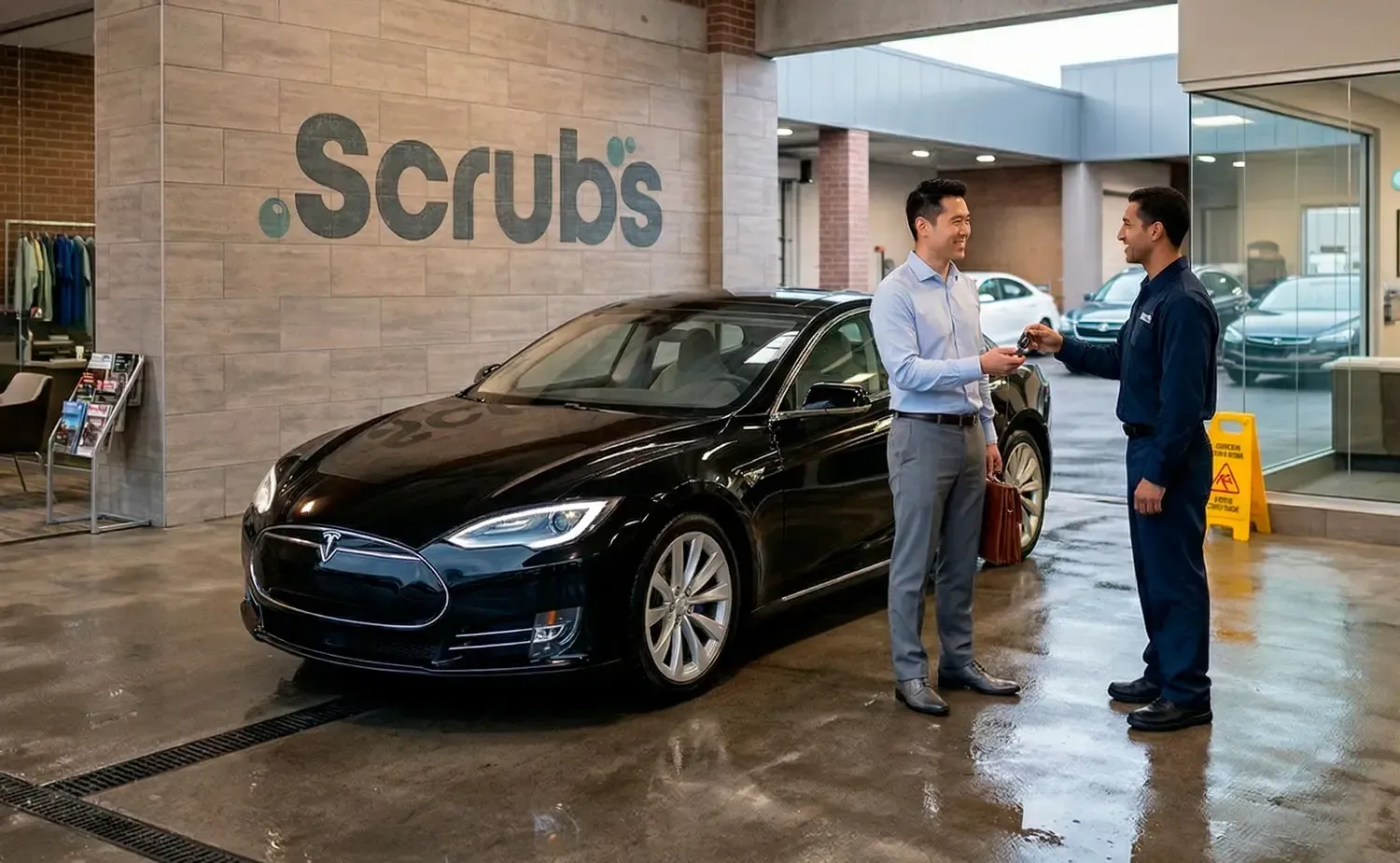
If you are nervous about using a conveyor tunnel wash for the first time, the easiest next step is to take it one instruction at a time. Scrubs Express Carwash gives Atlanta drivers a quick, structured wash experience where first-time users can follow the on-site guidance and settle in after one successful pass. Once you know what to expect, the whole process usually feels much easier the next time.
That is really what most first-time drivers need: one good experience.
After that first visit, the mystery is gone. The tunnel still makes noise. The conveyor still feels unusual for a moment. But your brain has a reference point now. You know what the entry looks like. You know what the motion feels like. You know that staying calm matters more than reacting fast.
And that is usually what turns a stressful first visit into a routine one.
FAQ
How do you enter a conveyor car wash safely?
Approach slowly, line the wheel up carefully, follow the on-site instructions, and avoid rushing. Once the vehicle is properly aligned and the wash gives the next instruction, focus on following that step rather than improvising.
What gear should your car be in during a tunnel wash?
Many tunnel washes instruct drivers to place the vehicle in neutral once aligned, but drivers should always follow the posted or staff guidance at that specific wash.
What should you do with your feet once the conveyor pulls the car?
Follow the on-site instructions. In many conveyor systems, once the vehicle is aligned and engaged properly, the driver should avoid unexpected inputs and let the wash carry the vehicle through.
What if you panic during a tunnel wash?
Take a breath, remind yourself that the motion and noise are expected, and avoid reacting suddenly out of fear. If the wash is operating normally, calm compliance is usually better than abrupt inputs.
Are tunnel car washes safe for families with kids in the car?
They can feel unfamiliar at first, especially for children, so preparation helps. Explain ahead of time that the wash may be loud and that everyone should stay seated, calm, and follow the normal in-car safety rules.
How do you know your car is lined up correctly before the wash starts?
A good sign is that the approach feels centered and the car moves into position without big last-second corrections. On-site staff guidance is the best immediate help during alignment.
If you are nervous about using a conveyor tunnel wash for the first time, the easiest next step is to take it one instruction at a time. Scrubs Express Carwash gives Atlanta drivers a quick, structured wash experience where first-time users can follow the on-site guidance and settle in after one successful pass. Once you know what to expect, the whole process usually feels much easier the next time.